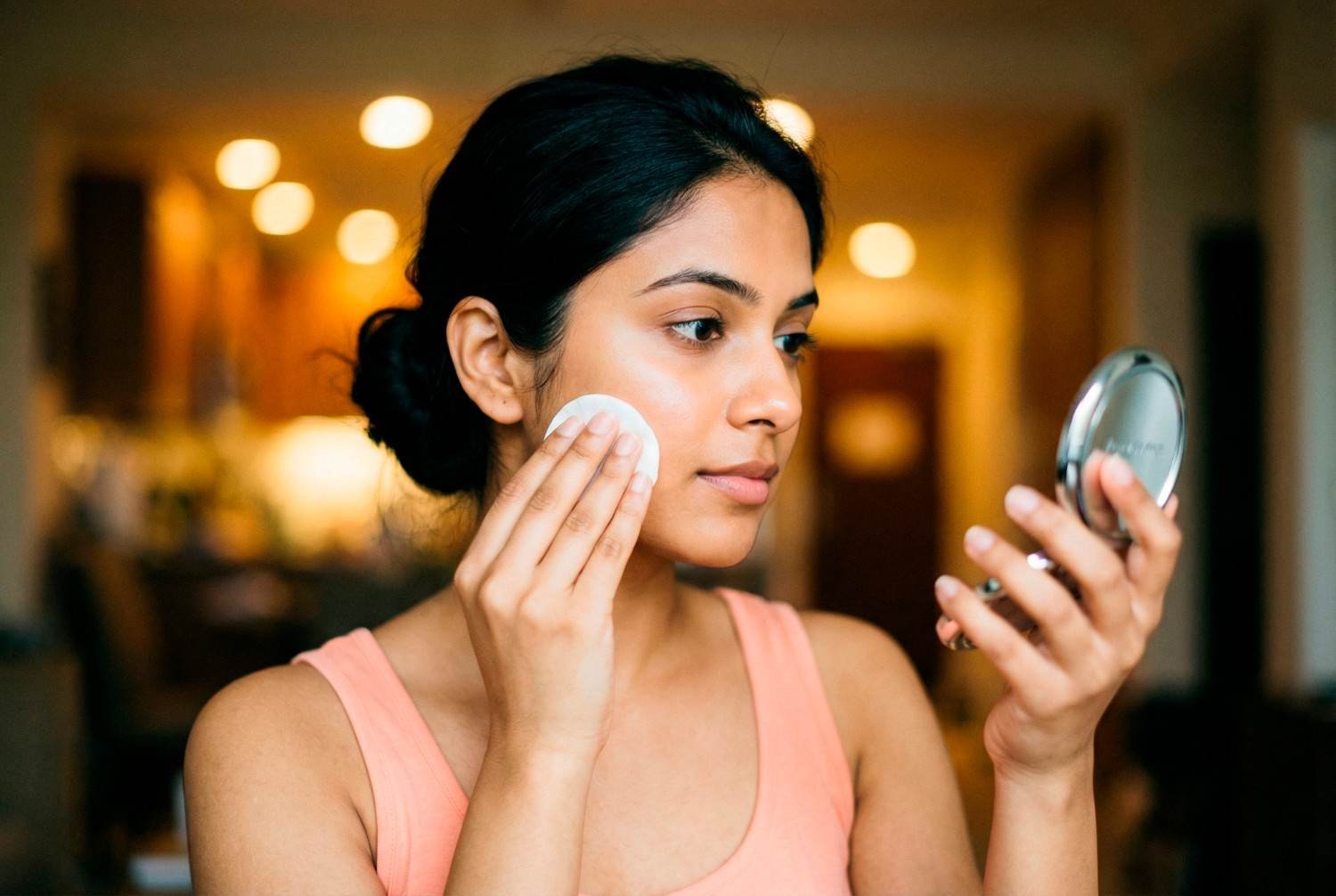
If your foundation looks smooth on your cheeks but starts breaking apart around your nose by lunchtime, you are dealing with one of the most frustrating makeup challenges. I have found that the secret to makeup for combination skin, dry patches, and oily T-zone concerns is not choosing between a completely matte or completely hydrating routine. It is learning to treat different parts of the face differently.
I prefer a zone-mapping approach. Dry cheeks and flaky patches need moisture and flexible formulas, while the forehead, nose, and chin usually need lighter hydration, oil control, and strategic powder. When these two needs are balanced, makeup looks smoother and lasts much longer.
How Should I Prep Combination Skin Before Makeup?
A smooth base starts with skincare. If dry patches are rough or flaky, foundation will often grab onto them regardless of how expensive the formula is.
I begin with a gentle cleanser that removes excess oil without leaving my face tight. If loose flakes are visible, I avoid aggressive scrubbing immediately before makeup. Instead, I soften the area with moisturizer and remove only loose skin very gently. Regular mild exfoliation within a skin care routine is usually more effective than trying to scrub texture away right before foundation.
Next, I use different hydration levels across the face. On dry cheeks and around the jawline, a richer moisturizer or hydrating serum containing ingredients such as hyaluronic acid, glycerin, ceramides, or squalane can help create a smoother surface.
Across the T-zone, I prefer a lightweight oil-free gel or lotion. This gives the skin hydration without creating a heavy layer underneath foundation.
After skincare, I wait about two to three minutes so everything can settle. Applying primer or foundation while moisturizer is still slippery can make makeup separate faster.
What Is Multi-Priming for Combination Skin
Multi-priming simply means using different primers where different problems occur.
I would not apply a strong mattifying primer over my entire face because it can make dehydrated patches look more obvious. At the same time, using a highly dewy primer everywhere may make an already oily T-zone break down faster.
What Primer Should I Use on an Oily T-Zone?

On the forehead, nose, sides of the nose, and chin, I use a small amount of pore-blurring or mattifying primer.
Pressing it gently into the skin rather than rubbing a thick layer over the area can create a smoother surface while giving foundation more grip.
What Primer Works Best on Dry Patches?
On dry cheeks or areas where foundation usually catches, I prefer a hydrating or lightweight gripping primer.
This is the foundation of zone-mapping: each part of the face receives only what it actually needs.
What Foundation Is Best for Combination Skin?
Natural, satin, and soft-matte foundations usually provide the best middle ground.
An extremely matte foundation can absorb too much moisture and exaggerate flakes. On the other hand, a very luminous foundation may become overly shiny as oil builds throughout the day.
For makeup for combination skin with dry patches oily T-zone, I prefer a lightweight, buildable foundation rather than thick full coverage from the start.
Apply a thin layer first and add coverage only where you need it. This prevents excess product from collecting around textured areas while reducing the chance of foundation sliding away from oily areas.
How Do I Apply Foundation Without Highlighting Dry Patches?
Technique matters almost as much as foundation formula. Before application, I make sure to moisturise your skin properly so dry areas are softer and less likely to catch excess pigment.
On dry areas, I like to press foundation into the skin using a damp makeup sponge. Aggressive buffing with a dense brush can sometimes disturb flaky texture and make it more noticeable.
Start around the center of the face and blend outward. Your cheeks may not need the same amount of product as your nose or areas with redness.
If a dry patch remains visible, adding more foundation usually does not solve the problem. More layers can make the texture look thicker and cakier.
How Do I Stop Foundation From Separating Around My Nose?

The nose is one of the first areas where combination-skin makeup tends to fail.
Too much moisturizer, too much primer, thick foundation, and natural oil production can all contribute to separation.
I keep skincare thin around the nose, use only a small amount of mattifying primer, and apply a very light foundation layer. If I need additional coverage around redness, I use concealer only where needed instead of applying another full coat of foundation.
This keeps the area lighter and makes touch-ups easier later.
Should I Powder My Entire Face?
I rarely recommend powdering the entire face when dry patches are part of the problem.
Instead, I use selective setting.
A small fluffy brush gives much better control than a large powder brush. I lightly apply loose translucent powder over the forehead, nose, sides of the nose, chin, and anywhere else that consistently becomes oily.
I leave dry cheeks mostly powder-free.
This keeps shine controlled without taking away the natural softness and hydration that dry areas need.
Does Setting Spray Help Combination Skin?
A setting spray can help the different textures of your makeup look more unified.
After strategically powdering the T-zone, I lightly mist the face with a hydrating or continuous setting spray. This can soften the visible powder finish and help makeup look more skin-like.
Avoid saturating the face. A light, even mist is enough.
How Can I Stop My Makeup Getting Cakey During the Day?
One of the biggest mistakes I see is repeatedly adding powder whenever shine appears.
If your forehead or nose gets oily during the afternoon, blot the excess oil first. Blotting papers or a clean tissue can remove surface oil without adding another makeup layer.
Only then should you apply a tiny amount of powder if necessary.
Applying powder directly over a greasy surface can create buildup that looks thick and uneven.
What Blush and Bronzer Work Best on Dry Cheeks?
Cream and liquid complexion products can work particularly well on areas that feel dry.
I often prefer cream blush or lightweight liquid bronzer because these formulas add color without requiring several layers of powder.
Press the product into foundation rather than dragging it across the skin. This reduces the chance of lifting the foundation underneath.
Powder blush can still work, but avoid heavily setting dry cheeks before applying it.
How Should I Adjust Combination-Skin Makeup by Season?
Combination skin often changes with the weather.
During hot, humid summers in places such as Florida, Texas, or much of the Southeast, oil production and shine may become more noticeable. Lighter moisturizers, targeted mattifying primer, thin foundation layers, and strategic powdering can help.
Cold winters and indoor heating can create the opposite problem, especially in northern parts of the US. Dry patches may become more visible, so I increase hydration around my cheeks while keeping oil-control products limited to the T-zone.
You do not necessarily need an entirely new makeup collection for every season. Often, changing the amount and placement of skincare, primer, and powder is enough.
Common Mistakes That Make Combination Skin Look Worse

The biggest mistake is treating combination skin as completely oily simply because the nose and forehead become shiny.
Skipping moisturizer can also backfire because oily skin can still be dehydrated.
Another mistake is applying too many layers. Heavy moisturizer, primer, foundation, concealer, and powder can create pilling or separation rather than a smoother finish. This is also an important consideration when applying makeup for mature skin with large pores, where excess product can settle into texture and make pores appear more noticeable.
The better strategy is controlled layering. Use enough product to solve the problem without covering every part of the face equally.
Frequently Asked Questions (FAQs)
1. What is the best makeup for combination skin, dry patches oily T-zone?
The best routine uses lightweight hydration on oily areas, richer moisture on dry areas, multi-priming, a natural or satin-finish foundation, and selective powdering. Treating each facial zone differently usually creates a smoother and longer-lasting base.
2. Should combination skin use matte or dewy foundation?
A natural, satin, or soft-matte finish is usually easier to manage. Very matte formulas may exaggerate flakes, while highly dewy formulas can become too shiny around the T-zone.
3. Why does foundation cling to dry patches but slide off my nose?
Dry patches can create uneven texture that catches foundation, while excess oil around the nose can break makeup down. Zone-specific skincare, primer, and powder can address both problems.
4. Can I use two different primers on my face?
Yes. Using a mattifying or pore-blurring primer on oily areas and a hydrating primer on dry areas is one of the most practical ways to manage combination skin.
A More Balanced Way to Build Your Base
I have found that combination-skin makeup becomes much easier when I stop trying to make my entire face behave the same way. Knowing your skin type and understanding how different areas of your face behave can make product selection and application much more effective. My cheeks may need extra hydration, while my nose may need oil control. There is no reason to treat both areas identically.
The most reliable routine is simple: hydrate strategically, use multi-priming, apply thin foundation layers, powder only oily areas, finish with setting spray, and blot before touching up.
Once you start treating your face according to its individual zones, you can achieve a smoother, more natural-looking base without choosing between flaky cheeks and a shiny T-zone.
Leave a Reply