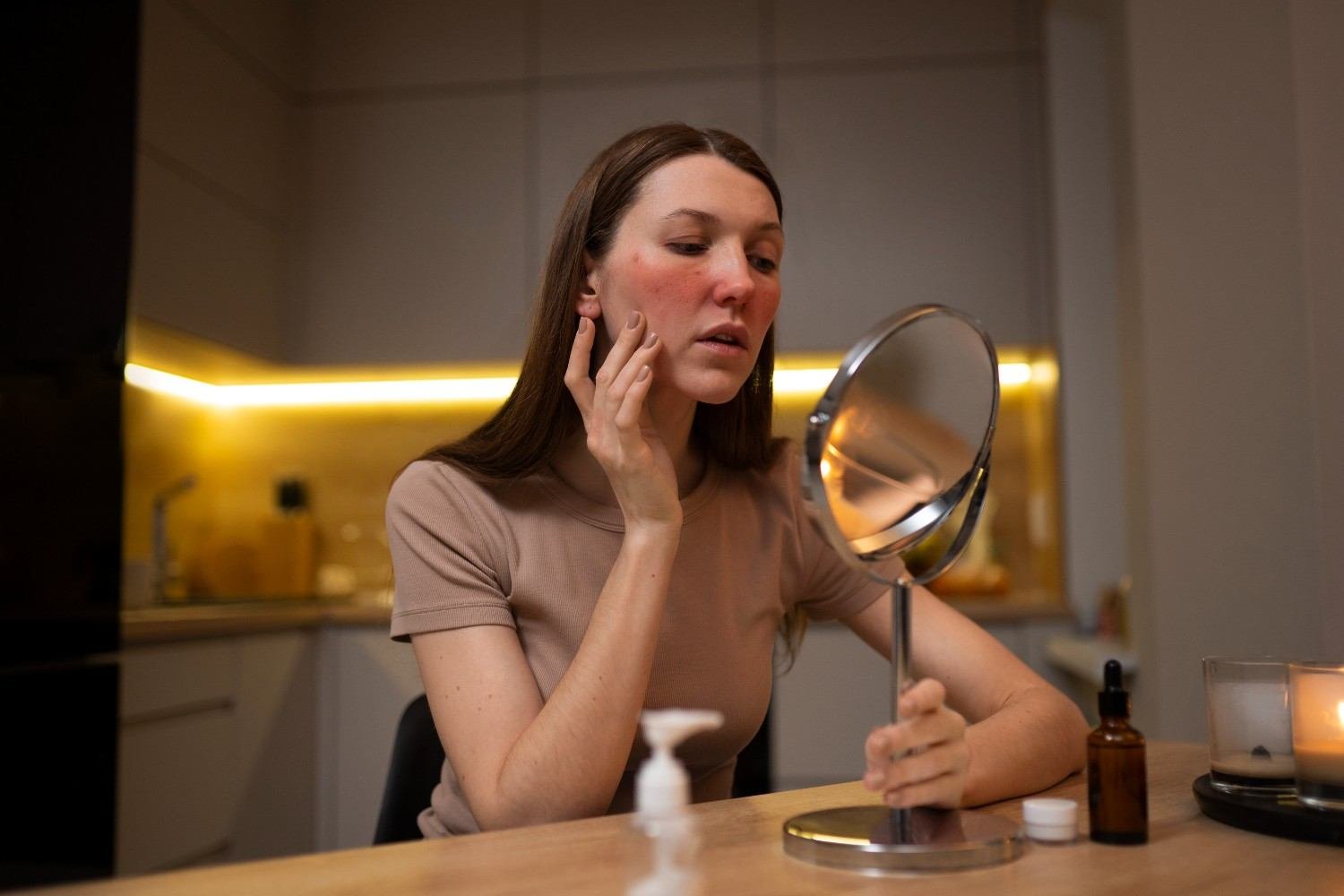
Facial redness does not mean I need to cover my entire face. I usually get a more natural result when I correct only uneven areas and leave the rest of my skin visible. For me, makeup for redness without full-coverage foundation works best when I combine gentle skin prep, green color correction, spot concealing, and a sheer complexion product only where needed.
How Do I Prep Redness-Prone Skin Before Makeup?
I start with a gentle cleanser, moisturizer, and broad-spectrum sunscreen. If skin is dry or irritated, concealer can catch on texture and make redness look more obvious.
For sensitive or rosacea-prone skin, I avoid rubbing, scrubbing, or aggressive exfoliation before makeup. The American Academy of Dermatology notes that green-tinted concealer can camouflage redness, while the National Rosacea Society recommends minimizing irritation and testing new products carefully.
Should I Use a Green Primer or a Spot Corrector?
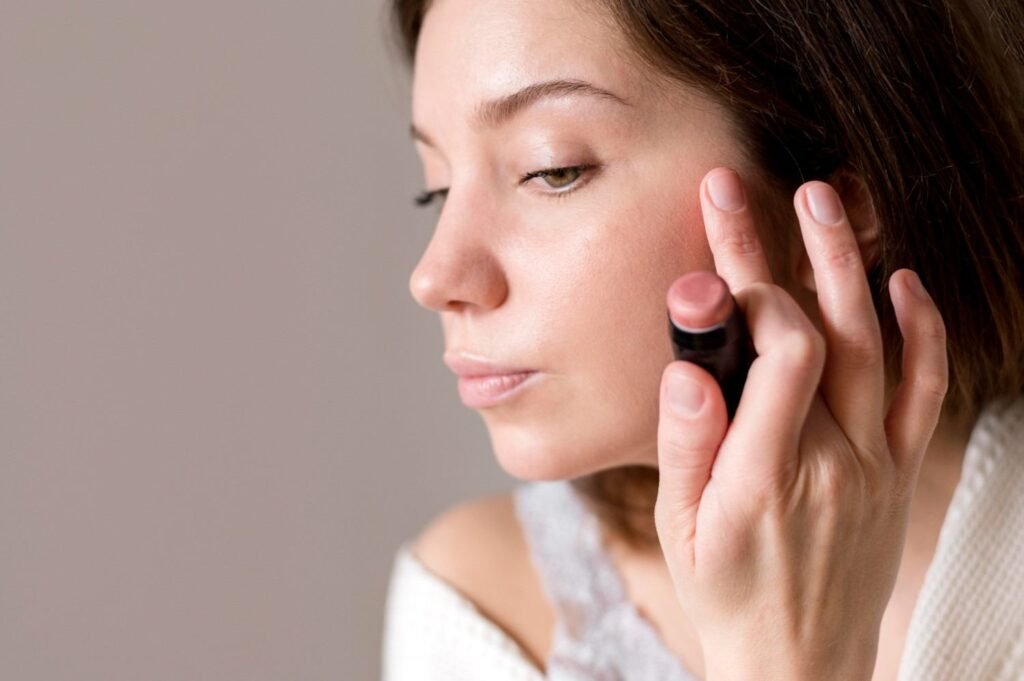
Green sits opposite red on the color wheel, so green-tinted makeup can visually neutralize redness. The right format depends on whether the redness is widespread or concentrated.
Use a Green Primer for Generalized Redness
If redness covers a larger area, I use a very thin layer of green primer. Make Up For Ever Step 1 Primer Redness Corrector and e.l.f. Tone Adjusting Face Primer are examples designed to reduce the appearance of redness before complexion makeup.
Use Concentrated Corrector on Strong Red Spots
For a red blemish, the creases around my nose, or a flushed patch, I prefer a cream corrector. I tap on the smallest amount, soften it until the green looks almost translucent, then let it settle before adding concealer.
Color-changing treatments are another option. Products in the Dr. Jart+ Cicapair range start green and blend toward a beige-toned finish.
Can a Skin Tint or CC Cream Replace Foundation?
Often, yes. A skin tint, tinted moisturizer, BB cream, or CC cream can soften uneven tone while allowing natural texture to remain visible. Understanding different skin pigmentation types can also help me choose whether I need simple tone-evening coverage or more targeted color correction.
Cetaphil Redness Relieving Daily Facial Tinted Moisturizer SPF 40 is formulated to neutralize the appearance of redness while providing mineral SPF. Summer Fridays Sheer Skin Tint offers sheer, buildable coverage and is designed to help even skin tone and reduce the look of redness.
When I want makeup for redness without full-coverage foundation, I look for terms such as sheer, lightweight, buildable, natural finish, and skin-like. If I need slightly more evening, I choose a CC cream but still ap
How Do I Spot-Conceal Redness So It Looks Natural?
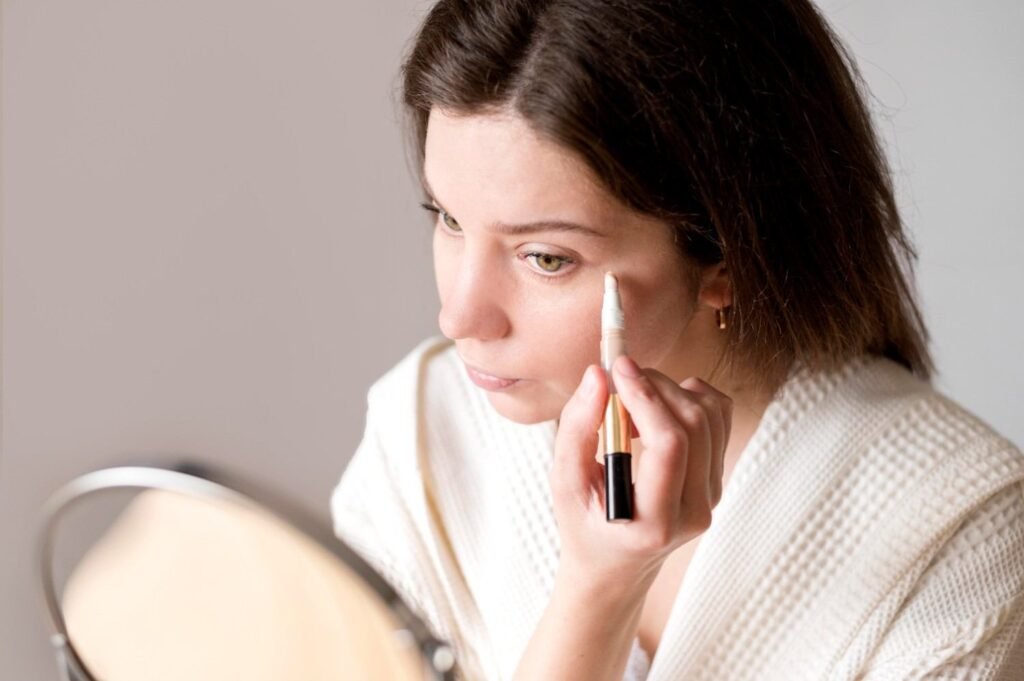
Spot concealing keeps this routine from becoming heavy. I apply my lightweight tint or corrector first, then choose a creamy concealer that closely matches my skin tone.
Using a small detail brush, I place concealer directly over stubborn redness. I keep the pigment concentrated in the center and blend only the edges with a fingertip, brush, or damp sponge.
I avoid concealer that is noticeably lighter than my complexion because it can make corrected areas look gray. I also press and tap instead of rubbing, which can lift the corrector underneath.
This technique works particularly well around the sides of the nose and on individual blemishes because I can maintain coverage exactly where I need it without creating an obvious patch of makeup.
Which Blush Colors Work Best After Correcting Redness?
I do not skip blush just because my cheeks naturally flush. Instead, I choose where the color goes.
Muted peach, soft mauve, warm bronze, and subdued neutral blush shades can add dimension without recreating the red effect I just corrected. I usually keep blush slightly higher on the cheeks rather than concentrating it around the center of the face. This placement can also work well with makeup for combination skin dry, because it lets me add color without overloading areas that may already have uneven texture or excess shine.
For a natural makeup look, I prefer to build blush slowly. Adding a small amount gives me more control than applying an intense pink or red shade and trying to soften it afterward.
How Should I Set Makeup Without Making Redness Look Dry?
I set only the areas that need it. A light dusting of translucent powder around the nose, chin, or oily parts of the T-zone can improve wear without flattening the complexion.
I avoid over-powdering dry cheeks because powder can emphasize texture. Redness-prone skin is not automatically oily, so I base setting on my actual skin type, heat, perspiration, and wear time.
This targeted setting method is especially useful during warmer US summers, when makeup around the nose and T-zone may move more quickly while the cheeks remain relatively dry.
What Mistakes Make Redness-Correcting Makeup Look Cakey?
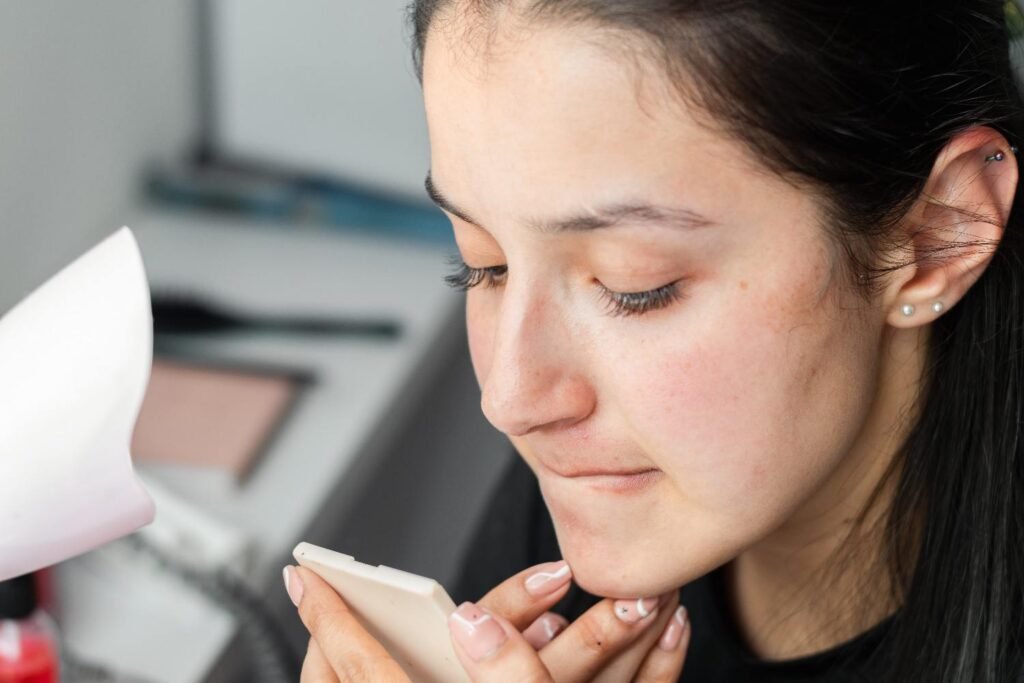
The biggest mistake is using too much product. Heavy green primer, thick concealer, and several layers can make corrected areas more noticeable than the redness itself.
Another mistake is trying to make every part of the face the same color. Leaving already-even areas alone usually creates a more believable finish.
I also pay attention to undertones. A concealer that is too light, pink, or otherwise mismatched can make spot correction more visible rather than less noticeable.
Persistent redness, burning, swelling, or worsening sensitivity is a reason to speak with a board-certified dermatologist rather than relying only on cosmetic coverage.
Frequently Asked Questions (FAQs)
1. Can I cover facial redness using only concealer?
Yes. If redness is mild or limited to a few areas, a skin-matching concealer may be enough. Apply it directly over the red area and blend only the perimeter.
2. Does green concealer work without foundation?
Yes. Green corrector can sit under concealer, tinted moisturizer, or skin tint. Use only enough to neutralize redness without leaving a visible green cast.
3. What is the best makeup for redness without full coverage foundation?
I would combine gentle skin prep, targeted green corrector, skin-matching concealer, and an optional sheer skin tint or CC cream. The best combination depends on the intensity of the redness and your skin type.
4. Can I wear blush over redness-prone skin?
Yes. Neutralize unwanted redness first, then add blush where you want intentional color. Soft peach, mauve, bronze, or neutral shades can create definition without making the face look overly flushed.
A More Natural Way to Even Out Redness
I get my best results when I stop treating facial redness as a reason to cover my whole face. Targeted correction gives me more control and usually looks fresher than an opaque base. For me, getting even skin tone is more about balancing discoloration strategically than hiding every part of my complexion.
By preparing the skin, using green only where needed, matching concealer carefully, choosing lightweight coverage, and setting selectively, I can create an even-looking complexion that still feels breathable and looks like real skin.
Leave a Reply