Perfume does not disappear because your skin “eats” fragrance. It fades because aromatic molecules leave your skin at different speeds. A 2025 study measuring fragrance evaporation on volunteers found that hydration, water loss, and skin-surface characteristics can influence that process, although the research involved only 10 people.
That chemistry explains the simplest answer to how to make perfume last longer on skin: start with hydrated skin, apply fragrance evenly, and avoid habits that encourage faster evaporation.
Why Perfume Lasts Longer on Some Skin
A fragrance works almost like a timed release. Highly volatile top notes—often citrus, herbs, and bright aromatics—leave first. Less volatile heart and base materials remain detectable longer. The Open University’s explanation of perfume chemistry notes that volatility helps determine why top, middle, and base notes emerge at different stages.
Skin is not an inert perfume strip. Temperature, hydration, airflow, perspiration, and the fragrance formula affect what eventually reaches your nose. That helps explain why one perfume may seem powerful on one person but comparatively short-lived on another.
In the recent evaporation study, hydration was the strongest measured skin factor associated with evaporation among the small volunteer group. More hydrated skin tended to retain certain less-volatile fragrance molecules better, while greater transepidermal water loss was linked with faster evaporation of some compounds.
The Best Way to Make Perfume Last Longer on Skin
1. Moisturize Before You Spray
Apply a thin layer of fragrance-free moisturizer to the areas where you plan to wear perfume. Allow it to settle briefly before spraying.
If you want to avoid competing aromas, choose “fragrance-free” rather than simply “unscented.” The American Academy of Dermatology explains that unscented products can still contain fragrance ingredients used to cover other odors.
A tiny amount of petroleum jelly may also provide a more occlusive surface on spots such as the wrists. Direct research on petroleum jelly specifically extending perfume wear is limited, however, so a normal fragrance-free lotion is the more practical starting point.
If your skin feels dry, tight, or irritated after using too many exfoliating products, learning how to repair your skin barrier after over-exfoliating can help you build a healthier base before applying fragrance.
2. Apply After Bathing—but Not Because Your Pores “Open”
A shower can improve fragrance application because it removes old scent, sweat, and surface debris while leaving the outer skin hydrated.
But pores do not literally open after warm water. Towel-dry, moisturize, let the lotion absorb, and then spray your perfume. Avoid freshly shaved, broken, sunburned, or irritated skin because the alcohol and fragrance ingredients may sting.
3. Use Pulse Points Strategically
Wrists, inner elbows, and the sides of the neck are traditional fragrance locations because warmth helps aromatic molecules move into the surrounding air.
That can improve projection, but there is a tradeoff: more heat can also encourage evaporation.
For longer wear, pair one warm pulse point with a more protected location, such as the upper chest or lower neck. The warmer area provides projection while the protected spot is less exposed to frequent hand washing, wind, and friction.
4. Spray and Leave It Alone
Rubbing your wrists together does not literally smash or “break” perfume molecules under normal conditions.
The more sensible reason to avoid vigorous rubbing is physical: it spreads the fragrance into a thinner layer, adds warmth, and can encourage the most volatile opening materials to disappear sooner.
Spray from several inches away, then allow the fragrance to dry naturally.
5. Match Fragrance Concentration to Your Goal
Higher fragrance concentrations often provide better persistence, but the wording on the bottle is not an absolute guarantee.
When deciding whether a more expensive fragrance is worthwhile, consider how often you wear it, how long you want it to last, and whether the added concentration provides a noticeable benefit; this same approach can help identify beauty products worth investing in.
The International Fragrance Association notes that terms such as eau de toilette and eau de parfum do not have one universally fixed international concentration definition. The ranges below reflect common industry practice.
| Fragrance Type | Typical Concentration | General Character |
| Eau de Cologne | 3–8% | Light and fresh |
| Eau de Toilette | 5–15% | Moderate wear |
| Eau de Parfum | 10–20% | Often fuller and longer-lasting |
| Extrait/Perfume | 15–40% | Usually richest and most persistent |
Composition matters as much as concentration. A woody eau de toilette with persistent base materials can sometimes outlast an eau de parfum dominated by bright citrus notes.
Try This Two-Wrist Longevity Test
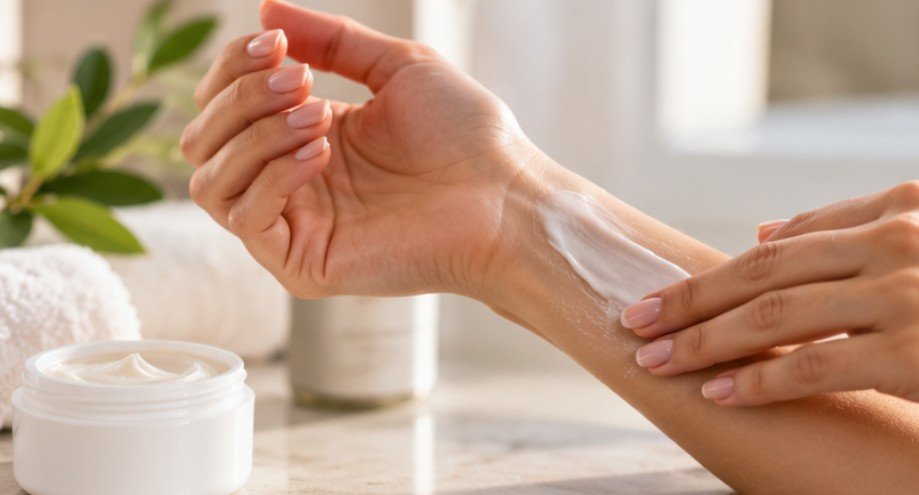
Instead of guessing which trick works, run a simple test on your own skin.
Start with clean wrists. Apply fragrance-free lotion to one wrist while leaving the other bare. Wait about two minutes, then spray each wrist once using the same perfume, distance, and amount. Do not rub either side.
Compare them after 30 minutes, two hours, four hours, and six hours. Avoid washing the area or applying additional fragrance.
If the moisturized wrist consistently remains easier to detect later, you have evidence that pre-moisturizing works for your skin and that particular fragrance.
Repeat the experiment another day because activity, temperature, humidity, and even your own sense of smell can change the result.
Why Your Perfume May Still Fade Quickly
You May Be Going Nose-Blind
Repeated exposure to the same odor can make you less conscious of it even though other people can still detect the fragrance.
Before adding several extra sprays, move into fresh air or ask someone nearby whether your perfume is still noticeable.
Your Perfume May Be Designed to Fade Lightly
Bright citrus, herbs, and airy “clean” accords often create an impressive opening but can disappear sooner than woods, musks, balsamic notes, and other slower-evaporating materials.
That is not automatically evidence of a cheap or poorly made perfume. Sometimes a transparent, short-lived character is part of the perfumer’s design.
Heat and Sweat Change Performance
A summer commute, outdoor activity, or warm workplace can noticeably change fragrance behavior.
Heat helps fragrance diffuse, which may make it stronger at first without necessarily making it last longer. Sweat, friction, and repeated washing can also remove or redistribute perfume.
During hot U.S. summers, applying a moderate amount to protected skin can be more effective than constantly respraying exposed wrists.
What About Spraying Perfume on Clothing?
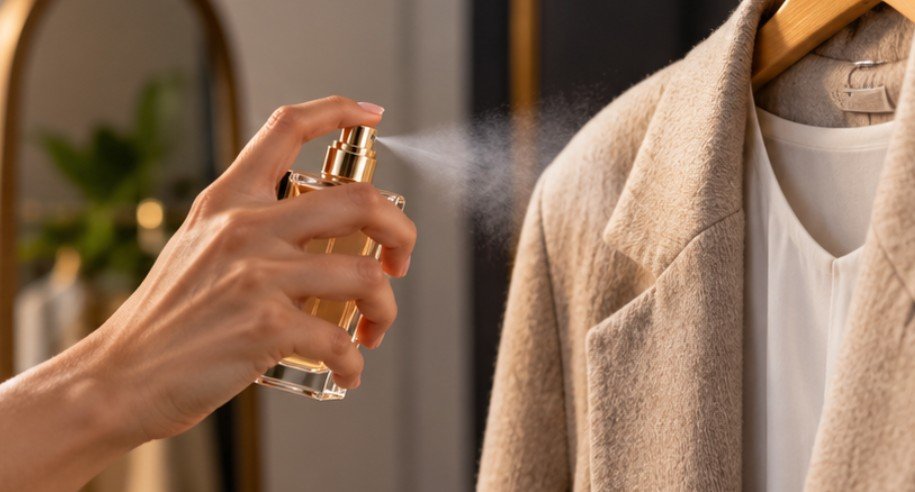
Fabric often retains fragrance longer than bare skin, so a light mist on clothing can extend your overall scent trail.
It does not technically make the perfume remain longer on your skin, though.
Always test a hidden area first. Perfume oils, alcohol, or colorants may affect silk, satin, suede, leather, and some pale or delicate fabrics.
Skin Safety Matters More Than Longevity
In the United States, perfumes and colognes marketed for application to the body are regulated as cosmetics. The FDA guidance on fragrances in cosmetics notes that some fragrance components can cause sensitivities or allergic reactions in susceptible people.
If a perfume produces itching, burning, redness, swelling, or a recurring rash, stop applying it to that area.
Fragrance is a recognized cause of allergic contact dermatitis, and a medical review indexed by the National Institutes of Health estimated fragrance allergy prevalence in the general population at approximately 0.7% to 2.6%.
Longer wear is never worth repeatedly irritating your skin.
Frequently Asked Questions
1. Does Vaseline make perfume last longer?
It may provide an occlusive surface that helps reduce rapid evaporation, but direct evidence is limited. A fragrance-free moisturizer is generally easier to spread evenly over larger areas.
2. Where should I spray perfume for the longest wear?
Try the upper chest, lower neck, inner elbows, and wrists. Include at least one area protected from regular washing, rubbing, wind, and direct airflow.
3. Why does perfume last longer on some people?
Hydration, skin temperature, water loss, environmental conditions, fragrance composition, and application habits all influence evaporation, so the same perfume can perform differently from person to person.
4. How to make perfume last longer on skin in hot weather?
Moisturize first, choose protected application areas, avoid rubbing, and favor fragrances with substantial heart or base notes. Heat increases diffusion, so spraying more does not necessarily extend wear.
A Better Fragrance Routine Beats More Sprays
The biggest improvement often happens before the perfume even leaves the bottle. Hydrate your skin, apply fragrance to clean areas, let it dry naturally, and choose locations based on both projection and protection. Then test the routine on your own skin instead of relying on universal fragrance rules.
Perfume longevity is partly chemistry and partly individual biology, so no trick can force every scent to remain noticeable all day. But controlling hydration, heat, friction, and fragrance concentration gives those aromatic molecules a better surface and a slower route into the air. That is far more reliable than simply spraying more.
Leave a Reply