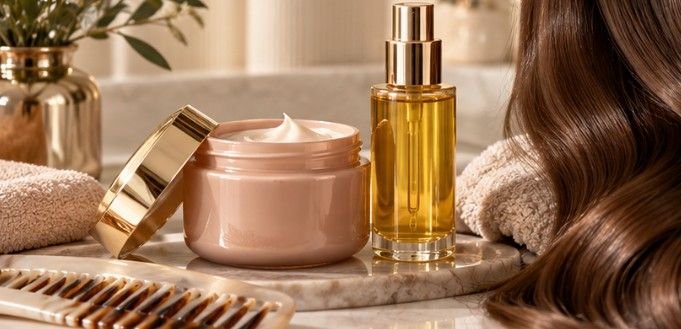
The most expensive product in your bathroom is not automatically your best investment. In beauty, value comes from measurable benefits: better protection, a proven active, reliable wear, less breakage, or enough repeated use to lower the cost per application. That is the standard I use for judging beauty products worth investing in.
The FDA does not pre-approve most cosmetics before sale, so a luxury price tag is never proof of safety or effectiveness.
Start With Products That Protect Skin
If I had to spend more in one category, I would prioritize prevention over products that simply disguise damage.
The American Academy of Dermatology identifies sunscreen and moisturizer as two of the most effective anti-aging purchases. For sunscreen, the goal is not prestige packaging; it is broad-spectrum SPF 30 or higher that you will apply generously and consistently. Texture, eye comfort, cast, and makeup compatibility can be worth paying for because they affect whether you use it.
The FDA also emphasizes broad-spectrum protection because ultraviolet exposure contributes to early skin aging and skin cancer risk. A $20 sunscreen applied correctly is therefore a better investment than a $70 one you ration.
Serums Must Earn Their Price
High-end serums can justify a splurge when the formulation—not the branding—is what costs more. Look for an active that addresses a specific concern, stable packaging, good tolerability, and realistic claims.
Retinoids are a useful example. The American Academy of Dermatology notes that they can help with acne, uneven tone, texture, fine lines, and wrinkles. Harvard Health reports that visible wrinkle improvement from prescription retinoids may take three to six months, with stronger results often taking six to 12 months.
That timeline matters. A $150 serum promising dramatic transformation in days deserves skepticism. Premium products such as PCA Skin Hydrating Serum or Bioeffect EGF Essence may offer elegant textures, but ingredients and consistent use should decide the purchase.
Redness Correctors: Pay for Finish, Not a Cure
Green-tinted complexion products can visually soften redness. A formula such as Erborian CC Red Correct may be worth more if it gives a convincing skin-like finish, layers well, and feels comfortable.
But color correction is not treatment for rosacea, eczema, or persistent inflammation. If redness burns, stings, worsens, or lasts, medical advice is a better investment than a more expensive corrector.
Luxury Makeup Can Be Worth It—Sometimes
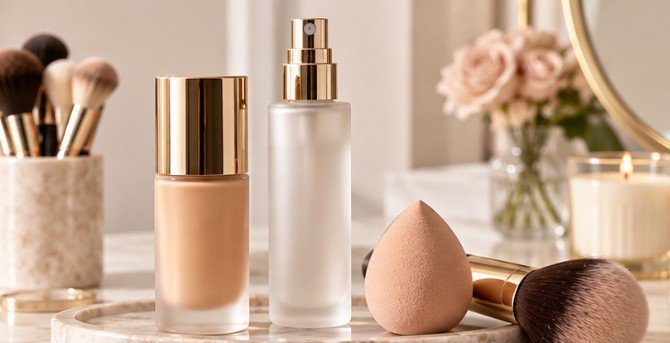
Foundation is one of the few makeup categories where a premium formula can earn its price through shade nuance, finish, wear, and consistency.
Dior Backstage Face & Body and Giorgio Armani Luminous Silk are premium examples. The splurge makes sense only if the product solves something a cheaper option does not: a much better shade match, less oxidation, better wear, or a finish you cannot duplicate.
Setting spray can also be functional. A product such as Charlotte Tilbury Airbrush Flawless Setting Spray is worth considering if it extends wear through long workdays, events, heat, or humidity. Test it on half your face against your usual routine before repurchasing.
Haircare: Spend Where Damage and Time Add Up
Hair can be weakened by repeated bleaching, dyeing, straightening, rough grooming, and heat. A review archived by the National Institutes of Health describes how these stresses can disrupt the cuticle, increase friction, and contribute to breakage.
That makes repair-oriented treatments more rational for bleached, relaxed, frequently colored, or heat-styled hair than for healthy, low-maintenance hair. Bond-building products such as Olaplex No. 3 may be useful when breakage is a real problem, but a damaged hair fiber does not biologically “heal.” The realistic goal is better strength, lubrication, feel, and reduced breakage.
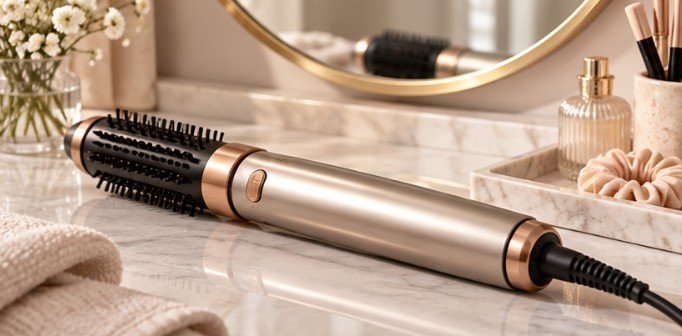
High-tech tools can also justify a premium if they save time. A device such as the Dyson Airstrait may make financial sense if it replaces separate drying and straightening steps several times a week. It makes less sense for someone who straightens twice a month.
Use the Cost-Per-Use Test
Before buying, ask four questions: Will I use it at least three times a week? Does it solve a problem my cheaper product does not? Is the benefit supported by evidence or something I can test? Will I finish it before it expires or becomes obsolete?
Then calculate price divided by expected uses.
| Purchase | Price | Expected uses | Cost per use |
| Premium serum | $120 | 120 | $1.00 |
| Foundation | $70 | 140 | $0.50 |
| Styling tool | $500 | 500 | $1.00 |
| Trend lipstick | $45 | 20 | $2.25 |
A costly tool used for years can be cheaper per use than a smaller impulse purchase that sits untouched.
What I Would Not Automatically Splurge On
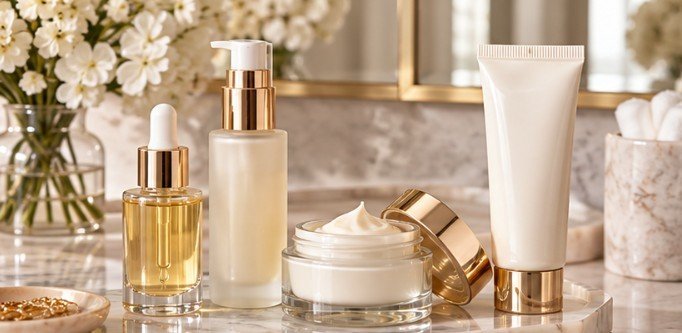
Price alone is a weak reason to upgrade cleanser, mascara, basic brow pencils, or trend-driven palettes. These categories often have strong lower-cost alternatives.
Be cautious with dramatic transformation claims. The Federal Trade Commission says objective health-related advertising claims should be backed by competent and reliable scientific evidence. Terms such as “clinically inspired,” “medical grade,” or “clean” can sound persuasive without proving that a product performs better.
Fragrance, packaging, and sensorial texture can still be valid reasons to spend more. They are luxury benefits, not proof of superior treatment.
A Smarter Order for Your Beauty Budget
If your budget is limited, I would prioritize a sunscreen you enjoy wearing, a moisturizer that keeps skin comfortable, one evidence-backed treatment for your main concern, complexion products that are difficult to shade-match, hair repair if you process or heat-style frequently, and tools only when they reduce time or replace another expense.
This framework is more useful than simply dividing beauty into “luxury” and “drugstore.” A relatively inexpensive sunscreen that prevents UV damage may deliver more meaningful value than a prestige cream, while an expensive foundation could be worthwhile if it is the only formula that reliably matches your undertone and survives a full workday.
Frequently Asked Questions
1. Are luxury skincare products always more effective?
No. Results depend on ingredients, formulation, stability, and whether the product suits your skin. Expensive packaging or fragrance can raise the price without improving performance.
2. Which beauty product is usually the best investment?
For many people, a comfortable broad-spectrum SPF 30+ sunscreen is a strong first investment because regular UV protection supports both skin health and appearance.
3. Are expensive hair tools worth it?
They can be if you style frequently and the tool saves time, replaces multiple devices, or gives more consistent results. Occasional users may not recover the cost.
4. How do I identify beauty products worth investing in?
Compare evidence, frequency of use, cost per use, return policy, ingredient transparency, and whether the product solves a specific problem better than your current option.
The Takeaway
The smartest splurge is rarely the product with the heaviest jar or loudest launch. It earns its place through protection, repeatable performance, useful actives, or time saved. I would rather own one sunscreen I happily wear every morning, one treatment I can tolerate for months, and one reliable styling tool than a drawer of expensive experiments.
Beauty spending becomes easier once you stop asking, “Is this luxurious?” and start asking, “What measurable job will this do for me, and how often will I benefit from it?”
Leave a Reply