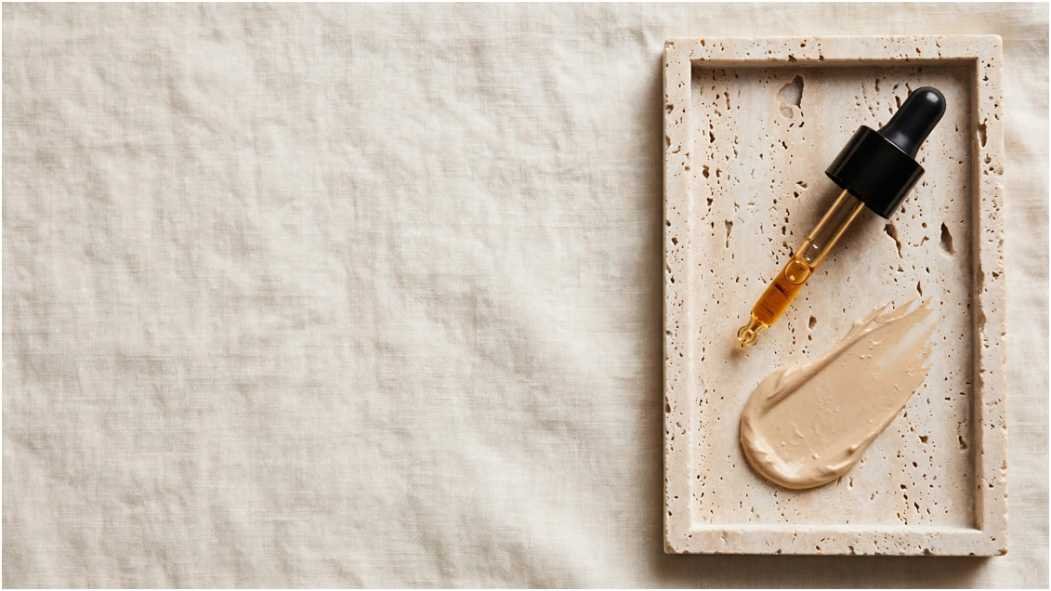
I spent years worsening my dark spots before I learned the biological mechanism behind them. To master how to fade post acne hyperpigmentation fast, you must tackle two fronts simultaneously: halt tyrosinase-driven melanin production and speed up epidermal shedding. Throwing random drugstore serums at your face disrupts your stratum corneum, creating fresh micro-inflammation that makes your dark marks darker.
According to clinical research published by the American Academy of Dermatology, post-inflammatory hyperpigmentation (PIH) occurs when cutaneous injury or inflammation prompts melanocytes to dump excess melanin into surrounding keratinocytes. Getting rid of that pigment requires surgical precision, not aggressive scrub sessions.
The Critical First Step: Diagnose PIH vs. PIE (The Glass Test)
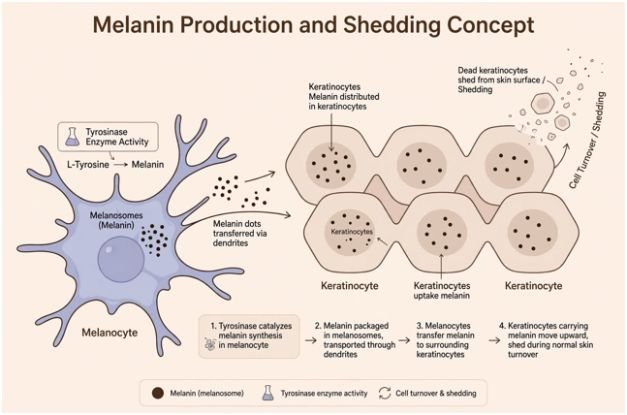
Before touching a single active ingredient, verify whether your spots are actually hyperpigmentation. Many people treat red or purple marks with pigment lighteners, only to see zero progress.
Take a clear drinking glass and press it firmly against the discoloration for three seconds while looking in the mirror.
| Test Result | Underlying Condition | Biological Cause | Primary Target |
| Turns white (blanches) | Post-Inflammatory Erythema (PIE) | Dilated, damaged micro-capillaries | Vascular calming, barrier repair |
| Stays brown/dark (no change) | Post-Inflammatory Hyperpigmentation (PIH) | Excess melanin pools in epidermal/dermal layers | Tyrosinase inhibition, accelerated cell turnover |
If the mark stays visibly brown or charcoal through the glass, it is PIH. If it temporarily disappears, you are dealing with vascular pooling. Treating erythema with heavy exfoliating acids keeps the tissue chronically inflamed, worsening the discoloration.
The AM Strategy: Arresting Melanin Synthesis
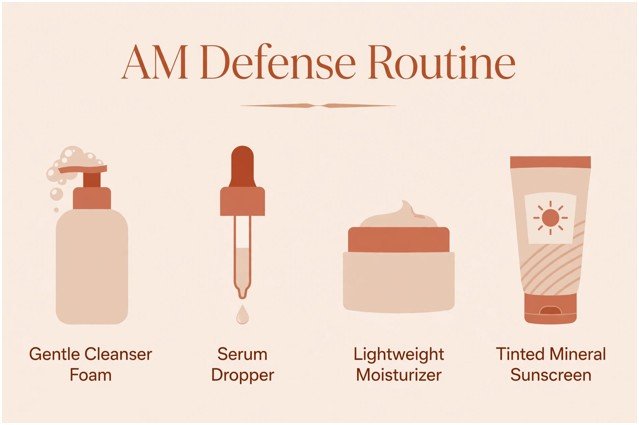
Your morning routine serves one primary goal: defend against melanocyte stimulation. Sunlight and high-energy visible (HEV) light signal your pigment cells to pump out melanin, undoing every bit of nighttime repair.
AM Flow: Gentle Cleanse ➔ Tyrosinase Inhibitor (Azelaic/Vitamin C) ➔ Barrier Hydration ➔ Broad-Spectrum Tinted SPF 50
Morning Actives: Tyrosinase Inhibitors Over Redundant Acids
Never layer multiple high-percentage acids in the morning. Pick one targeted tyrosinase inhibitor to suppress the enzyme responsible for pigment creation:
| Active Ingredient | Optimal Concentration | Mechanism of Action | Best Paired With |
| Azelaic Acid | 10%–15% | Selectively inhibits overactive melanocytes; calms residual inflammation | Niacinamide (2%–4%) |
| L-Ascorbic Acid (Vit C) | 10%–15% | Neutralizes free radicals; downregulates tyrosinase activity | Vitamin E + Ferulic Acid |
| Tranexamic Acid | 3%–5% | Slows melanocyte-keratinocyte chemical signaling | Alpha Arbutin (1%–2%) |
I stick with 15% prescription azelaic acid. It selectively targets abnormal pigment cells without bleaching the surrounding healthy tissue, making it exceptionally safe for deeper complexions.
Visible Light Defense: Iron Oxides Are Non-Negotiable
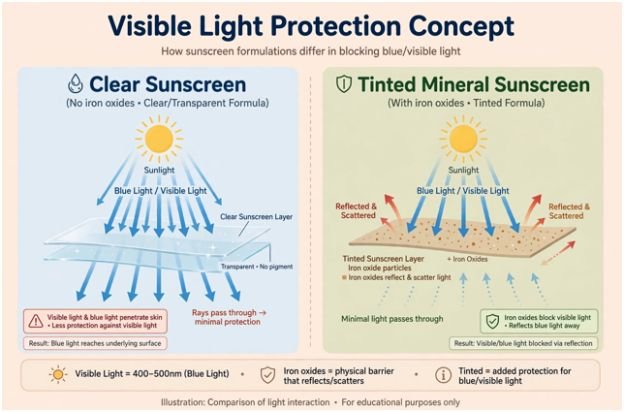
Standard chemical sunscreens absorb ultraviolet radiation, but they fail to block the visible light spectrum. A controlled trial in the Journal of Clinical and Aesthetic Dermatology revealed that high-energy visible (HEV/blue) light stimulates stubborn, long-lasting hyperpigmentation, particularly in Fitzpatrick skin types III through VI.
To counter this, choose a tinted mineral formula featuring iron oxides over clear sunscreens. Look for sunscreen for acne prone skin that won’t clog pores to find mineral formulas that shield against visible light without triggering fresh breakouts.
The PM Strategy: Accelerating Cellular Turnover
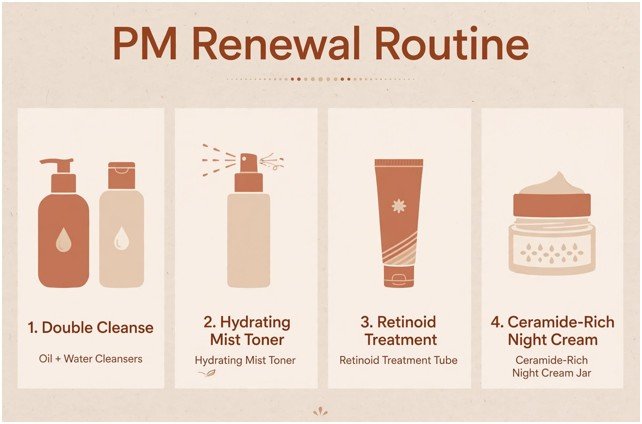
Nighttime is when you actively shed melanin-saturated skin cells and stimulate collagen matrix renewal. Establishing an uncompromising morning vs night skincare routine steps order ensures your actives perform without triggering barrier failure.
PM Flow: Double Cleanse (Oil + Water) ➔ Hydrating Toner/Mist ➔ Retinoid (Wait 10 min) ➔ Ceramide Lipid Cream
Retinoid Cycling Without Barrier Destruction
Topical retinoids represent the clinical gold standard for cell turnover. A study indexed in PubMed confirms that topical retinoids dramatically shorten keratinocyte transit time, lifting trapped melanin deposits weeks faster than unassisted desquamation.
| Retinoid Derivative | Strength Level | Speed of Conversion | Irritation Risk |
| Tretinoin | 0.025%–0.05% | Immediate (Pure Retinoic Acid) | High |
| Adapalene | 0.1% | High (Selective RAR-beta/gamma agonist) | Moderate |
| Retinaldehyde | 0.05%–0.1% | Fast (Single metabolic conversion step) | Low to Moderate |
| Encapsulated Retinol | 0.3%–1.0% | Moderate (Two conversion steps) | Low |
Start with Adapalene 0.1% or low-dose Tretinoin three nights per week. Apply your retinoid over completely dry skin, followed by a ceramide-rich moisturizer. Rushing into nightly application causes micro-tears, provoking secondary PIH.
Weekly Acid Resurfacing (When to Pause)
On one designated evening each week, bench your retinoid and use a chemical exfoliant. Alpha-hydroxy acids (AHAs) break the desmosome bonds binding pigmented dead cells to the stratum corneum:
- Glycolic Acid (7%–10%): Smallest molecular size; penetrates deeply for fast surface brightening on resilient skin.
- Lactic Acid (5%–10%): Larger molecular size; hydrates while loosening surface pigment.
- Mandelic Acid (10%): Lipid-soluble AHA; safe choice for darker skin tones prone to rebound hyperpigmentation.
Never combine your AHA toner and your retinoid in the same session. Doing so creates acute barrier inflammation, which triggers melanocytes to produce more pigment.
In-Office Escalation: When Topical Actives Plateau
Dermal hyperpigmentation sits deeper in the skin, where topical skincare cannot easily reach. If home care shows no measurable lightening after 12 weeks of strict compliance, professional intervention becomes necessary.
| Clinical Procedure | Target Depth | Expected Downtime | Best Suited For |
| Modified Jessner’s Peel | Superficial to Medium | 3–5 days flaking | Stubborn epidermal PIH |
| Q-Switched Nd:YAG Laser | Deep Dermis | 24–48 hours mild erythema | Safe pigment targeting in darker skin types |
| Medical Microneedling | Epidermal-Dermal Junction | 1–2 days redness | Mixed texture and post-inflammatory marks |
Always confirm your practitioner has direct experience treating your specific Fitzpatrick skin phototype. Heat generated by improper laser selection can induce severe, permanent post-inflammatory marks.
Stop Stacking Actives Like Skincare Candy
Fast results do not come from dumping ten brighteners on your face at once. Speed comes from keeping your skin barrier calm enough that melanocytes stop firing emergency pigment packets.
Pick one tyrosinase inhibitor for daylight protection, commit to one retinoid for nighttime cell turnover, and use a tinted mineral shield every single morning. Consistency beats product overload every time.
Frequently Asked Questions
1. How long does post-acne hyperpigmentation take to fade completely?
With strict broad-spectrum sun protection and daily targeted actives, epidermal PIH typically fades within 8 to 12 weeks, whereas untreated spots can persist for up to a year.
2. Can Vitamin C and Azelaic Acid be used together to speed up results?
Yes, but alternating them (Vitamin C in the morning, Azelaic Acid in the evening) works better than layering them simultaneously to prevent barrier irritation.
3. Does drinking water help fade hyperpigmentation faster?
Drinking water supports general skin turgor and cellular function, but it cannot dissolve or shed existing localized melanin deposits.
4. Why do my dark spots get darker even though I wear sunscreen?
Your sunscreen likely lacks iron oxides, meaning high-energy visible (blue) light continues to penetrate the skin and trigger melanocyte pigment production.
Leave a Reply