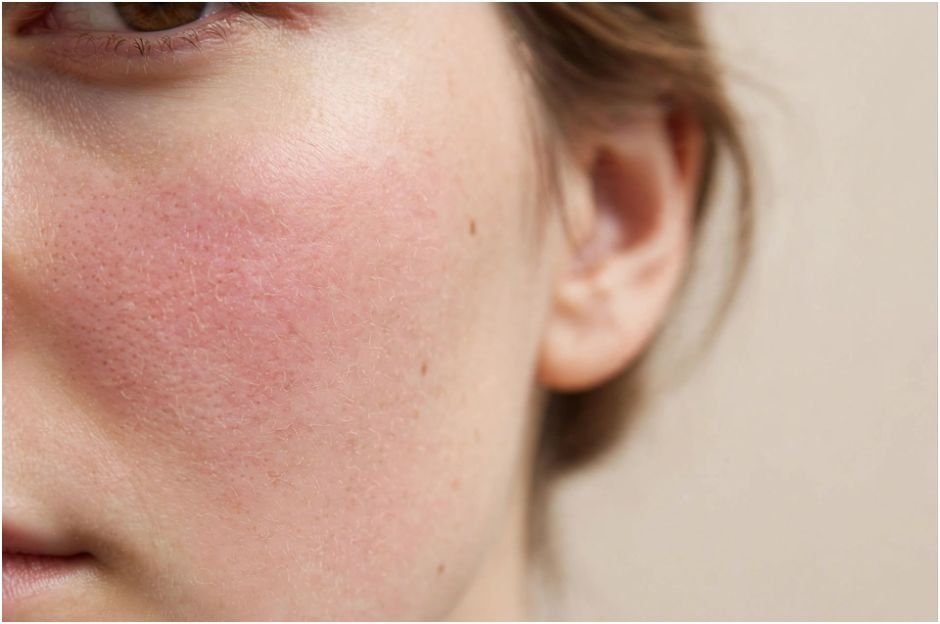
The telltale signs showed up suddenly: stinging splashes of water, tight shiny patches on my cheekbones, and foundation flaking off mid-day. If your face feels raw, hot, and reactive to basic products, you need to know how to repair damaged skin barrier from retinol before chronic inflammation sets in.
Overusing vitamin A degrades your protective outer shield, leading to acute trans-epidermal water loss (TEWL). When I pushed past mild flaking into genuine retinoid dermatitis, continuing my routine only compounded the damage. Through trial and clinical guidance, I engineered an exact recovery blueprint that reverses the burn, restores moisture equilibrium, and rebuilds resilience in 14 to 28 days.
The Biological Reason Your Face Is Burning
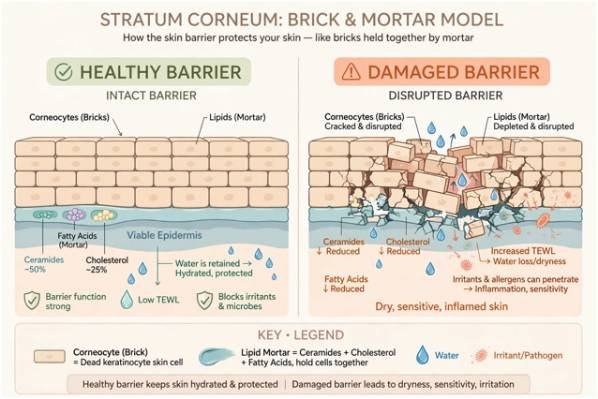
Retinoids accelerate cellular turnover. When you increase usage too fast or apply too high a concentration, dead corneocytes slough off faster than your basal layer can produce viable replacements.
The Stratum Corneum and Lipid Washout
Your stratum corneum functions like a brick wall: dead skin cells are the bricks, and intercellular lipids—primarily ceramides, cholesterol, and free fatty acids—serve as the mortar. Research archived on the National Center for Biotechnology Information (NCBI) demonstrates that topically applied retinoids deplete these essential surface lipids during the initial accommodation phase.
Without lipid mortar, your skin barrier develops microscopic fissures. Irritants penetrate deeper into the dermis while intrinsic water rapidly evaporates. This explains why an innocent splash of plain tap water burns: exposed sensory nerve fibers register changes in osmotic pressure and pH as acute chemical attacks.
Immediate Actions: The 72-Hour Elimination Phase
Halting cellular turnover acceleration gives your tissue a chance to recover. Continuing to use actives during barrier breakdown invites permanent hyperpigmentation and persistent erythema.
ACUTE BARRIER COLLAPSE (Day 0)
│
┌────────────────┴────────────────┐
▼ ▼
STOP ALL ACTIVES DROP WATER TEMP
(Retinol, AHA/BHA, Vit C) (Cool/Lukewarm Only)
│ │
└────────────────┬────────────────┘
▼
ELIMINATION PHASE: REST ONLY (Days 1–3)
Pausing the Chemical Aggressors
Put every exfoliating acid, ascorbic acid serum, and retinol formulation in a drawer. The American Academy of Dermatology (AAD) emphasizes simplifying your regimen to baseline essentials when managing contact dermatitis or retinoid-induced sensitivity. Even gentle cleansers with sulfates or essential oils trigger mast cell degranulation and vascular flushing.
Temperature and Mechanical Friction Control
Wash your face with cold or lukewarm water exclusively. Elevated water temperatures dissolve remaining surface sebum, compounding dryness. Ban washcloths, cleansing brushes, and towel rubbing. Gently press a soft paper towel to damp areas, leaving the face slightly moist for your hydrators.
Rebuilding the Barrier: The Physiological Lipid Protocol
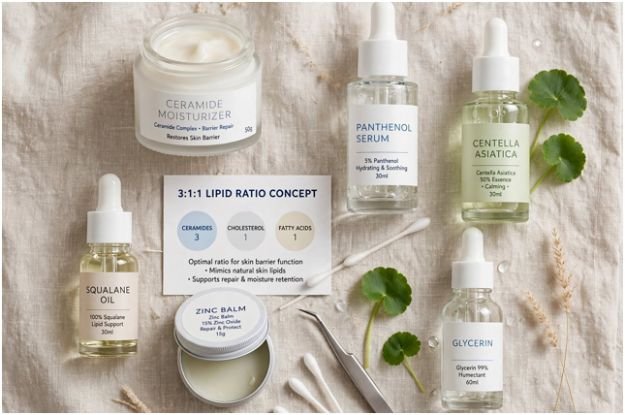
Barrier repair requires active biochemical components rather than basic emollients. Mineral oils and standard moisturizers coat the surface, but they do not integrate into the lamellar bilayers.
| Step | Focus | Hero Ingredients | Avoid Completely |
| Cleanse | Non-foaming wash | Glycerin, Oat Extract, Micellar lotion | SLS/SLES, Fragrance, Essential Oils |
| Hydrate | Cellular plumping | Panthenol, Centella Asiatica, Ectoin | Pure Hyaluronic Acid in arid air |
| Repair | Physiological lipid replenishment | 3:1:1 Ceramides, Cholesterol, Fatty Acids | Actives, Drying Alcohols |
| Seal | Physical occlusion | Squalane, Petrolatum, Zinc Salve | Exfoliants, Retinol, Clay masks |
Restoring the 3:1:1 Lipid Balance
Clinical literature published in the Journal of Clinical and Aesthetic Dermatology (JCAD) supports using a precise 3:1:1 ratio of ceramides, cholesterol, and free fatty acids. This ratio closely mirrors human sebum, enabling direct incorporation into damaged stratum corneum bilayers. Look for formulas containing ceramide NP, AP, and EOP combined with pure cholesterol and squalane.
I layer a rich lipid cream morning and evening. For inflamed hot spots around my nose and chin, I finish with a targeted zinc-infused recovery balm. Zinc acts as a mild anti-inflammatory agent, sealing damaged tissue without clogging pores.
Humectants Without the Osmotic Backfire
Hyaluronic acid serums can prove counterproductive in arid climates during acute barrier distress. When the ambient humidity sits below 40%, high-molecular-weight hyaluronic acid draws water from deeper cutaneous layers toward the parched surface, accelerating dehydration.
Prioritize panthenol (provitamin B5), glycerin, and ectoin instead. Apply your hydrators onto damp skin, then immediately apply your lipid moisturizer within thirty seconds. This locks water into the tissue before ambient air can evaporate it.
Sun Protection During Acute Retinoid Dermatitis
Ultraviolet radiation degrades newly formed extracellular matrix proteins. Chemical sunscreen filters function by absorbing UV radiation and transforming it into heat energy within the tissue. On an inflamed face, this thermogenic conversion triggers stinging, facial heat, and erythema.
Switch entirely to an all-mineral sunscreen containing 10% to 20% non-nano zinc oxide. Zinc protects against both UVA and UVB rays while calming vascular reactivity. If a mineral sunscreen feels drying, apply a generous layer of ceramide-rich moisturizer underneath to maintain an occlusive moisture seal.
The Reintroduction Threshold: Testing Your Barrier Resilience
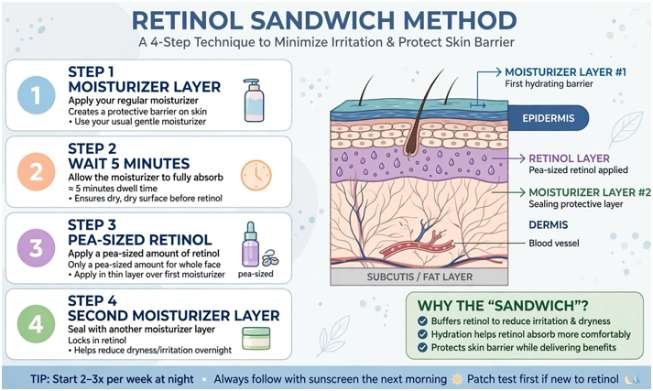
Do not reintroduce retinol simply because surface peeling stopped. The stratum corneum requires approximately 28 days to complete a full desquamation cycle.
Wait until your skin passes this baseline resilience test: a gentle cleanser, lightweight humectant, and baseline moisturizer cause zero stinging, redness, or heat for seven consecutive days.
BARRIER HEALED (Zero Stinging for 7 Days)
│
▼
Step 1: Apply Thin Ceramide Moisturizer
│
▼
Step 2: Wait 5 Minutes (Skin Dries Completely)
│
▼
Step 3: Apply Pea-Sized Retinoid (1x/week)
│
▼
Step 4: Seal with Second Layer of Moisturizer
The Buffer Sandwich Framework
Reintroduce vitamin A by applying a pea-sized amount once per week using the sandwich technique. Apply a base layer of lightweight moisturizer, wait five minutes for it to absorb, apply your retinol, and cap it with another layer of barrier cream.
This slows the penetration rate of the active ingredient across the skin layers, preserving your hard-won lipid barrier while providing cellular turnover benefits.
Your Retinol Recovery Playbook (FAQ)
1. How long does it take to repair a damaged skin barrier from retinol?
A mild barrier disruption recovers in 14 days, while severe retinoid dermatitis requires 4 to 6 weeks of dedicated lipid restoration.
2. Can I slug with pure petrolatum over active retinol?
Never apply heavy occlusives like petrolatum over retinol, as trapped active ingredients penetrate deeper and cause chemical irritation.
3. Does a damaged skin barrier cause acne breakouts?
Yes, barrier micro-tears allow opportunistic bacteria to penetrate pores while dehydration triggers compensatory, pore-clogging sebum production.
4. How do I know when my skin barrier is fully repaired?
Your barrier is fully healed when rich moisturizers, mineral SPF, and cool tap water produce zero burning, tightness, or persistent redness.
Glow Back from the Brink
Overdoing retinol is a rite of passage for skincare enthusiasts, but treating retinoid burn like a race only prolongs the recovery cycle. Treat your complexion with patience, feed it real physiological lipids, and cut out the actives until your baseline is fully restored.
Once your skin feels smooth and resilient again, reintroduce your favorite retinoid slowly—because consistent, irritation-free use always delivers better results than intense, painful treatments.
Leave a Reply