Category: Devices & Accessories

  • Makeup Tools That Simplify Everyday Routines and Keep Your Kit Organized

    Makeup Tools That Simplify Everyday Routines and Keep Your Kit Organized

    I used to think a better makeup routine meant having a bigger collection. My drawer filled with brushes, sponges, sharpeners, tweezers, and little gadgets, yet I still wasted time searching for the one tool I wanted. Once I paid attention to what I actually used each morning, I noticed something obvious: a smaller group of dependable tools made getting ready much easier.

    I also realized that organization matters almost as much as the tools. When my everyday brushes were buried beneath products I rarely touched, even a five-minute routine became frustrating. Keeping useful tools visible, clean, and easy to grab changed the rhythm of getting ready, and it made my kit feel more intentional without making it feel bare.

    Why the Right Makeup Tools Make Daily Routines Easier

    The best everyday makeup tools solve small problems repeatedly. A brush with the right shape can spread foundation evenly without repeated blending. A soft sponge can quickly soften concealer edges. A dual-ended brush can handle two jobs while taking up the space of one.

    Choose tools around your actual routine. The goal is not perfection. It is removing the little pauses that add up when you are getting ready before work, school, errands, or a night out. Someone who wears tinted moisturizer, cream blush, mascara, and brow gel does not need the same collection as someone who regularly creates full glam eye looks. Your daily products should determine your daily tools. That is where simplicity helps.

    Makeup Tools Worth Keeping Within Reach

    Makeup Tools Worth Keeping Within Reach

    A versatile complexion brush is one of the most useful pieces in a compact kit. Look for a shape that can blend foundation, skin tint, cream bronzer, or blush without requiring a separate brush for every formula. Medium-density synthetic bristles are practical for liquid and cream products because they distribute product smoothly and clean relatively easily.

    A makeup sponge earns its place when you want fast, controlled blending. A damp sponge can soften foundation or concealer around areas where a brush may leave visible edges. It can also sheer out heavier coverage, which is useful when your morning routine needs to move quickly.

    An eyelash curler and a spoolie are similarly compact additions. The curler can open up the eyes before mascara, while the spoolie can shape brows, soften excess brow product, or separate lashes. These tools take seconds to use and are easy to keep together.

    A dual-ended brush can go further. One end might handle complexion work while the other is designed for smaller areas, giving you two functions without doubling storage space. For people who travel or keep a small vanity, that flexibility is genuinely useful.

    Make Organization Part of the Routine

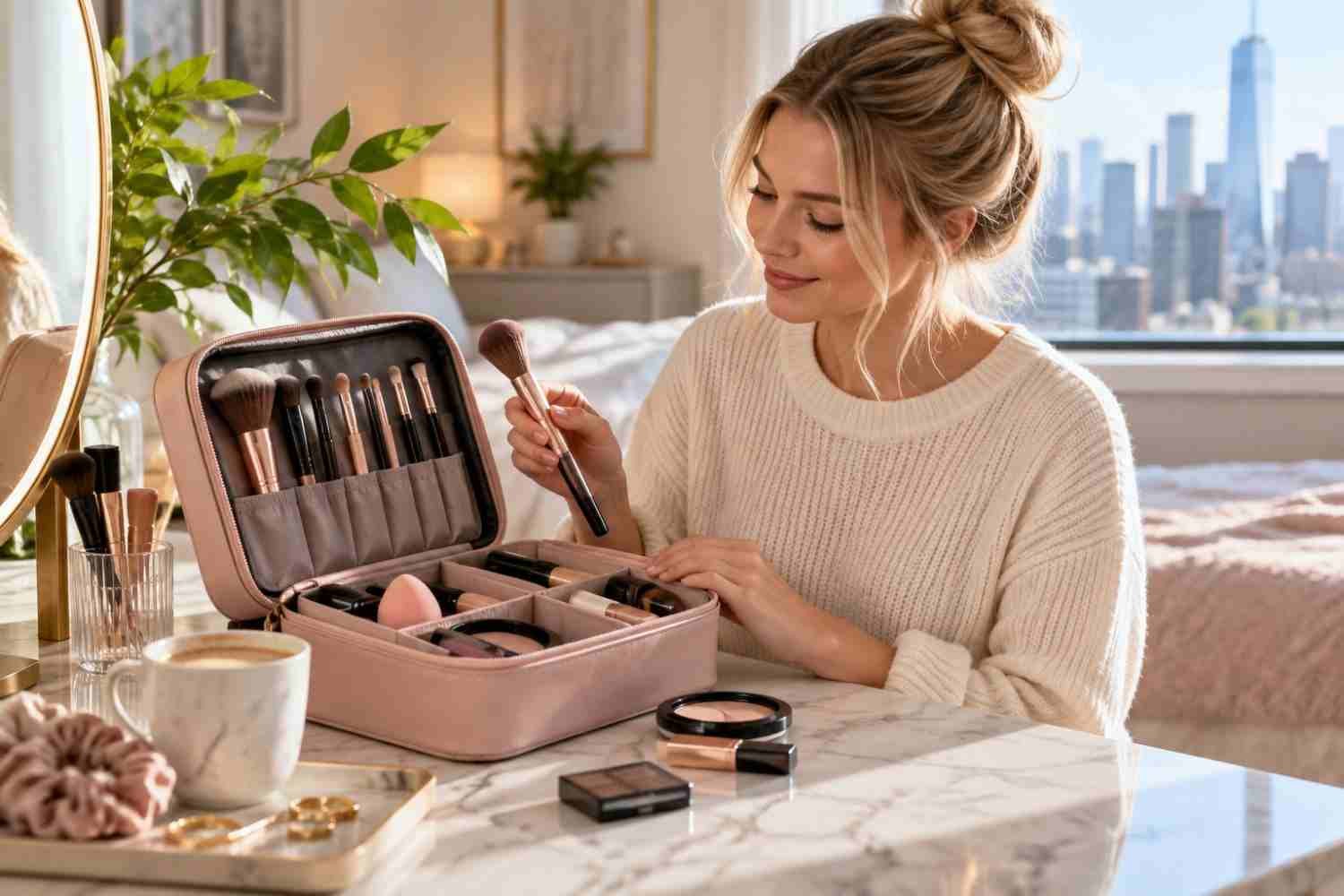
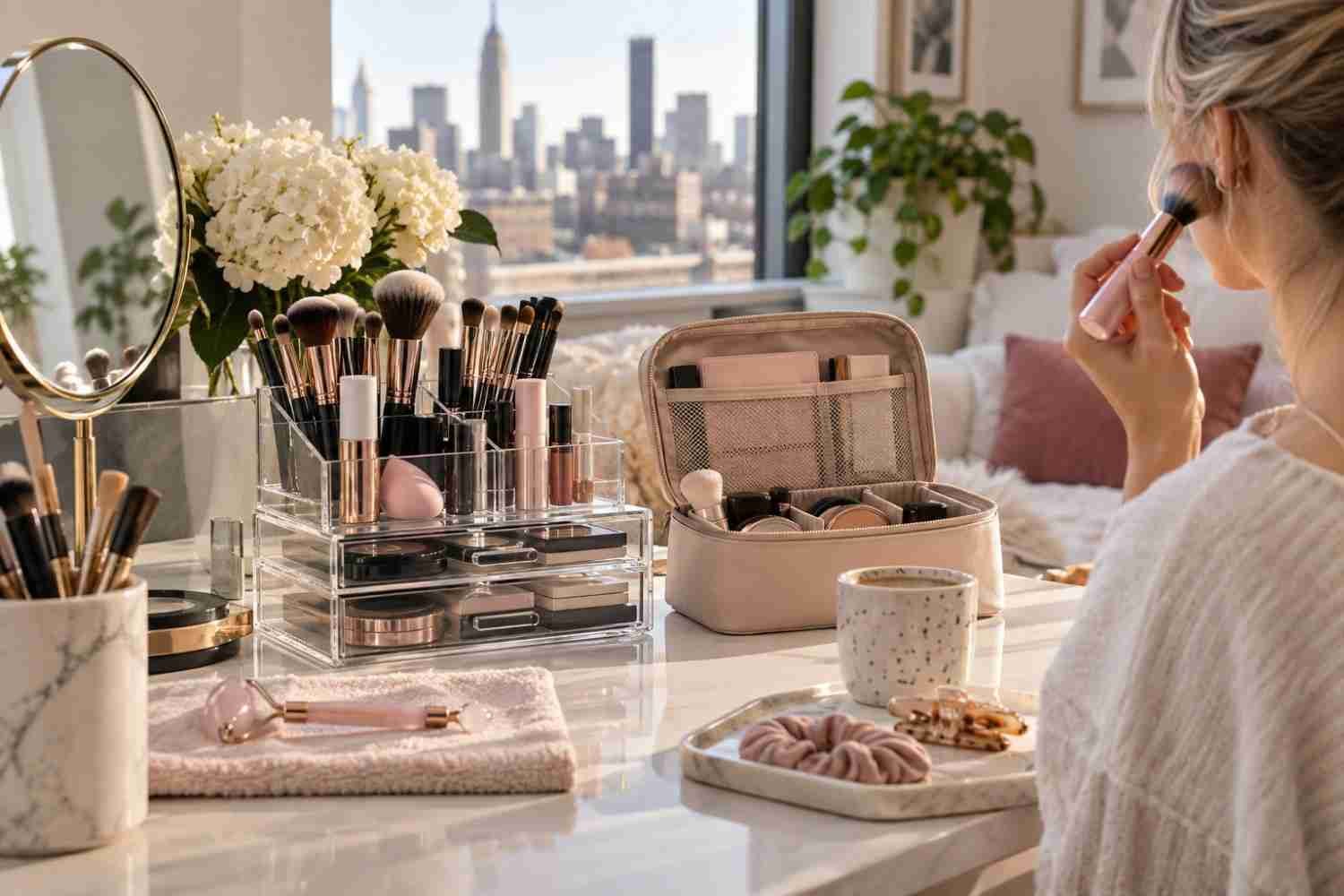
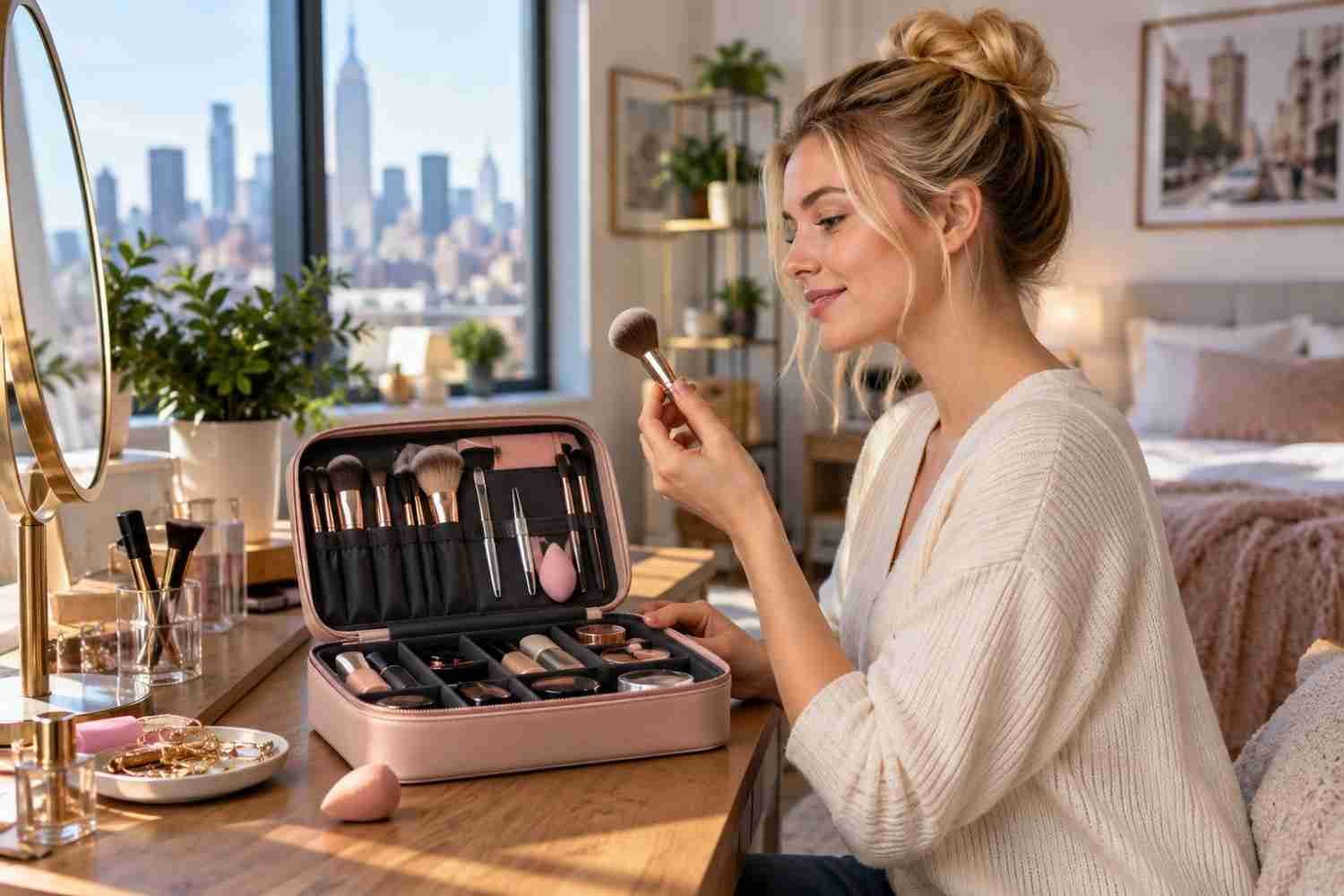
    A good organization system should make the next use easier. Separate everyday tools from occasional ones. Keep brushes and applicators you reach for most often in an open cup, shallow tray, or compact organizer where their shapes are immediately visible.

    Vertical storage can help with brushes and palettes because it uses less counter space and lets you see what you own. Clear compartments can also prevent buying another brush simply because the one you already have disappeared underneath everything else.

    This is where time-saving beauty tools for everyday use become more practical. The benefit is not only that a tool performs quickly. It is that you can find it quickly, use it confidently, and put it away without creating another mess.

    Cleanliness deserves a place in the system, too. Brushes and reusable sponges collect makeup residue and should be cleaned regularly according to their materials and use. Keeping a small cleaning routine alongside storage prevents buildup from becoming a bigger chore later.

    When Specialized Tools Earn Their Place

    When Specialized Tools Earn Their Place

    Specialty tools can be worthwhile when they solve a problem that appears often. A fine brow tool makes sense for someone who regularly shapes brows. A precise eyeliner brush can help someone who prefers detailed eye looks. A lash tool may be unnecessary for one person and indispensable for another.

    The mistake is treating every new beauty tool as essential. Before adding something, ask whether it performs a job your existing tools cannot handle comfortably. If the answer is no, leaving it out may make your routine better.

    This logic extends beyond makeup. A compact nail-care setup can complement a streamlined beauty space when each item has a clear purpose. Keeping professional nail tools for home use in a separate, organized section prevents manicure supplies from getting mixed into everyday makeup while keeping them accessible.

    Build a Smaller Kit Around Your Habits

    Start by tracking the tools you reach for during a normal week. Those repeated choices reveal more than a shopping list. If one brush handles several products well, keep it accessible. If another has not been used in months, it may belong in secondary storage.

    Storage should support that decision-making process rather than become another project. A small organizer with visible sections can be enough. There is no need to fill every compartment. Empty space can be useful because it gives frequently used tools room to stay visible.

    FAQs: Makeup Tools That Simplify Everyday Routines and Keep Your Kit Organized

    1. What makeup tools are most useful for everyday routines?

    A versatile complexion brush, makeup sponge, detail brush, spoolie, and eyelash curler cover common daily tasks without creating unnecessary clutter.

    2. How many makeup brushes do I actually need?

    There is no fixed number. A small collection works well if each brush serves a purpose and matches the formulas and looks you use regularly.

    3. How should I organize everyday makeup tools?

    Keep frequently used brushes and applicators visible and easy to reach. Store occasional tools separately so they do not bury the items you use most.

    4. Are multipurpose makeup tools worth buying?

    Yes, when they perform different jobs comfortably. Dual-ended or multitasking tools can reduce storage needs and simplify travel and daily routines.

    Why A Simpler Kit Often Works Better

    The most useful makeup collection is rarely the one with the most pieces. It is the one that removes small obstacles from the routine. When familiar tools are clean, organized, and suited to the products you actually wear, getting ready becomes less about searching and more about applying makeup.

    A thoughtful kit does not make beauty boring. It makes room for the parts you enjoy.

  • Beauty Patches With Smart Sensors: What to Know Before Trying Them

    Beauty Patches With Smart Sensors: What to Know Before Trying Them

    I started noticing how many skincare products now promise more than surface-level care. Patches once meant a small sticker for a breakout or a dose of an ingredient, but newer concepts make that sticker part of a sensing system. That shift caught my attention because the appeal is easy to understand: instead of guessing what skin needs, a wearable patch could potentially collect information while it sits on the skin.

    I also found myself wondering where the technology ends, and the marketing begins. A patch that measures moisture or UV exposure sounds impressive, but measurement quality, interpretation, comfort, and availability matter just as much as the sensor itself. That distinction is worth understanding before treating smart patches as a replacement for familiar skincare tools.

    What Makes a Beauty Patch Smart?

    A conventional beauty patch generally has one job. It may protect a blemish, hold an ingredient against the skin, or create an occlusive environment that supports topical treatment. A smart patch adds electronics or sensing materials that can collect information from the skin or its immediate environment.

    Flexible sensors can conform closely to moving skin rather than behaving like rigid electronics. Depending on the system, they may monitor hydration, temperature, UV exposure, mechanical changes, or chemical signals associated with sweat. Some experimental platforms can send readings to a phone or another receiver for analysis.

    What Can the Sensors Actually Measure?

    What Can the Sensors Actually Measure

    The phrase smart sensor can make a product sound more capable than it is, so the specific measurement matters. Skin hydration is not the same thing as measuring every aspect of skin health. A hydration-focused sensor may estimate moisture-related changes at the skin surface, while another system might examine temperature or ultraviolet exposure.

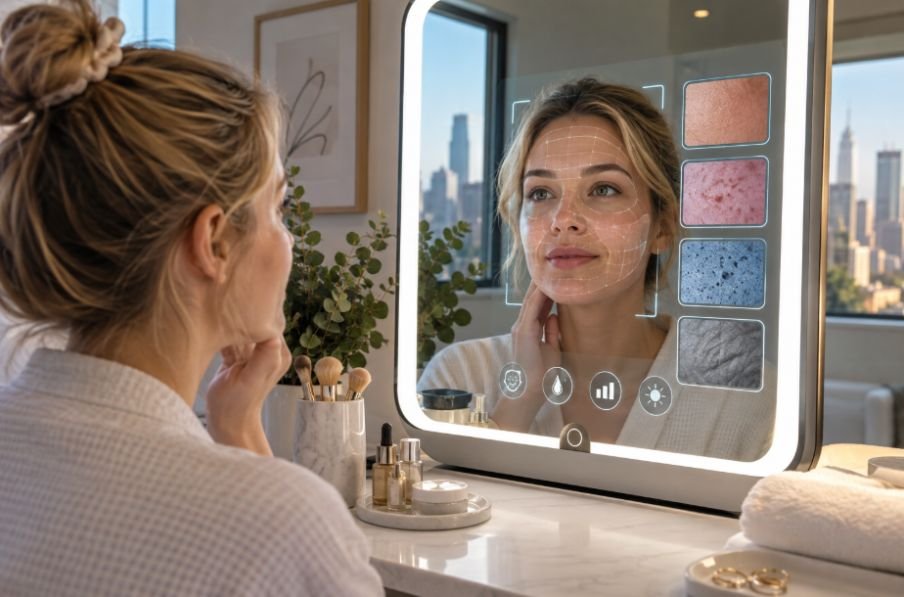
    Redness presents another challenge. It can be influenced by irritation, temperature, blood flow, product use, and other factors. A future wearable may combine optical measurements with other signals, but a sensor reading should not automatically be treated as a medical diagnosis.

    How Skin Data Could Become Personalized Care

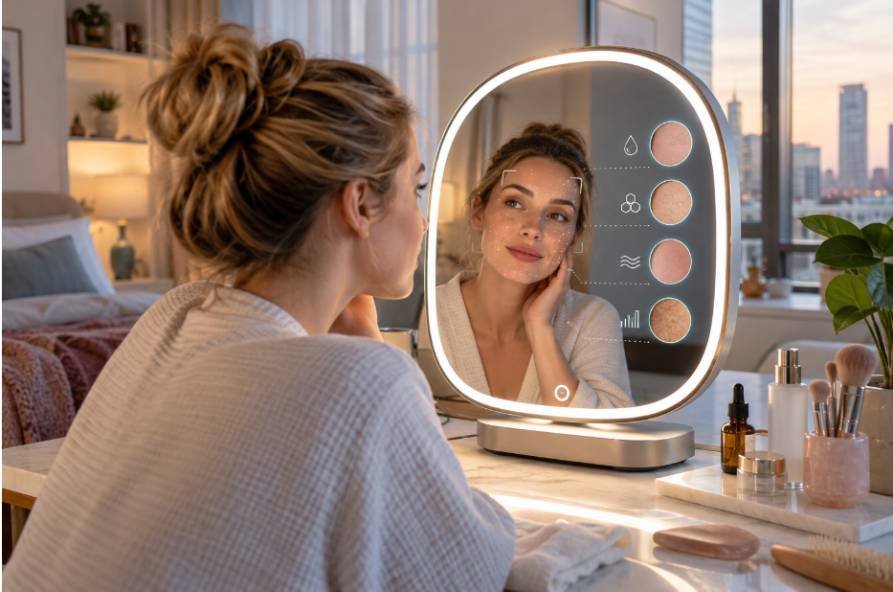
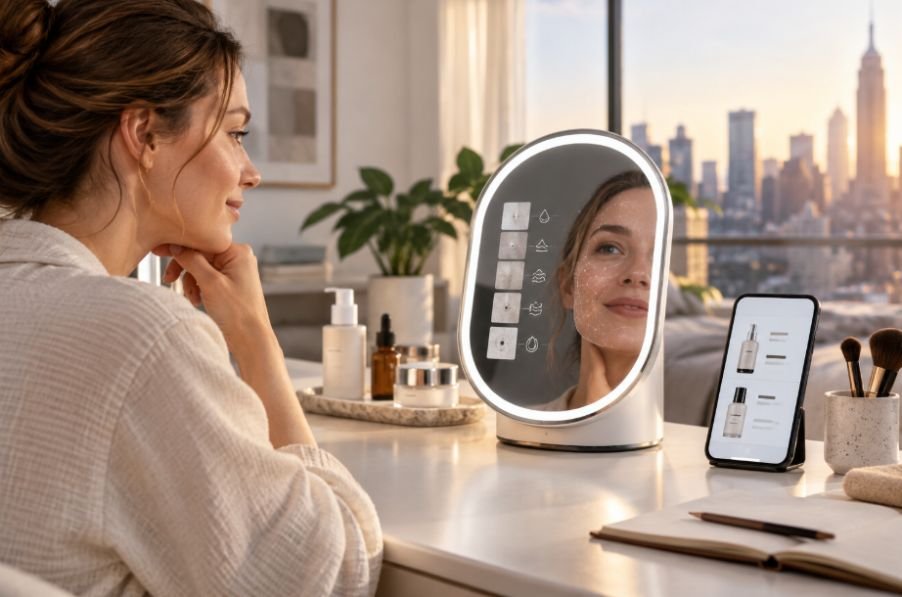
    The real appeal of smart skincare is not the sensor alone. It is what happens after a measurement is collected. A connected patch could transmit data to an app, where software organizes changes over time and presents them in a form that is easier to understand.

    That could eventually make skincare less dependent on occasional snapshots. Instead of deciding that skin seems dry today, a person might see a longer pattern of changing moisture levels or environmental exposure. With enough reliable data, algorithms could potentially help tailor product recommendations or routines.

    The technology is still developing, though. Wearable sensors have to deal with movement, sweat, skin contact, signal interference, calibration, and differences between users. A reading can be affected by how consistently the patch sits on the skin. More data does not automatically mean better advice if the underlying measurement is unreliable.

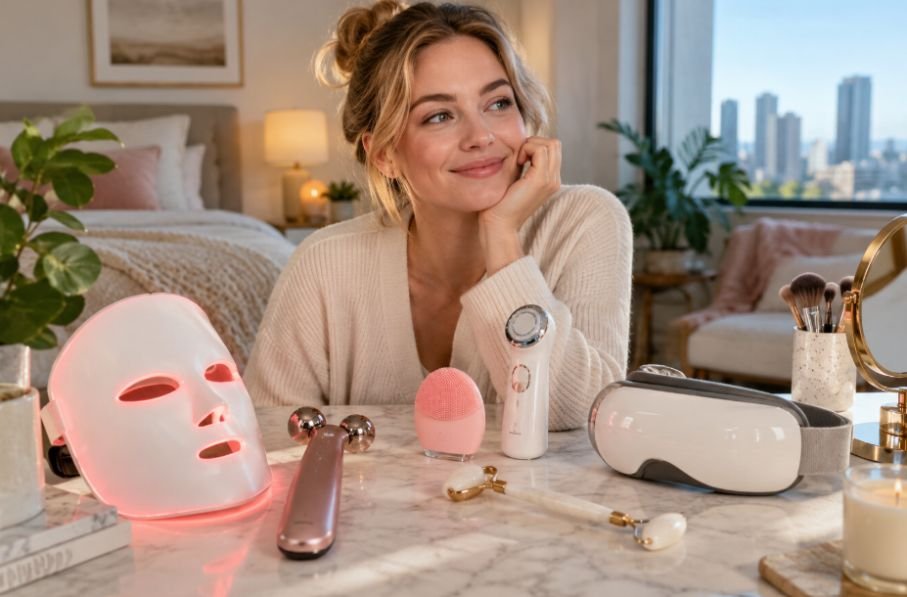
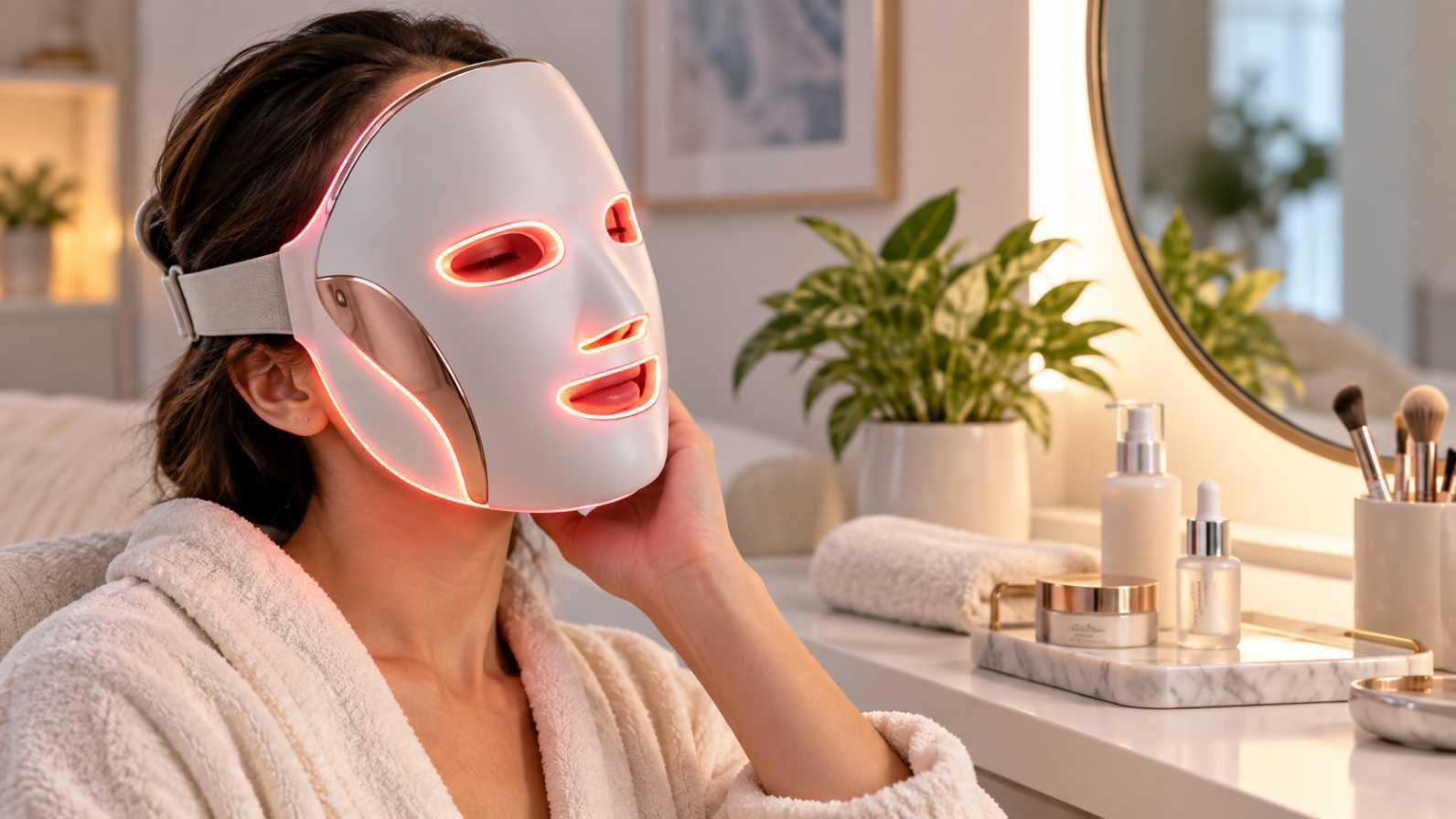
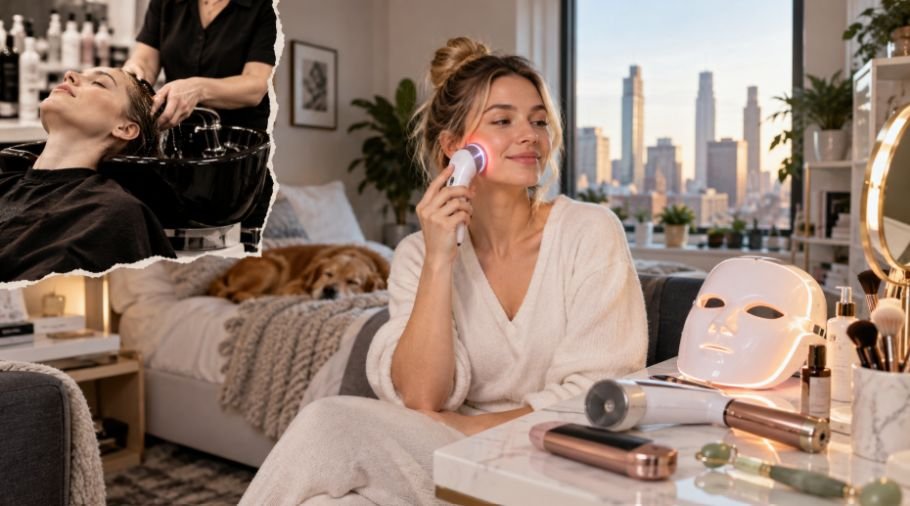
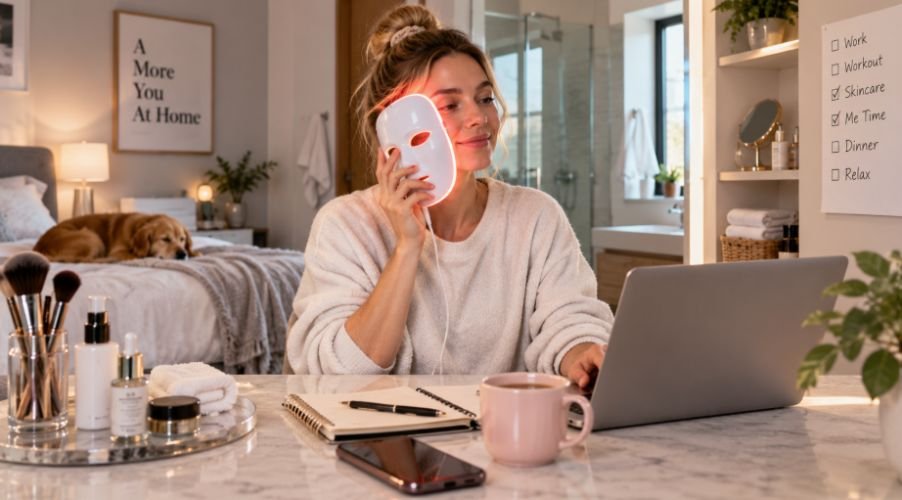
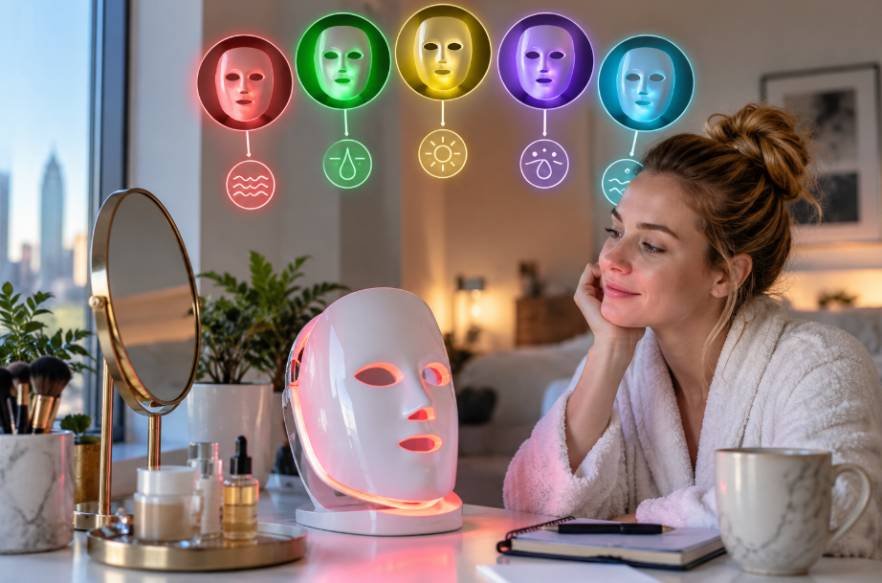
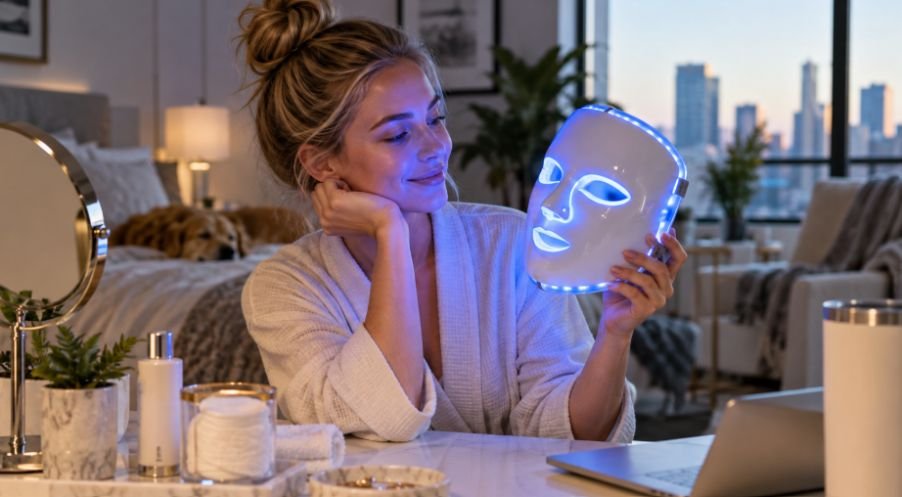
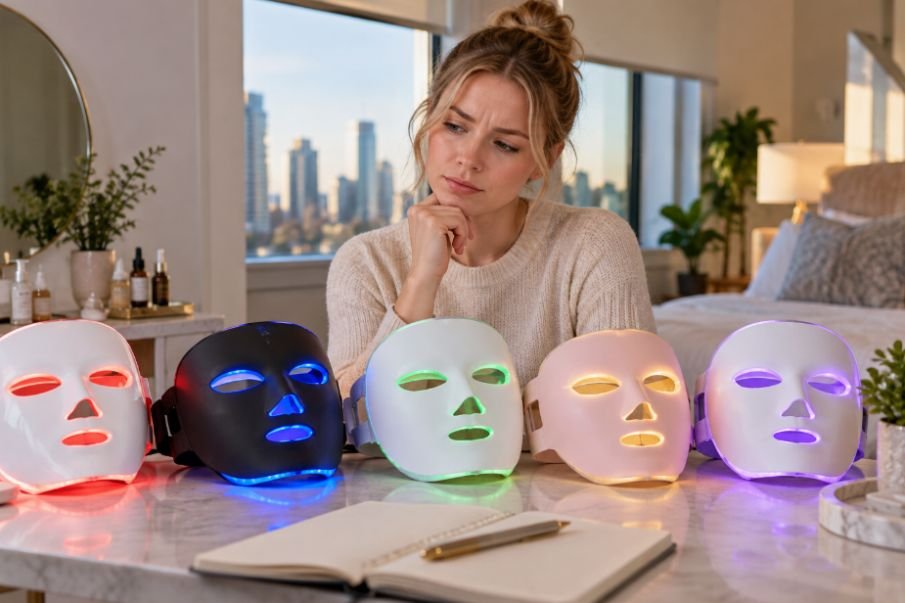
    For people already exploring LED face masks with multiple light wavelengths, smart patches represent a different approach to beauty technology. Light-based devices generally deliver a treatment, while sensing patches are designed around collecting information. Future products could potentially combine sensing and treatment, but those are separate technical challenges.

    Where Microneedles Fit In

    Another term likely to appear alongside smart patches is microneedle technology. Microneedles use tiny structures designed to interact with the outer skin barrier and can be investigated for controlled delivery of cosmetic or therapeutic ingredients.

    That does not mean every smart patch contains microneedles. Sensing and delivery are different functions. One system may measure a skin parameter, another may deliver an ingredient, and a more advanced platform could eventually combine both.

    What to Check Before Trying One

    Before buying a product described as smart, look beyond the technology language. The first question is simple: what does the patch measure? A specific claim is more useful than a vague promise about analyzing skin.

    It is also worth checking whether results are displayed directly, interpreted through an app, or used only during product testing. Look for information about wear time, adhesive materials, connectivity requirements, and whether repeated measurements are comparable.

    Finally, consider whether the product is available to consumers. Recent beauty-tech research shows progress in wearable skin sensing, but commercially accessible diagnostic-style patches remain limited. Some impressive systems are still being demonstrated, tested, or developed rather than sold as ordinary skincare products.

    Where Smart Beauty Patches Could Go Next

    Where Smart Beauty Patches Could Go Next

    The most interesting possibility is a shift from reactive skincare toward more measured personalization. Future patches could combine several sensors, track patterns across different conditions, and connect those measurements with a routine. A system might eventually recognize that environmental exposure, moisture changes, and product use are interacting rather than treating each factor separately.

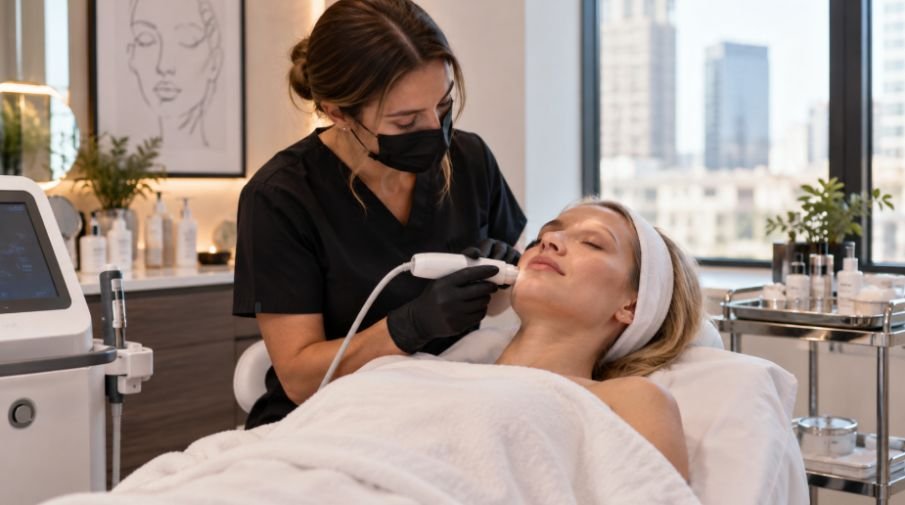
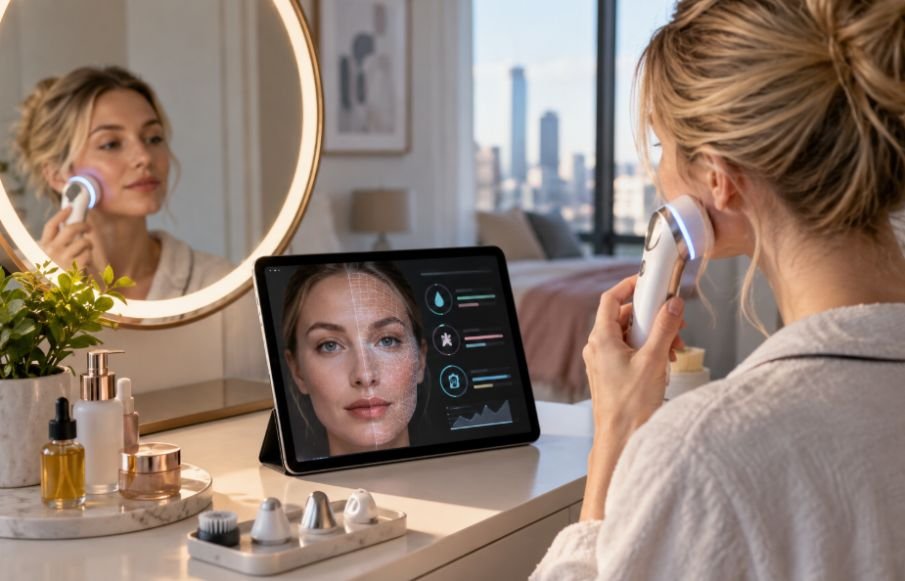
    For readers interested in next-generation facial sculpting devices, the broader trend is worth watching. Beauty technology is moving toward devices that do more than perform a single visible function. The next step may be systems that measure, interpret, and respond, although the distance between a promising prototype and a dependable consumer product can be substantial.

    FAQs: Beauty Patches With Smart Sensors: What to Know Before Trying Them

    1. What are beauty patches with smart sensors?

    They are wearable patches designed to collect information from the skin or surrounding environment. Depending on the technology, measurements may include hydration, temperature, UV exposure, or chemical signals.

    2. Are smart beauty patches widely available?

    Not yet. Research and development are advancing, but many skin-monitoring patches remain experimental or limited in commercial availability.

    3. Can a smart patch diagnose a skin condition?

    A sensor reading should not automatically be considered a diagnosis. Consumer devices may provide measurements or trends, while clinical diagnosis requires appropriate evaluation and validated medical tools.

    4. Do smart patches replace skincare products?

    Generally, no. A sensing patch and a treatment product perform different jobs. Some future systems may combine monitoring with ingredient delivery, but that technology is still developing.

    Why Better Measurement Could Change Skincare

    The promise of smart patches is not really about putting more electronics into beauty products. It is about making skincare more responsive to what is happening on the skin. If sensors become accurate, comfortable, affordable, and easy to understand, they could add context to decisions that are currently based heavily on appearance and guesswork.

    For now, curiosity is reasonable, but realistic expectations matter. The technology is moving forward, and the most useful innovations will be the ones that turn better measurements into practical care.

  • Smart Hair Styling Tools With Temperature Control: Features That Matter

    Smart Hair Styling Tools With Temperature Control: Features That Matter

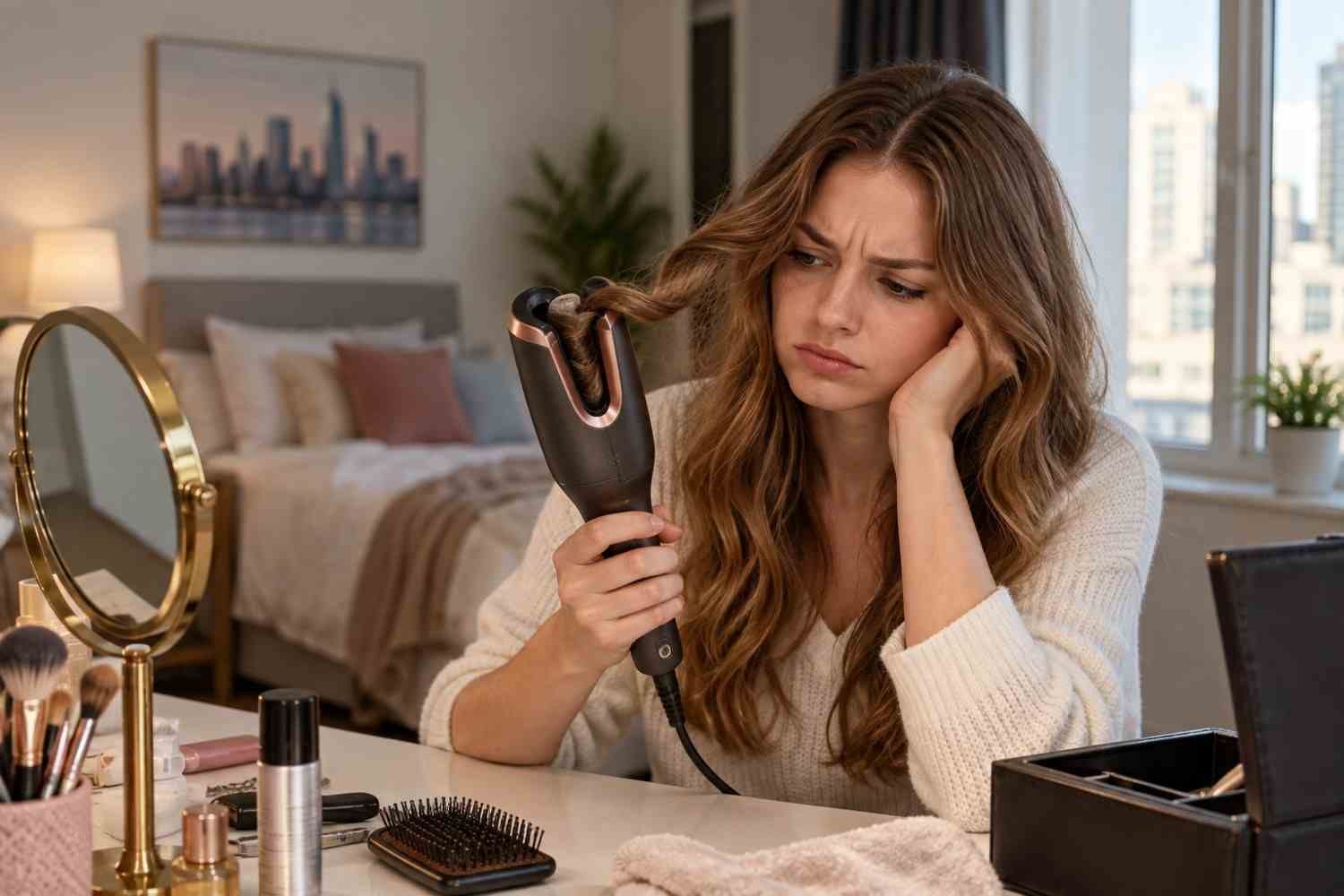
    I used to think the temperature dial on a hair tool was just another setting to ignore. If my straightener got hot quickly and my curls held, I considered it a good tool. After dealing with uneven results, repeated passes, and hair that sometimes felt rough after styling, I started paying closer attention to how heat was actually being delivered.

    I also noticed newer styling devices feel different in use. Some react to what is happening while I style. That made me curious about smart hair styling tools with temperature control and which features genuinely matter.

    What Makes a Hair Tool Smart?

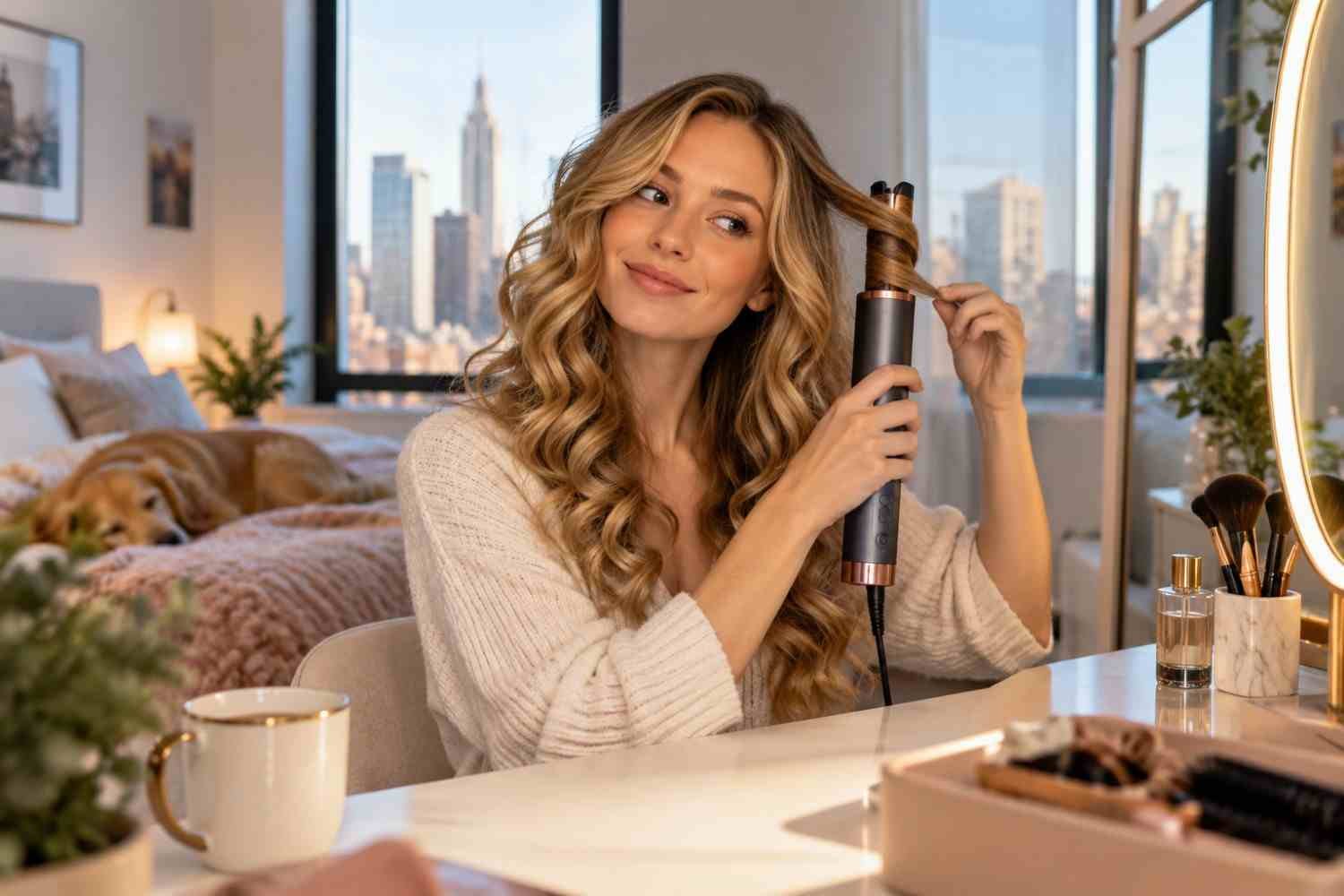
    A conventional heated tool gives you a selected temperature and expects you to manage the rest. A smarter device can add sensors, processors, feedback systems, or programmed settings that monitor conditions and adjust performance. The goal is controlled heat during daily styling.

    Real-time monitoring is one of the more meaningful developments. Sensors can help a device track temperature and maintain a consistent level instead of allowing large fluctuations. Some newer dryers detect proximity to the scalp and adjust heat. That responsive behavior can personalize styling without constant manual changes. Intelligent heat control is increasingly treated as a practical feature.

    Why Consistent Temperature Matters

    Why Consistent Temperature Matters

    High temperature is not automatically better. Hair responds to thermal exposure, and excessive heat can contribute to dryness, brittleness, and surface damage. The bigger issue is exposure time and repeated passes.

    That makes stable temperature regulation useful. If a straightener drops below its selected setting and then overheats while recovering, the experience can be inconsistent. A well-regulated tool aims to deliver predictable heat, helping you avoid extra passes. Ceramic surfaces are also commonly used because they can distribute heat across the styling area, although the material alone does not determine whether a tool is gentle.

    Use enough heat to create the result you want, then focus on technique. Temperature control cannot make careless styling harmless.

    Smart Features Worth Paying Attention To

    Not every digital feature deserves equal weight. Look for technology that changes how the device actually performs.

    • Adaptive heat sensing can monitor temperature and make rapid adjustments during styling.
    • Consistent heat delivery can reduce repeated passes.
    • Hair-type settings can make choosing a starting point easier for fine, thick, curly, or treated hair.
    • Automatic shutoff, cool settings, and controlled airflow add useful safety and convenience.

    Some advanced stylers take personalization further with stored profiles or guided settings. These can help connect hair characteristics with a sensible routine. However, a touchscreen or app is not automatically proof of better heat management. Ask what the technology changes in practice.

    Modern beauty tools increasingly combine functions, too. Current coverage includes dryers, flatirons, rotating curlers, brush dryers, and multi-stylers.

    Match the Tool to Your Hair

    The smartest tool on paper can still be wrong for your hair. Fine or fragile strands generally need conservative heat and fewer passes, while thick or coarse hair may require more controlled power. Curly and textured hair can also benefit from tools that reduce snagging and friction while maintaining predictable heat.

    Color-treated or stressed hair deserves extra care. Precise temperature control helps with restraint, but it does not replace heat protectant or good styling habits. Hair should also be sufficiently dry when using tools designed for dry styling, unless the device specifically supports wet-to-dry use.

    Personalization should mean more than selecting a hair type inside an app. Consider your hair’s condition, density, texture, and styling goal before choosing technology.

    Look Beyond Straighteners

    Look Beyond Straighteners

    Temperature intelligence is no longer limited to flatirons. Hair dryers can regulate heat while monitoring distance or airflow, while hot brushes and multi-stylers combine drying, smoothing, curling, or volumizing in fewer steps. Air-based styling systems are another direction because they use airflow to shape hair rather than relying exclusively on hot surfaces.

    That matters daily. A tool that dries and styles at once can reduce handling and shorten the time hair spends under heat. Recent beauty coverage has emphasized multitasking designs, faster drying, and technologies intended to make styling more efficient.

    Versatility should not overshadow basic performance. A device with ten attachments is not necessarily more useful than a simple, reliable tool.

    What to Check Before Buying

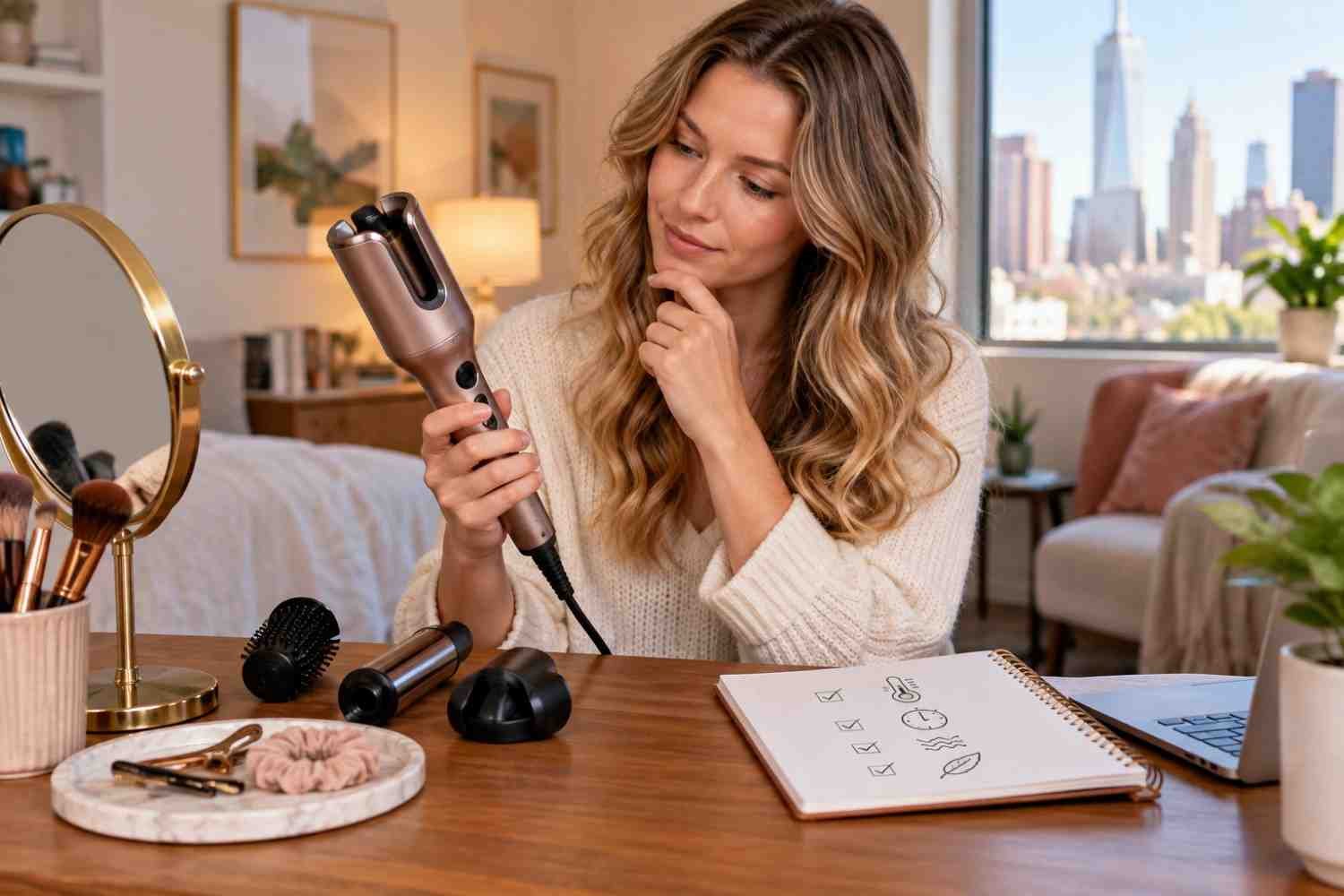
    Before spending more on smart styling technology, examine the features that affect actual use. Check the temperature range, adjustment precision, automatic heat regulation, and consistency during repeated passes. Also consider plate or barrel construction, airflow, weight, controls, and automatic shutoff.

    Think about your routine. If you mainly straighten your hair, precise plate temperature and smooth movement may matter most. If you switch between waves, curls, and blowouts, a responsive multi-styler could make more sense. Ease of cleaning and storage also matter because sophisticated technology is less valuable when the device is annoying to use.

    Smart does not mean maintenance-free. Keep attachments clean, follow instructions, and replace a tool if its temperature behavior becomes erratic.

    FAQs: Smart Hair Styling Tools With Temperature Control: Features That Matter

    1. Do smart hair tools prevent heat damage?

    No. Temperature control can limit unnecessary thermal exposure, but damage also depends on heat level, contact time, passes, hair condition, and technique.

    2. Are ceramic plates better for hair?

    Ceramic surfaces can provide even heat distribution, but overall performance depends on temperature regulation, construction, and how the tool is used.

    3. Are smart hair tools worth the extra cost?

    They can be worthwhile if adaptive heat, precise controls, or multitasking features solve a real problem. Extra technology alone is not a reason to spend more.

    4. Should every hair type use the same temperature?

    No. Texture, thickness, condition, and treatment history can affect the appropriate setting. Start conservatively and increase heat only when necessary.

    The Features Worth Keeping

    The most useful smart styling technology is not the feature that looks futuristic on a product page. It is the one that quietly makes heat more predictable, reduces unnecessary passes, simplifies control, or helps you work with your hair instead of fighting it. That is where temperature sensors, responsive controls, balanced heat distribution, and practical presets can earn their place in a daily routine.

    Good styling still requires judgment. The right tool can make that easier, but cannot replace it. When technology gives you more control without making the routine complicated, smart hair styling starts to feel genuinely useful.