I burned my skin barrier five years ago by slathering a 30% AHA solution directly over wet skin while using prescription retinoids. My face looked glossy, red, and felt tight like plastic wrap for three weeks. Learning how to introduce chemical peel into weekly routine schedules requires clinical patience, deliberate acid selection, and aggressive recovery periods.
Chemical exfoliation loosens the desmosomes holding dead cells together. When managed properly, it accelerates cell renewal, clears congested pores, and improves hyperpigmentation without mechanical micro-tears.
Choosing Your Acid Class: Matching Molecules to Skin Physiology
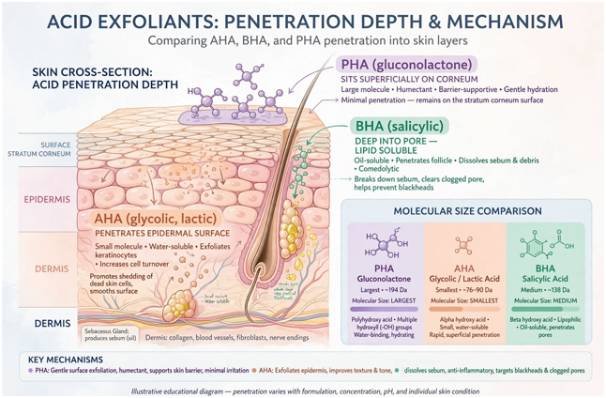
Different acids work at different depths of the skin. Water-soluble Alpha Hydroxy Acids (AHAs) work on the stratum corneum, while lipid-soluble Beta Hydroxy Acids (BHAs) dissolve sebum deep inside follicular units. Polyhydroxy Acids (PHAs) feature larger molecular structures that sit safely on sensitive outer layers without causing deep stinging. Research documented by the American Academy of Dermatology highlights that matching acid formulations to skin barrier tolerance prevents post-inflammatory hyperpigmentation.
+——————+———————–+————————+—————————————+
| Acid Category | Primary Types | Penetration Depth | Optimal Target Skin Profiles |
+——————+———————–+————————+—————————————+
| AHA | Glycolic, Lactic | Epidermal (Surface) | Sun-damaged, dry, texture irregularities |
+——————+———————–+————————+—————————————+
| BHA | Salicylic | Pores / Sebaceous units| Congested, oily, acne-prone |
+——————+———————–+————————+—————————————+
| PHA | Gluconolactone | Superficial Corneum | Reactive, rosacea-prone, compromised |
+——————+———————–+————————+—————————————+
Glycolic acid has the smallest molecular weight of all AHAs. It penetrates quickly, making it effective for photoaging but risky for beginners. Lactic acid contains a larger molecular profile and natural humectant properties, making it an ideal starting point for combination skin. Salicylic acid cuts through lipid blockages, making it suitable for blackheads and inflammatory papules.
The Application Protocol: Step-by-Step Night Execution
Applying home peels requires following strict dermatological contact rules. Never deviate from manufacturer timing. Applying acids to damp skin accelerates absorption rates exponentially, drastically increasing the risk of chemical irritation. Peer-reviewed dermatological studies via the National Center for Biotechnology Information emphasize keeping your skin’s acid mantle near a physiological pH of 4.5 to 5.5 to support healthy epidermal repair.
- Purify Without Stripping: Wash with a mild, sulfate-free cleanser. Rinse thoroughly with lukewarm water. Hot water destabilizes surface lipids.
- Complete Dry-Down: Wait five full minutes after towel drying. The stratum corneum must be bone dry to prevent rapid acid pooling.
- Shield Sensitive Zones: Apply an occlusive ointment like petrolatum to the corners of your nose, oral commissures, and orbital eye bone rims.
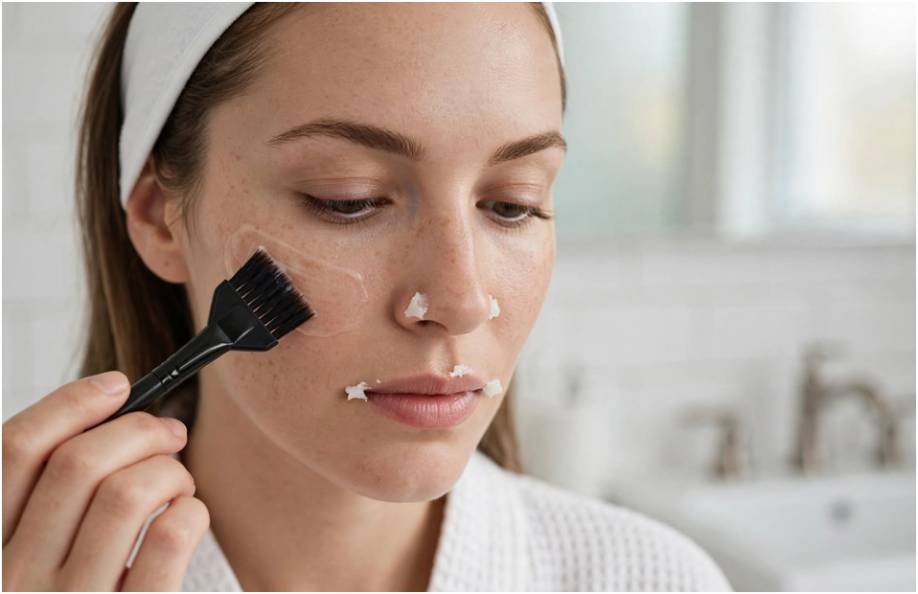
- Targeted Application: Spread the peel using a synthetic fan brush or pad, moving from forehead to cheeks and finishing on the chin. Avoid eyelids and lips entirely.
- Neutralize or Rinse: If using a wash-off treatment, rinse with cold water at the exact designated time mark. If leave-on, let it settle for ten minutes before proceeding.
- Support the Barrier: Apply lipid-rich creams containing physiological ratios of cholesterol and fatty acids. Understanding ceramides vs hyaluronic acid for skin hydration helps select moisturizers that physically rebuild damaged lipid architecture rather than temporarily pulling water to raw tissue.
The Contact Timing Matrix
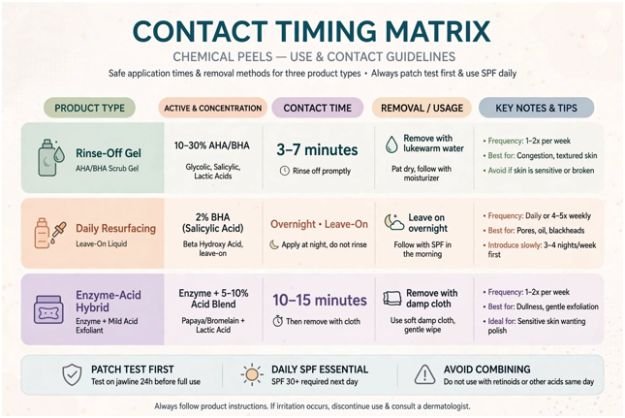
+——————–+————————+———————+——————————-+
| Formulation Style | Active Strength Range | Maximum Contact | Post-Treatment Neutralization |
+——————–+————————+———————+——————————-+
| Rinse-off Gel | 10% – 30% AHA/BHA | 3 to 7 minutes | Cold water wash + alkaline pad|
+——————–+————————+———————+——————————-+
| Daily Resurfacing | 2% BHA / 5% Lactic | Leave-on overnight | None; moisturize directly |
+——————–+————————+———————+——————————-+
| Enzyme-Acid Hybrid | 5% Fruit Enzyme + PHA | 10 to 15 minutes | Wet microfiber cloth removal |
+——————–+————————+———————+——————————-+
The 28-Day Chemical Peel Rotation Schedule
Never begin an acid regimen at full weekly frequency. Skin requires roughly 28 days to complete a natural cellular desquamation cycle. The “Sub-Erythema Micro-Dosing Strategy” spaces treatments to match this renewal rhythm. Start with an application every 14 days for the first month. Once the skin tolerates that without flaking, progress to a weekly schedule.
+———–+———————————–+———————————–+
| Weekday | Morning Routine Focus | Evening Routine Focus |
+———–+———————————–+———————————–+
| Monday | Gentle Rinse + SPF 50 | Low pH Cleanser + Hydrating Serum |
+———–+———————————–+———————————–+
| Tuesday | Antioxidant Serum + Mineral SPF | Gentle Wash + Chemical Peel Night |
+———–+———————————–+———————————–+
| Wednesday | Hydrating Mist + Ceramide Cream | Barrier Repair Night (No Actives) |
+———–+———————————–+———————————–+
| Thursday | Barrier Moisturizer + SPF 50 | Barrier Repair Night (No Actives) |
+———–+———————————–+———————————–+
| Friday | Antioxidant Serum + Mineral SPF | Retinoid Night OR Peptide Serum |
+———–+———————————–+———————————–+
| Saturday | Gentle Rinse + Hydrating SPF | Soothing Sheet Mask + Squalane |
+———–+———————————–+———————————–+
| Sunday | Barrier Defense Lotion + SPF 50 | Rest Night + Rich Barrier Cream |
+———–+———————————–+———————————–+
Balancing Actives and Recovery Nights
Avoid using active ingredients concurrently on the same evening. Never layer vitamin C, prescription tretinoin, or physical scrub beads over a freshly peeled surface. Give your skin two full recovery evenings focused entirely on hydration after every peel session.
The Skin Cancer Foundation confirms that chemical exfoliation increases photosensitivity to ultraviolet radiation by up to 50%. Broad-spectrum sunscreen with an SPF rating of 30 or higher is non-negotiable every single morning, rain or shine.
Diagnosing Trouble: Barrier Distress vs. Normal Cell Turnover
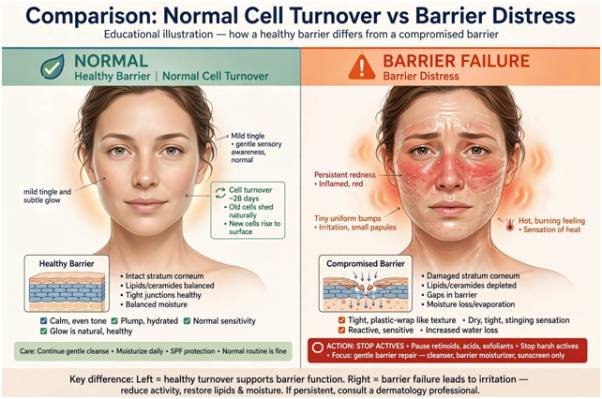
Beginners often confuse cell turnover with irritant contact dermatitis. A mild tingle during application is normal; persistent throbbing, hot skin, or swelling signals chemical burns.
Distinguishing between retinol purging vs allergic reaction breakouts is essential when assessing adverse reactions. Purging brings preexisting microcomedones to the surface in usual breakout zones.
Barrier failure manifests as raw, burning red plaques and tiny, uniform fluid-filled bumps across novel areas. If simple moisturizer stings upon application, halt all exfoliants immediately for three weeks and switch strictly to pure mineral sunscreen, gentle non-foaming cleansers, and occlusive balms.
Frequently Asked Questions About Chemical Peels
1. Can I leave my at-home chemical peel on overnight?
Only leave the product on if the packaging specifically labels it as a leave-on serum; rinse-off peels left overnight cause severe chemical burns.
2. How soon will I see visible results from a weekly peel?
Surface radiance improves within 48 hours, while deeper textural improvements and dark spot fading take 8 to 12 weeks of consistent use.
3. Should I peel if I have an active inflammatory acne breakout?
Avoid using high-strength AHAs directly over open, bleeding, or inflamed cystic lesions; use a gentle, localized 2% salicylic acid wash instead.
4. Can I wax or thread my face while using chemical peels?
Discontinue all chemical peels at least seven days before waxing or threading to prevent epidermal skin lifting and scarring.
Glow Hard, Peel Soft: Your Smooth Skin Action Plan
Chemical peels are clinical skin tools, not casual beauty pampering sessions. Stop chasing immediate peeling sheets like those on viral videos; microscopically dissolved dead cells deliver smooth results without visible flaking or raw, sensitized redness.
Pick an acid matching your barrier profile, patch test on your jawline for 48 hours, apply on completely dry skin, and respect your recovery days. Consistency and moderation always beat aggressive over-treatment.
Leave a Reply