
I noticed my first fine lines under my eyes at twenty-six, right after a transatlantic flight. Panicked, I spent months slathering on heavy cold-pressed balms, only to wake up with persistent, tiny white bumps known as milia. That frustrating misstep taught me an essential lesson: learning how to prevent fine lines under eyes naturally requires working with the unique biology of orbital skin, not overwhelming it with kitchen remedies.
Under-eye skin is barely 0.5 millimeters thick. It lacks sebaceous glands, meaning it cannot produce its own sebum to retain moisture. If you treat this delicate zone like the rest of your face, you will accelerate crepiness rather than prevent it. Here is the daily, holistic regimen I rely on to keep the under-eye area firm, supple, and healthy.
The Biological Reason Periorbital Skin Creases First
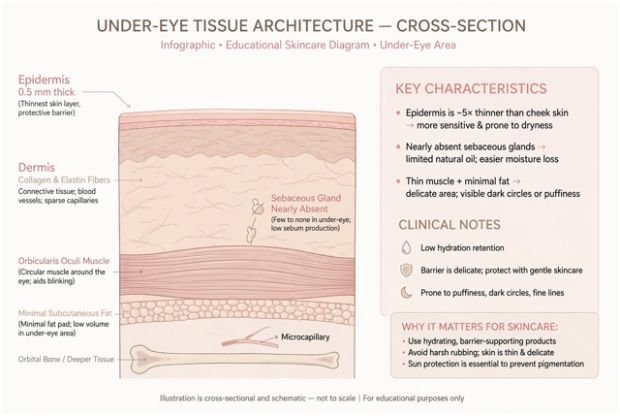
Your orbicularis oculi muscles contract thousands of times every single day. Every blink, squint, and smile mechanically compresses the fragile dermal layer sitting right on top of that muscle.
The National Center for Biotechnology Information documents that extrinsic photoaging accounts for up to 80% of visible facial aging, with the periorbital zone demonstrating the earliest loss of dermal elasticity. Because this area contains virtually no subcutaneous fat cushion, even minor environmental shifts strip away surface moisture immediately.
+————————————————————-+
| Under-Eye Tissue Architecture |
| |
| Epidermis: ~0.5 mm thick (thinnest on human body) |
| Sebaceous Glands: Nearly absent (minimal natural lipids) |
| Underlying Support: Orbicularis oculi muscle + minimal fat|
| Result: High vulnerability to micro-shearing & dryness |
+————————————————————-+
Dehydration Lines vs. Structural Elastosis
Before changing your routine, you must determine what type of lines you have:
- Dehydration lines present as a crisscross, crepey mesh across the surface. They flare up after poor sleep, dry weather, or high caffeine intake. They vanish the moment you restore your moisture barrier.
- Structural lines appear as deeper, static grooves etched into the skin even when your face is completely relaxed. They indicate damaged collagen bundles within the extracellular matrix.
Natural interventions halt dehydration lines almost instantly and dramatically slow down the progression of structural creases.
The Natural Topical Strategy: Gentle Hydration Without Triggering Milia
Most people immediately reach for pure coconut oil or shea butter. In my experience, applying heavy, comedogenic fats to the eye area is a mistake. The eye contour lacks the pore structure to absorb dense lipids. Those heavy fats sit on the surface, trap dead keratin cells, and clog the eyelid margins.
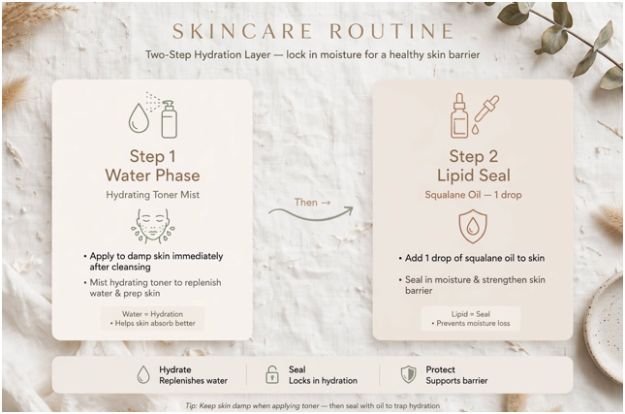
Instead, I follow a targeted two-step hydration layer. First, I apply water-attracting humectants to damp skin. Sweeping a layer of the best hydrating toner for sensitive dry skin across the orbital bone infuses the stratum corneum with immediate water weight.
Step 1: Water Phase Step 2: Lipid Seal
[ Damp Skin + Hydrating Toner ] —> [ 1 Drop Squalane / Rosehip ]
(Binds moisture deep) (Locks water in)
Next, evaluate your active hydrators. Understanding the functional differences between ceramides vs hyaluronic acid for skin hydration helps you balance water delivery with barrier repair. While hyaluronic acid pulls moisture into surface cells, physiological ceramides reinforce intercellular lipids so that water cannot escape.
The Lightweight Plant Lipid Approach
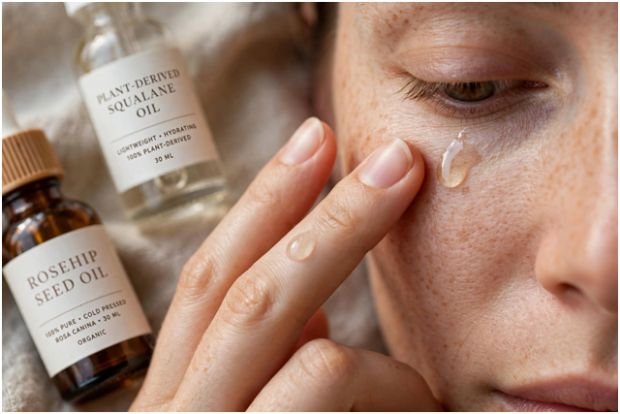
To lock in that moisture naturally without causing puffiness, I use single-origin, low-comedogenic plant oils.
- Plant-derived squalane: Squalane mimics your skin’s natural squalene, a lipid component that decreases with age. It sinks in immediately with zero greasy residue.
- Cold-pressed rosehip seed oil: Packed with trans-retinoic acid precursors and linoleic acid, rosehip oil supports natural cellular renewal without causing retinoid dermatitis.
I place one single drop of oil on my ring finger, tap it against the opposite ring finger, and press it gently along the orbital bone. Never drag the oil up to the bottom lash line. Your blinking motion naturally migrates products upward toward the eye.
Antioxidants and Plant-Derived Cellular Support
Environmental free radicals break down delicate collagen scaffolding long before your genetics dictate.
I apply chilled, damp green tea compresses twice a week. Green tea contains high levels of epigallocatechin gallate (EGCG), a polyphenol that scavenges reactive oxygen species. A 10-minute cold compress constricts superficial blood vessels to relieve puffiness while drenching surface cells in cellular defense.
Controlling Daily Mechanical Strain and UV Exposure
You cannot prevent skin aging naturally if you ignore the physical habits breaking down your collagen matrix every afternoon.
Protecting the Orbital Barrier from Friction
Friction is the fastest way to thin out your under-eye skin. Aggressive makeup removal shears fragile capillary walls and stretches structural fibers.
When removing sunscreen or mineral powders, I saturate a soft pad with jojoba oil, press it against my closed eye for fifteen seconds to dissolve the pigment, and wipe away without rubbing. If allergies make your eyes itch, use cold compresses or preservative-free saline rinses rather than knuckling your eyes.
Shielding Your Eyes from Micro-Squinting
Squinting is an involuntary mechanical motion that deepens dynamic expression lines into permanent creases.
The Skin Cancer Foundation warns that the periorbital region represents up to 10% of all skin cancers, highlighting its exceptional vulnerability to UV damage. To protect this area naturally:
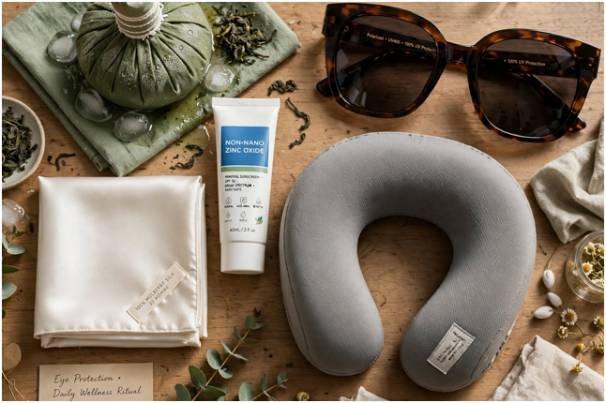
- Wear polarized, UV400 sunglasses: Large frames physically block UV rays from degrading your dermal collagen while stopping you from squinting against harsh daylight.
- Apply mineral sunscreen daily: Choose non-nano zinc oxide formulas. Mineral filters sit comfortably on the skin surface, do not sting when you sweat, and protect delicate barrier proteins.
- Practice the 20-20-20 screen rule: Every 20 minutes, focus on an object 20 feet away for 20 seconds. This simple habit releases built-up tension in the ocular muscles and restores your natural blink rate.
The American Academy of Ophthalmology also highlights that proper eyelid hygiene and unblocked meibomian glands are essential for a healthy tear film. Keeping heavy cosmetics away from the waterline protects your eyes from chronic dry-eye irritation and compensatory squinting.
Internal Cellular Support and Sleep Mechanics
Topical application accounts for only half the battle. Cellular building blocks come from within.
Collagen synthesis requires specific micronutrients. Vitamin C serves as an essential cofactor for the enzymes prolyl and lysyl hydroxylase, which stabilize the triple-helix structure of new collagen fibers. I focus on whole-food sources: bell peppers, citrus, and dark leafy greens paired with pumpkin seeds for zinc.
Equally important is nocturnal mechanical compression. If you sleep on your stomach or side, you crush your face into your pillow for eight hours, creating sleep creases that eventually turn into static lines.
I trained myself to sleep on my back using an ergonomic neck-support pillow. If back sleeping is impossible for you, switch to a pure 100% mulberry silk pillowcase. Silk creates far less friction against delicate facial skin than coarse cotton, allowing your face to glide across the fabric without creasing.
Frequently Asked Questions
1. Can natural remedies reverse deep under-eye wrinkles?
Natural remedies plump superficial dehydration lines and slow new damage, but etched, structural wrinkles require long-term clinical interventions like peptides, low-strength retinoids, or in-office procedures.
2. Does drinking water reduce under-eye fine lines?
Yes, consistent hydration restores tissue volume in the skin, which immediately softens crinkly dehydration lines caused by fluid depletion.
3. Is pure coconut oil safe for under-eye wrinkles?
No, coconut oil is highly comedogenic and often causes milia or irritates eyelid oil glands; choose lightweight squalane or rosehip oil instead.
4. At what age should you start under-eye prevention?
You should begin protective habits like applying mineral sunscreen, wearing UV sunglasses, and using light hydrators in your early twenties before structural collagen decline begins.
Keep It Simple, Keep It Consistent
Obsessing over every micro-crease when you smile is an exhausting, losing battle. Dynamic expression lines simply prove that you interact with the world and laugh often.
Focus on protective habits rather than impossible perfection: hydrate the barrier with lightweight lipids, wear your sunglasses, and treat that fragile 0.5-millimeter zone with patience. Consistency with basic, gentle habits will always outperform an expensive, complicated 10-step routine.
Leave a Reply