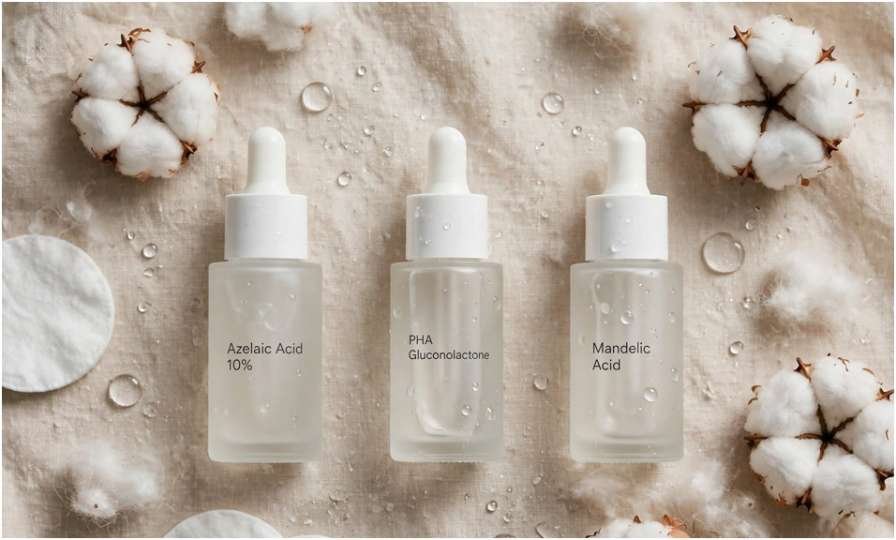
I spent two years avoiding all acids because one glycolic toner left me beet red for three days. If you have rosacea, you know that sting. I learned safe chemical exfoliants for rosacea prone skin are not about strength, they are about penetration control.
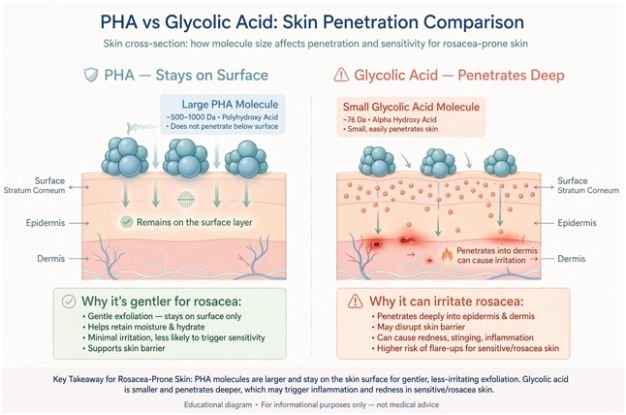
Traditional physical scrubs and small-molecule AHAs, especially glycolic acid, are high-risk due to their rapid, deep penetration and potential to trigger severe redness. I switched to a molecular-size filter and my barrier finally calmed down.
Why Most Exfoliants Make Rosacea Worse
Rosacea skin has a compromised lipid barrier. That means anything sharp or fast-acting creates micro-tears and heat.
The Molecular Size Rule No One Talks About
Larger molecules cannot dive deep. They sit on the surface, loosen dead cells slowly, and pull water in. Smaller molecules rush into the dermis and spark inflammation. This single rule changed how I shop for acids.
For deeper background on rosacea triggers and barrier care, the American Academy of Dermatology offers dermatologist-reviewed guidelines. The National Rosacea Society also breaks down subtypes and why Subtype 2 reacts differently to exfoliation.
The Only 3 Chemical Exfoliants I Trust on My Rosacea
1. Azelaic Acid – Lowest Risk Multitasker
This was my entry point. Azelaic acid acts as an ultra-gentle exfoliant while actively calming heat reactivity, erythema, and the inflammatory bumps of papulopustular rosacea. I used 10% three nights a week. No sting, less morning redness. The Cleveland Clinic notes its anti-inflammatory and keratolytic dual action.
2. Polyhydroxy Acids (PHAs) – The Surface-Only Exfoliant
Gluconolactone and lactobionic acid have large molecular structures. That size limits penetration to the very surface, preventing deep irritation. They function as humectants to draw moisture into compromised barriers. An NIH study on gluconolactone showed improved barrier function and hydration with minimal irritation. This is my winter pick.
3. Mandelic & Lactic Acid – Proceed With Caution
Mandelic has a larger size than glycolic, and lactic stimulates ceramide production. Both are gentler than glycolic acid but still carry irritation risks. I only use them at 5% or less, once weekly, and never when I am flushed. They require low percentages and low frequency.
Comparison Table: Risk Profile & Benefits
| Ingredient | Risk Profile | Primary Mechanism & Skin Benefit |
| Azelaic Acid | Lowest Risk | Ultra-gentle exfoliant + calms heat, erythema, Subtype 2 bumps |
| PHAs – Gluconolactone, Lactobionic Acid | Low to Moderate | Large molecule, surface-only exfoliation + humectant for barrier |
| Mandelic & Lactic Acids | Proceed with Caution | Larger than glycolic, ceramide support, but irritation possible |
| Physical Scrubs & Glycolic Acid | High Risk – Avoid | Rapid deep penetration + mechanical disruption triggers redness |
How I Exfoliate Safely Without Triggering a Flare
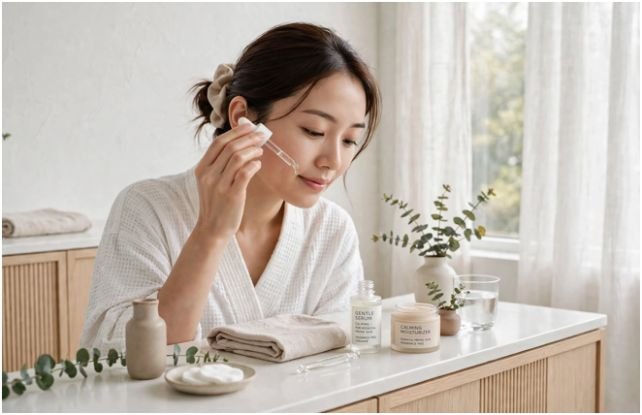
I tested an 8-week low and slow protocol. Weeks 1-4: azelaic acid only, 1x per week at night. Weeks 5-8: added PHA 1x per week on a non-azelaic night. Result: texture improved, zero papules, no increased baseline redness. That taught me frequency matters more than percentage.
If you are building a schedule, learn to introduce chemical peel into weekly routine – it maps out the night-by-night separation I use.
I also learned not to confuse purging with a true reaction. If you are layering actives, this breakdown of retinol purging vs allergic reaction breakouts helped me identify what was a flare and what was not.
Rules I Follow Every Time
| Rule | How I Apply It |
| Avoid Active Flare-ups | Never introduce acid when skin is burning, flushing, or peeling. Wait for calm baseline. |
| Low and Slow Approach | Start 1x per week at night. After 3 weeks with no irritation, scale to 2-3x max. |
| Patch Test First | Tiny drop behind ear or jawline for 24-48 hours to check for burning. |
| Skip Aggressive Actives | No coarse scrubs, high-percentage glycolic, alcohol-heavy toners, or layering on retinoid nights. |
Always talk to your dermatologist before changing actives, especially if you use prescription metronidazole or ivermectin.
FAQ
1. What is the safest chemical exfoliant for rosacea?
Azelaic acid 10% and PHAs like gluconolactone are considered the safest due to low penetration and anti-inflammatory effects.
2. Can I use lactic acid if I have rosacea?
Yes, but only at low percentages under 5% and once weekly, and only when your skin is not actively flaring.
3. How often should rosacea prone skin exfoliate?
Start once a week at night, then slowly build to two or three times if tolerated.
4. Does exfoliation help rosacea texture?
Yes, surface-only exfoliation helps smooth rough patches without triggering redness when you choose large-molecule acids.
My Take: Soft Power Wins
Stop chasing the tingle. For rosacea, effective exfoliation feels like nothing at all. Pick one multitasker, respect the molecular size rule, and let your barrier lead. Your next step: audit your current toner for glycolic acid or denatured alcohol and swap it for a PHA or azelaic formula this week.
Leave a Reply