I destroyed my barrier with too much retinol and a glycolic acid obsession. My face was red, tight, and stung when I applied even plain moisturizer. If that is you, this skincare routine for broken skin barrier and redness is the exact protocol I used to fix it in four weeks.
I stopped all actives and treated my skin like an open wound. No Vitamin C, no acids, no scrubs. Just repair.
How I Knew My Barrier Was Broken (It’s Not Just Dryness)
Dryness goes away after moisturizer. A broken barrier does not. Mine felt tight an hour after moisturizing, looked blotchy red around the nose and cheeks, and burned with lukewarm water.
The Brick and Mortar Breakdown
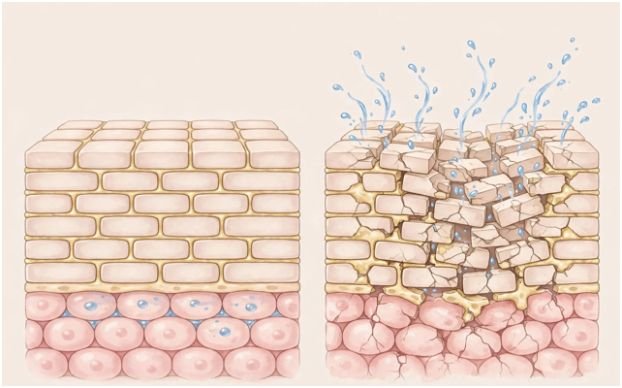
The top layer of your skin, the stratum corneum, works like a wall. Corneocytes are the bricks. Ceramides, cholesterol, and fatty acids are the mortar. When you over-exfoliate, you dissolve that mortar.
According to the American Academy of Dermatology, a compromised barrier increases transepidermal water loss and lets irritants penetrate deeper, which triggers inflammation. Research on ceramides from the NIH shows they make up about 50% of that lipid mortar and are critical for water retention.
That explained my symptoms perfectly.
My Stripped-Down 3-Step Recovery Routine
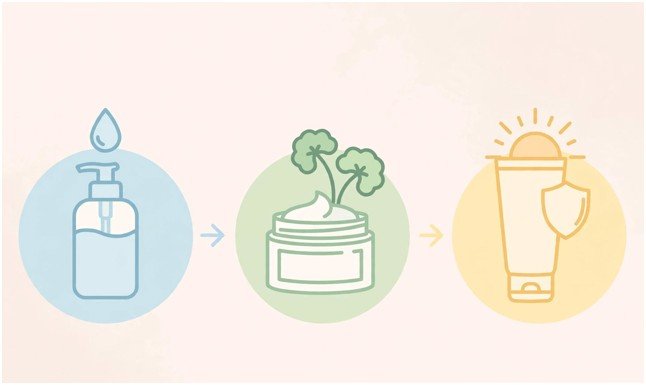
I followed this for 21 days straight before changing anything. It is also the correct morning vs night skincare routine steps order when you are in recovery – keep both AM and PM identical except for sunscreen.
Step 1: The Non-Foaming Cleanse
I switched to lukewarm water only in the morning. At night, I used a fragrance-free, non-foaming lotion cleanser with glycerin and oat extract. No massaging for more than 30 seconds. Foaming sulfates strip the few lipids you have left, and Cleveland Clinic dermatologists note that gentle cleansers preserve barrier function better than harsh surfactants.
Step 2: Rebuild The Mortar and Calm Redness
I applied everything to damp skin. My night routine became two layers: a ceramide-rich cream, then a thin occlusive.
This is not the time for lightweight gels. You need lipids and anti-inflammatory agents. If you are trying to repair damaged skin barrier from retinol like I was, this step is everything.
Step 3: Mineral-Only Protection
I used only micronized zinc oxide SPF 35 every morning, even indoors. Chemical sunscreens made my raw skin sting because they absorb into the skin. Mineral filters sit on top. UV degrades your remaining barrier lipids and makes redness worse.
The Ingredient Table That Actually Saved Me
I stopped buying by marketing claims and started buying by mechanism. This table guided every product I chose:
| Function | Target Action | Ingredients That Work |
| Cleanse | Prevents lipid stripping | Glycerin, Oat Extract, Non-foaming bases |
| Mortar Repair | Replaces depleted ceramides | Ceramides NP/AP/EOP, Phytosterols, Squalane |
| Redness Relief | Inhibits pro-inflammatory cytokines | Centella Asiatica (Madecassoside), Panthenol B5 |
| Occlusion | Physically seals micro-cracks | Petrolatum, Shea Butter, Dimethicone |
For me, Panthenol and Centella lowered visible redness within 3 days, while ceramides stopped the tight feeling by day 7.
What I Stopped Doing Immediately
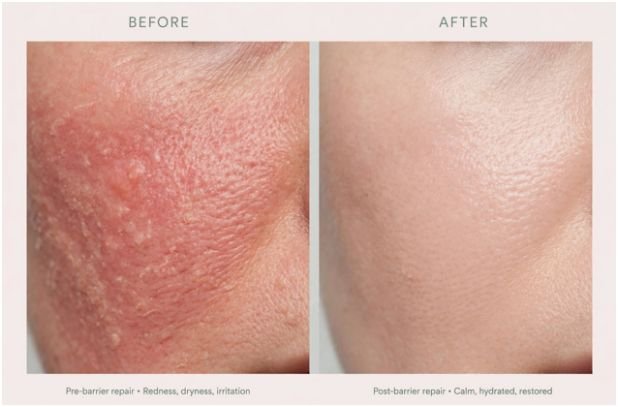
I cut hot water completely. Hot water melts your remaining natural oils. I also removed all actives: retinol, Vitamin C serums, salicylic acid, glycolic acid, and benzoyl peroxide. Even though Vitamin C is an antioxidant, its low pH burns compromised skin. I stopped physical scrubs, fragrance, and essential oils. I patch tested everything behind my jawline first.
How to Reintroduce Actives Without Relapsing
This is where most people fail. The epidermal turnover cycle takes 14 to 28 days. You must maintain the 3-step routine strictly for that full period.
My rule was the Sting Test. If a bland, fragrance-free moisturizer still stung on application, my barrier was still broken. I did not reintroduce anything until stinging and persistent redness were gone.
Then I reintroduced one active at a time, spaced 7 to 10 days apart, at 1 to 2 times per week. For retinol, I started with 0.25% twice a week, sandwiched between moisturizer.
Final Thoughts: Your Barrier Isn’t Ruined, It’s Just Mad at You
Your skin wants to heal. It just needs you to stop attacking it. My redness did not fade because I added more products. It faded because I removed almost everything. Stick to cleanse, rebuild, protect for 28 days and let the mortar reset.
FAQ
1. How long does it take to repair a broken skin barrier and redness?
Typically 14 to 28 days with a stripped-down routine, depending on severity.
2. Can I use hyaluronic acid on a broken barrier?
Yes, on damp skin under a ceramide cream and occlusive, but avoid it in low humidity without sealing.
3. Why does my face sting when I apply moisturizer?
Stinging from bland products is the clearest sign your lipid barrier is still compromised and water loss is high.
4. Should I exfoliate to remove flaking from barrier damage?
No, flaking is from water loss, not buildup; exfoliation will dissolve more lipids and worsen redness.
Leave a Reply