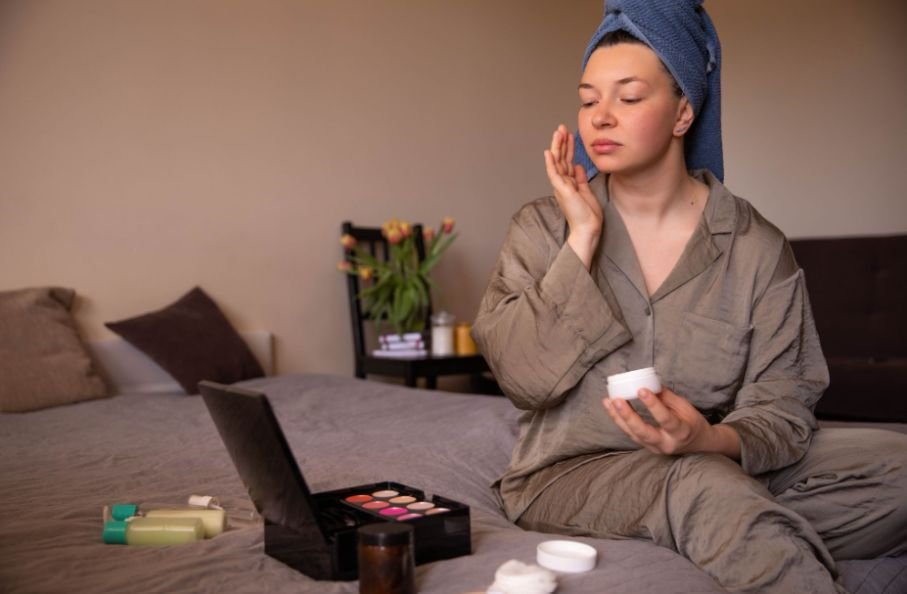
By midday, I used to notice the same frustrating pattern: extra shine across my forehead, foundation disappearing around my nose, and powder starting to look heavier every time I touched up.
I eventually realized that lasting makeup on oily skin is less about piling on matte products and more about controlling each layer from the start. My makeup routine for oily skin now focuses on lightweight hydration, strategic priming, thin complexion layers, targeted powder, and smarter touch-ups so my base stays fresh without looking dry, flat, or cakey.
How Should I Prep Oily Skin Before Makeup?
I start with a gentle foaming or gel cleanser to remove oil, sweat, and residue without scrubbing. Dermatologists recommend gentle cleansing and note that oily skin still needs moisture. Oil-free and non-comedogenic products can also suit acne-prone skin.
If my skin tolerates it, I may use a lightweight BHA or pore-refining toner, but I treat toner as optional. Next, I apply a thin layer of lightweight moisturizer. For daytime wear in the US, I finish with broad-spectrum SPF 30 or higher and let my skincare settle before makeup.
Does the Setting-Spray Sandwich Method Work for Oily Skin?
On long workdays, humid summer days, or special occasions, I sometimes use the “sandwich” technique. Once skincare has settled, I mist a light layer of setting spray over the face and let it dry.
Then I press mattifying or pore-blurring primer mainly into my T-zone—the forehead, nose, sides of the nose, and chin. I do not automatically cover my whole face because targeted shine control helps me avoid an excessively matte finish.
How Do I Apply Foundation Without Making Oily Skin Cakey?
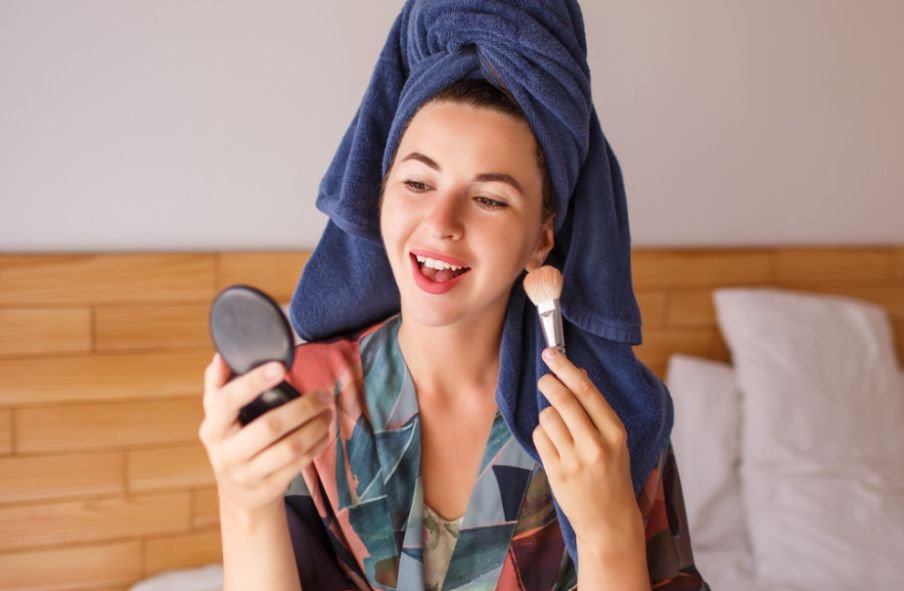
I choose a water-based, natural-matte, matte, or long-wear foundation and apply it in thin, buildable layers.
For a lighter, more understated finish, I can also follow a natural makeup look step-by-step approach while keeping foundation layers thin and targeted.
I start near the center of my face and blend outward with a damp sponge or stippling brush. Pressing and tapping gives me a smoother result than repeatedly dragging a tool across the skin.
I add lightweight liquid concealer only where I need it, such as under my eyes or over blemishes. If I am using the sandwich method, I follow the liquid and cream products with another fine mist of setting spray and let it dry before applying powder.
How Much Powder Should I Use on an Oily T-Zone?
I press loose translucent setting powder into my forehead, nose, chin, and other high-shine areas with a powder puff. I may lightly bake extremely oily areas for a special occasion, but I keep baking optional because too much powder can emphasize pores and skin texture.
For blush, bronzer, and highlighter, powder formulas are easy for me to manage on very oily skin. I can still use cream formulas, but I apply them sparingly and set strategically instead of assuming every cream product will automatically slide off.
How Do I Stop Eye Makeup and Lip Color From Smudging?
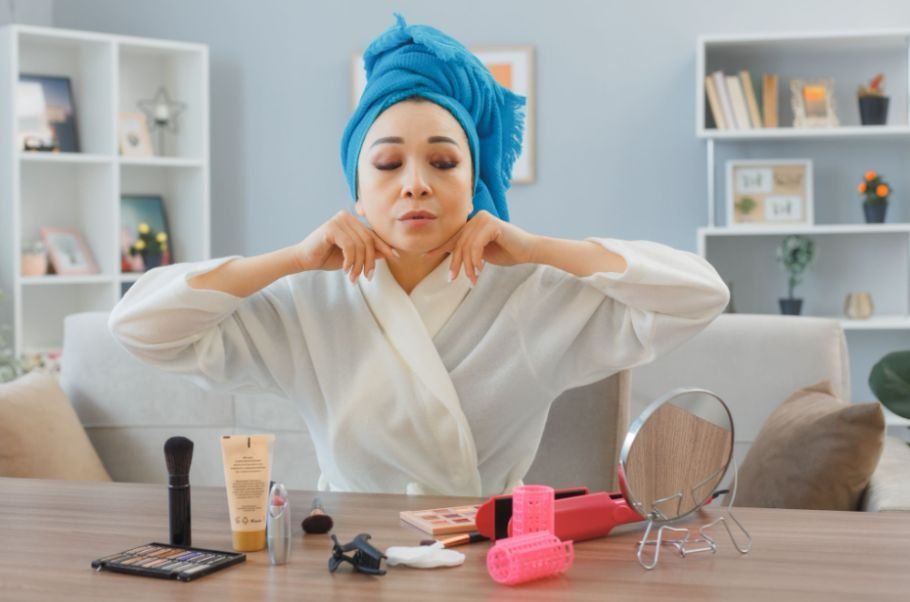
I keep heavy skincare away from my eyelids, use a small amount of matte eye primer, and lightly set it when necessary. Eye primer can help reduce creasing and movement when my eyelids become oily. This lighter approach can also suit skincare for aging skin, where excessive product around the eyes may emphasize texture.
In heat and humidity, I prefer long-wearing gel or waterproof eyeliner and tubing or waterproof mascara if smudging is a recurring problem.
For my lips, I apply thin layers of long-wear or transfer-resistant color and allow them to set. A very light dusting of translucent powder around the lip edge can also help limit transfer.
I finish my entire face with an even mist of oil-control or long-wear setting spray. An X-and-T spraying pattern can help distribute the mist, but I avoid soaking my skin with more spray than I need.
What Should I Do When My Face Gets Oily During the Day?
My most important touch-up rule is simple: blot before adding more powder. Applying powder directly over a visible layer of oil can make foundation look thick, uneven, and cakey.
I gently press blotting paper onto my forehead, nose, and chin without rubbing. After blotting, I add only a small amount of powder wherever shine remains.
This technique is especially useful during humid US summers, outdoor events, long commutes, and days spent moving repeatedly between heat and air conditioning.
Why Does Foundation Separate Around My Nose?
My nose is often the first place where my makeup breaks down because the area combines natural oil, visible pores, facial movement, and frequent touching.
I use less moisturizer, primer, foundation, and powder there than I might instinctively apply. If my makeup separates later, I blot the oil first, gently press the remaining foundation back into place, and add a trace of powder only when necessary.
Adding another thick coat of foundation usually makes the separation more noticeable rather than fixing it.
What Mistakes Make Oily-Skin Makeup Wear Off Faster?
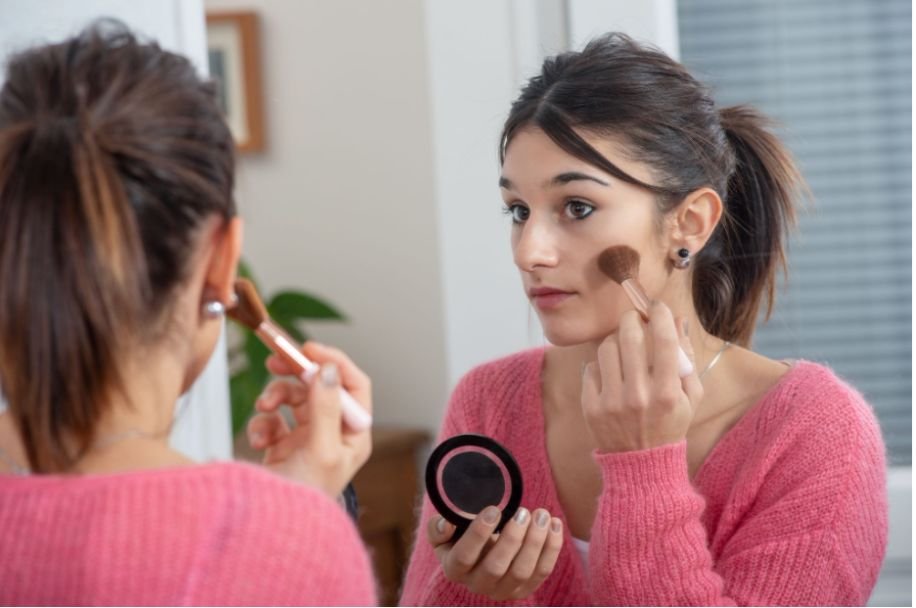
The biggest mistake I avoid is using too much of everything. Thick moisturizer followed by heavy primer, full-coverage foundation, and lots of powder can create a bulky surface that starts looking textured once natural oils emerge.
I also do not skip moisturizer solely because my skin is oily. Instead, I choose a lightweight formula and give it time to absorb before moving on to makeup.
Even when my skin is oily, I still pay attention to areas that may become dehydrated or flaky, since the right makeup for dry flaky skin techniques can help me adjust my base when my skin needs more moisture.
At night, I remove my makeup completely before going to bed, particularly when I am prone to breakouts.
Frequently Asked Questions
1. How Long Should a Makeup Routine for Oily Skin Last?
There is no universal number of hours because wear depends on natural oil production, climate, activity, formulas, and application. I concentrate on thin layers, strategic setting, and blot-first touch-ups rather than expecting completely matte skin from morning until night.
2. Should I Put Powder on Before Foundation?
A very light dusting of loose powder over the T-zone can work as an optional oil-control technique. Some makeup artists use it to absorb surface oil before foundation, but too much powder underneath the base can create patchiness.
3. Is Matte Foundation Always Best for Oily Skin?
Not necessarily. Matte and natural-matte formulas can reduce visible shine, but technique matters just as much. I would rather wear a thin layer of a compatible foundation than a thick layer chosen solely because the label says matte.
4. How Can I Keep Oily-Skin Makeup From Looking Flat?
I set my T-zone more thoroughly while using less powder on calmer areas such as my outer cheeks. That targeted technique controls unwanted shine without removing every bit of dimension from my complexion.
Final Takeaway
When I want my makeup to survive a long US workday, hot summer weather, or an evening out, I rely on balance rather than excessive mattifying. I cleanse gently, hydrate lightly, let sunscreen settle, prime strategically, build foundation and concealer in thin layers, set my T-zone, and finish with setting spray.
Blotting before repowdering, using less product around my nose, and controlling oil only where necessary have made the biggest difference in my makeup routine for oily skin. The result looks smoother and fresher without the heavy, cakey finish that often comes from trying to cover every sign of natural shine.
Leave a Reply