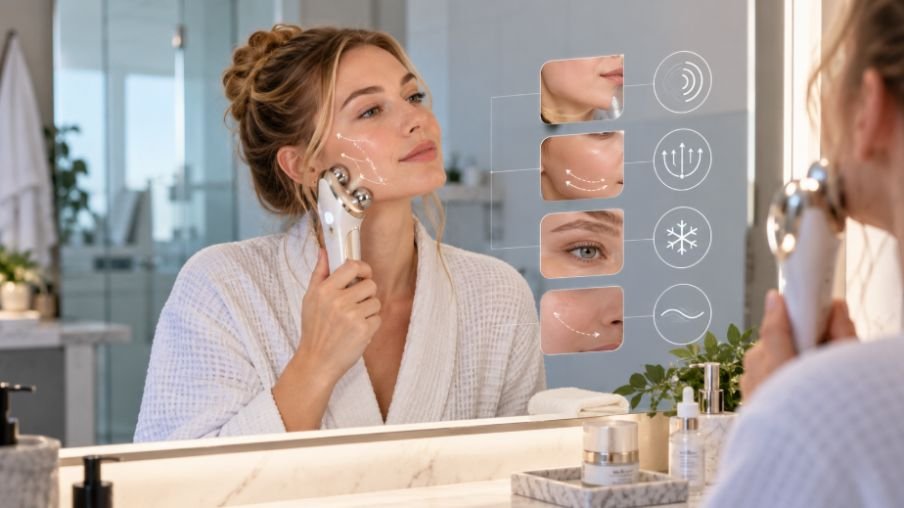
I started noticing how quickly facial beauty tools have changed when simple rollers and massage gadgets gave way to devices promising stimulation, light, heat, and more precise treatments. A compact device can fit into a normal routine while using technology far beyond an ordinary skincare accessory.
I realized that “facial sculpting” can mean several things. Some devices temporarily make the face look less puffy, while others are designed to stimulate muscles or deliver controlled energy to skin. That distinction matters because next-generation technology is not necessarily about an overnight lift. It is about making home treatments more targeted, consistent, and practical.
What Makes These Devices Different?
The biggest shift is from single-purpose tools toward platforms that combine technologies. Instead of relying only on manual massage or one type of current, newer devices may pair microcurrent, radiofrequency, LED, thermal stimulation, or other functions. Different technologies address different cosmetic concerns.
Research supports this direction, although the evidence is not equally strong for every technology. A recent review found moderate evidence for home-use LED and radiofrequency devices, while another review noted that studies of home devices often have small samples and short follow-up periods. That makes realistic expectations more important than feature lists.
Multiple Technologies in One Device
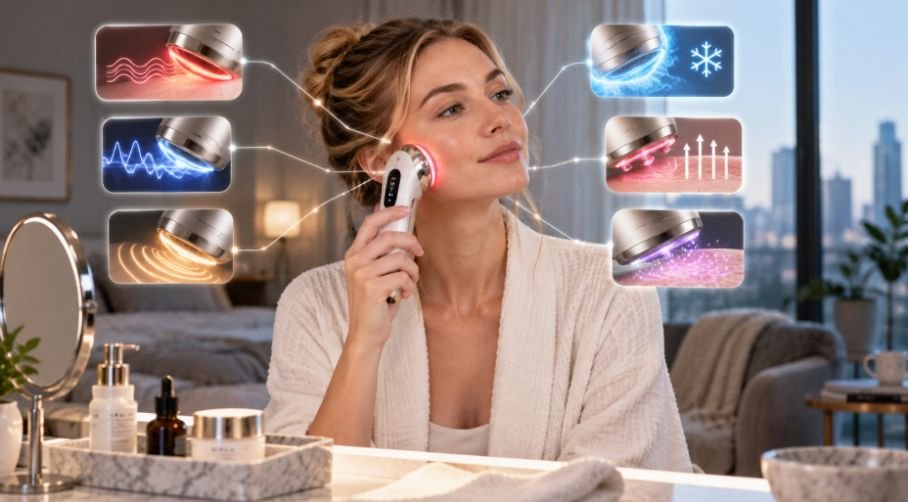
Microcurrent is commonly associated with facial toning and temporary lifting effects, while RF uses controlled heat to support changes associated with skin firmness. LED works differently, using specific wavelengths of light rather than electrical stimulation or heat.
Some combination devices bring these approaches together, while others add massage or cleansing functions. This is where LED face masks with multiple light wavelengths fit into the broader evolution of home skincare technology. Different wavelengths can serve different cosmetic goals, although several colors do not prove better results.
Someone interested in firmness, texture, and general maintenance may prefer one well-designed device over several separate tools. Clinical research has reported improvements from certain combinations of RF, LED, and microcurrent, but those findings do not prove that every multi-function device works equally well.
Smarter Controls and More Precise Treatment
Another difference is how devices manage energy. Newer designs use sensors and programmed modes. Temperature, current, and motion sensors can help a device monitor conditions during use. Research examining home facial devices has documented these features, showing how safety and usability are becoming part of the engineering rather than an afterthought.
A smart feature is useful only if it makes treatment easier to perform correctly. Good design should reduce guesswork, not add another complicated routine.
Better Delivery, Not Just More Power
The word “deeper” appears frequently in beauty marketing, but it should be interpreted carefully. Different technologies interact with different tissue structures, and consumer devices generally operate at lower energy levels than professional equipment. More power is not automatically better, especially with heat or electrical stimulation.
A clinical trial of a noninvasive home RF device found improvements in wrinkles, skin texture, elasticity, and dermal thickness after eight weeks, with the device reported as well tolerated.
That helps put device performance into perspective. The useful question is what technology is being delivered, at what level, for what purpose, and with what safety controls. That helps separate engineering from marketing.
What About Muscle Sculpting?
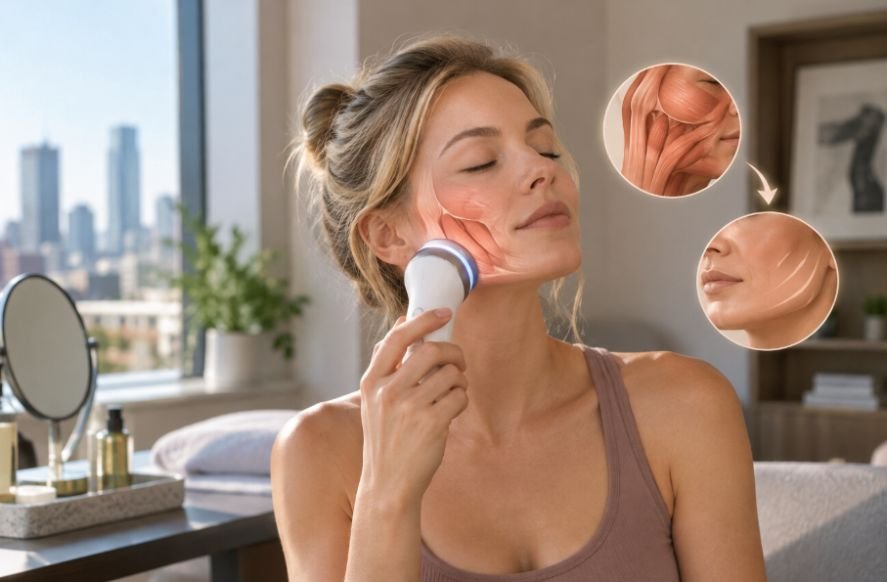
Facial sculpting devices can differ in where they aim to create an effect. Microcurrent and EMS-based technologies use electrical stimulation, but their mechanisms, intensity, and intended applications are not interchangeable. Some devices are designed to stimulate facial muscles, while others focus primarily on skin.
This matters when judging claims about a sharper jawline or lifted appearance. A temporary change caused by muscle stimulation, reduced puffiness, or improved circulation is different from structural changes in skin or deeper tissue. Consumers should seek evidence tied to the specific device.
Choosing a Next-Generation Device
Start with the concern you want to address, then examine the modality, schedule, specifications, safety features, and evidence. For shoppers, this also means reading specifications instead of relying on labels such as “advanced,” “professional,” or “deep.” Those descriptions can sound impressive without explaining energy levels, treatment limits, or the evidence behind a claimed benefit. Clear specifications are more useful than a crowded feature list.
Look especially for:
- Clearly stated technology and intended use
- Sensible treatment instructions and intensity controls
- Safety features such as temperature or current monitoring
- Evidence supporting the underlying technology
- A design you will realistically use consistently
A technically impressive device that stays in a drawer has little practical value. Consistency is a major advantage because treatments can fit into a routine.
Where Professional Treatment Still Fits
Next-generation home devices should not blur the line between consumer skincare and medical procedures. Some energy-based technologies require professional training.
The FDA has specifically warned that RF microneedling is a medical procedure and should not be used at home, citing reports of burns, scarring, fat loss, disfigurement, and nerve damage. That warning concerns RF microneedling, not ordinary noninvasive home devices, but it illustrates why the exact technology matters.
For everyday use, high-tech facial devices for everyday skincare should therefore be judged by appropriate claims, sensible energy levels, clear instructions, and realistic expectations. More advanced does not automatically mean more aggressive.
Frequently Asked Questions
1. Are next-generation facial sculpting devices better than basic tools?
They can offer more targeted technology, multiple treatment modes, and improved controls, but effectiveness depends on the device and evidence behind its technology.
2. Can these devices permanently reshape the face?
Most consumer devices should not be expected to permanently reshape facial anatomy. They may temporarily improve definition or support changes in skin appearance with consistent use.
3. Is combining several technologies always better?
No. Combining technologies can help when their purposes complement each other, but extra features do not automatically produce better results.
4. What should I check before buying one?
Look at the technology, intended use, treatment instructions, safety features, specifications, and evidence. Also consider whether the routine is realistic enough to follow consistently.
The Technology Matters Less Than the Fit
The most interesting development in facial sculpting is not one breakthrough gadget. It is the movement toward devices that combine established technologies with better control, thoughtful design, and clearer treatment goals. That makes informed selection more important. A device should earn its place in a routine by solving a specific problem rather than simply carrying a long list of features.
The smartest approach is to choose technology with a purpose, use it consistently, and keep expectations grounded. A useful device does not need to promise a new face. It needs to make good skincare easier to maintain.
Leave a Reply