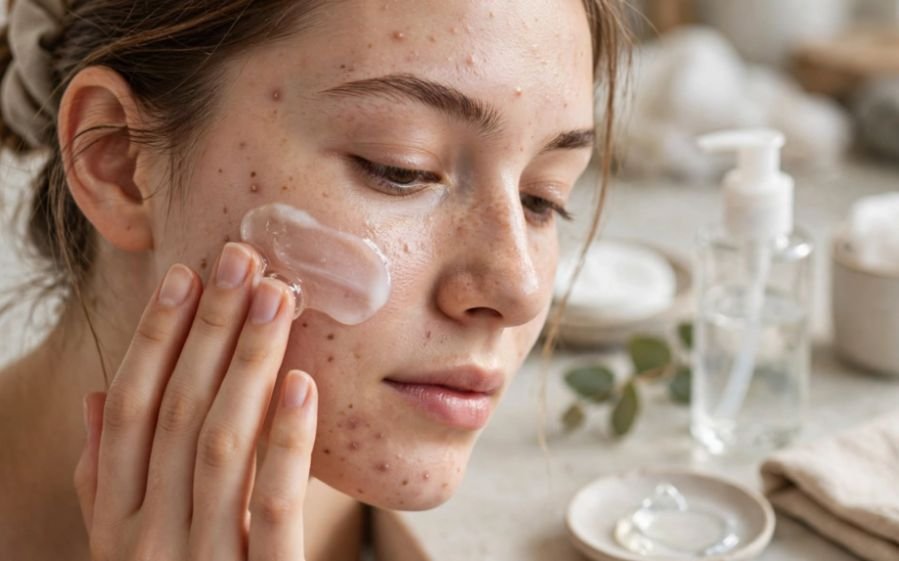
Finding a daily SPF when your skin rebels against everything feels like an impossible compromise between UV protection and cystic breakouts. For years, I avoided daily sun protection because every cream-heavy formula turned my face into an oil slick by noon. The secret isn’t skipping SPF; it is understanding how specific textures and active filters interact with your pores.
A “non-comedogenic” label on a bottle is largely an unregulated marketing claim rather than a medical guarantee. Real pore safety comes down to choosing the right vehicle, avoiding heavy occlusives, and mastering application techniques.
Understanding What Actually Clogs Your Pores
The Truth About Non-Comedogenic Labels
Marketing terms give a false sense of security. Individual sebum composition varies wildly, meaning a formula that works for someone else might trigger micro-comedones on your skin. Instead of trusting front-label claims, look directly at the ingredient deck.
Heavy plant oils like coconut or wheat germ, rich butters like shea or cocoa, and heavy synthetic emollients like isopropyl myristate are common culprits that trap sebum in the follicles.
Mineral Versus Chemical Filters for Breakouts
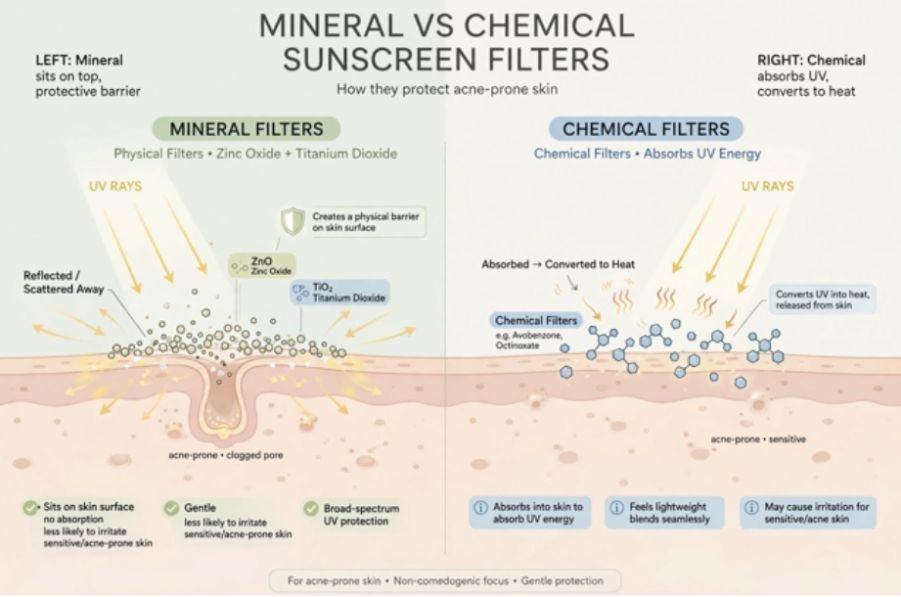
Mineral filters like zinc oxide and titanium dioxide sit on top of the skin to reflect UV rays. Zinc oxide offers mild anti-inflammatory properties that calm active, angry acne. Chemical filters like avobenzone and octisalate absorb UV rays and dissipate them as heat.
They enable much lighter fluid and water-gel textures, though specific organic filters can cause stinging or contact redness on sensitive, compromised skin barriers. If you are dealing with angry breakouts, you might also want to check out retinol purging vs allergic reaction breakouts to ensure your skin issues stem from your SPF rather than active treatments.
The Best Texture Types to Keep Pores Clear
Water-Gels and Lightweight Fluids
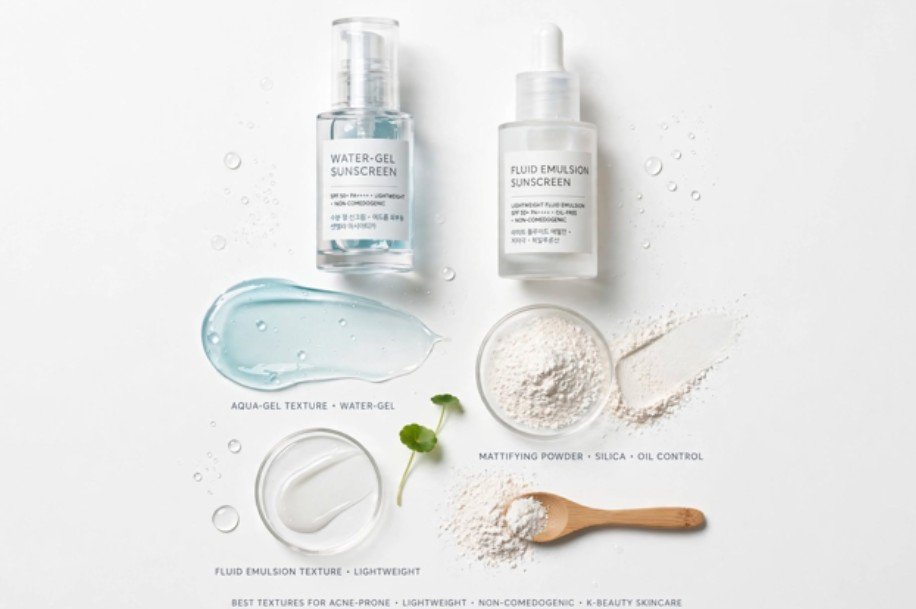
Rich creams trap sweat and dead skin cells inside the pore lining. Transitioning to lightweight aqua-gels or fluid emulsions changes everything. These formulas use high water content and volatile silicones that evaporate quickly, leaving a weightless protective film behind. They control excess sebum production throughout the day without stripping the moisture barrier.
Mattifying Powders and Silica Additions
If midday shine is your primary nemesis, look for formulations boosted with silica or starch-based powders. These ingredients act like microscopic sponges, absorbing excess sebum before it can mix with your sunscreen and form a pore-clogging plug.
Pairing your lightweight SPF with a best hydrating toner for sensitive dry skin ensures your baseline hydration remains high so your skin does not overproduce oil in defense.
Application Habits That Prevent Breakouts
The Two-Finger Rule Done Right
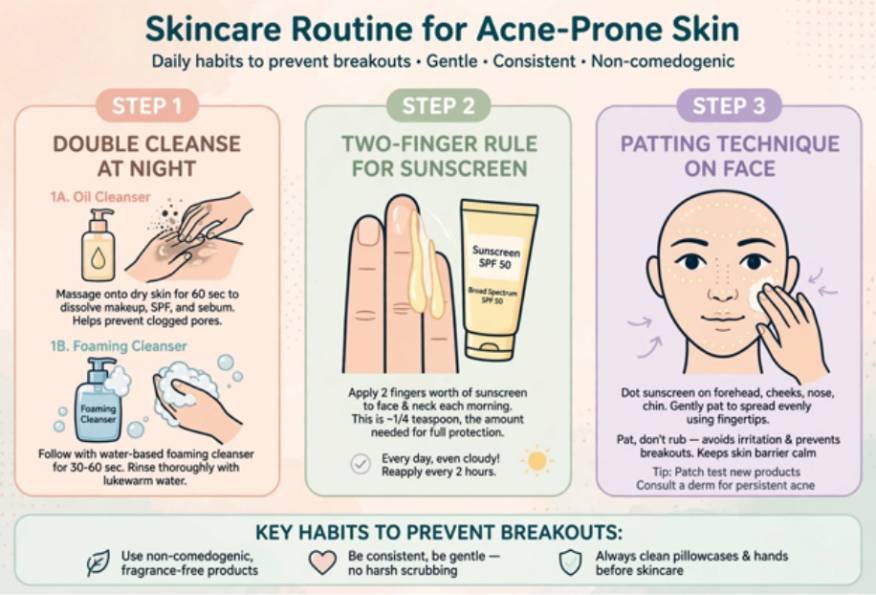
Using too little sunscreen leaves your skin vulnerable to sun damage, but slathering on heavy layers causes congestion. Apply two full finger lengths of product for your face alone to meet the clinically tested density of $2\text{ mg/cm}^2$.
Spreading this exact amount across your face and neck dilutes coverage drastically. Use a separate finger length for your neck and ears to ensure proper protection.
Layering and Patting Techniques
Allow your morning moisturizer two to three minutes to set before layering your sunscreen on top. Applying SPF over wet skincare disrupts the film-forming agents and leads to uneven protection and product pilling.
Avoid aggressively rubbing fluid sunscreens into the skin. Excessive friction drives emulsifiers straight into vulnerable pores and inflames active lesions. Instead, dot the product evenly across your face and pat or gently smooth outward in a single uniform direction.
The Non-Negotiable Double Cleanse
Even the lightest non-comedogenic sunscreens require a thorough breakdown at the end of the day. UV filters, silicones, and waterproof polymers cling stubbornly to skin lipids.
Use an oil-based cleanser, cleansing balm, or micellar water as your first step to dissolve stubborn filters. Follow immediately with a gentle water-based foaming or gel wash to completely rinse away all solubilized residue before you sleep.
Frequently Asked Questions
1. Can I skip moisturizer if I use a gel sunscreen?
Yes, if your skin feels adequately hydrated by a lightweight gel sunscreen, you can skip your morning moisturizer entirely to prevent heavy product layering.
2. Why does my sunscreen pill on my face?
Pilling usually happens when you layer sunscreen over unabsorbed moisturizer or apply too much friction during application.
3. Are physical sunscreens always better for acne?
Not necessarily; while zinc oxide has anti-inflammatory benefits, poorly formulated mineral sunscreens can feel heavy and occlusive.
4. How do I remove water-resistant sunscreen properly?
Always use a two-step cleansing routine starting with an oil cleanser or micellar water, followed by a gentle water-based cleanser.
Leave a Reply