
The simplest rule is also the most useful: if you are wondering whether to use hypochlorous acid spray before or after moisturizer, use it before moisturizer in a normal skincare routine. Apply it to freshly cleansed skin, let the mist dry, then continue with serum, moisturizer, and sunscreen in the morning.
That order is mainly about contact. Hypochlorous acid (HOCl) is water-based, while moisturizer leaves a protective layer that slows water loss. Applying the spray first gives it direct access to skin instead of asking it to work through a cream or ointment.
Why HOCl Has Become a Skincare Staple
Hypochlorous acid sounds harsh, but the human immune system actually produces it. Neutrophils use HOCl as part of the body’s defense against microbes. Modern facial sprays use stabilized formulations designed for topical use, which are very different from household disinfectants.
A 2025 clinical review available through the National Library of Medicine evaluated research on HOCl across dermatology and several other medical specialties. The review drew on 61 original clinical studies and described antimicrobial, anti-inflammatory, immunomodulatory, and wound-healing activity. It also emphasized that results are not completely consistent and that formulation, stability, pH, and dosing can influence performance.
A facial HOCl mist may therefore support irritated or blemish-prone skin, but it is not a cure-all for acne, eczema, rosacea, or infected skin.
The Best Layering Order
The American Academy of Dermatology recommends cleansing first, applying medications or treatments next, and following with moisturizer and sunscreen. A facial HOCl spray fits most logically into that treatment stage.
Morning Routine
- Cleanse gently and pat the skin dry.
- Mist a skin-labeled HOCl spray evenly over the face.
- Let it air-dry completely.
- Apply a serum or another leave-on treatment, if used.
- Apply moisturizer.
- Finish with broad-spectrum SPF 30 or higher.
Evening Routine
Cleanse, mist HOCl, allow it to dry, then apply your other leave-on products and moisturizer. If you use a prescription topical medication, follow your prescriber’s directions rather than changing the sequence yourself.
The often-repeated “30 to 60 seconds” waiting period is a practical estimate rather than a medically established magic number. A simpler rule is to wait until the mist no longer feels wet before applying the next layer.
What If You Spray It After Moisturizer?
Using HOCl after moisturizer is not automatically wrong. It is simply less ideal when you are building a deliberate morning or evening routine.
Moisturizers contain humectants, emollients, and sometimes occlusive ingredients that create a layer over the skin. Spraying a watery product afterward can still feel refreshing, but the HOCl is no longer being applied directly to clean skin.
| Situation | Best approach | Why |
| Regular AM or PM routine | HOCl before moisturizer | Gives the mist direct skin contact |
| Midday heat or irritation | Light mist over existing skincare | Practical when cleansing is inconvenient |
| After sweating | Cleanse when possible; otherwise mist temporarily | Bridges the gap until a proper wash |
| Very dry skin | HOCl first, moisturizer after drying | Moisturizer helps reduce water loss |
If you mist over sunscreen or makeup, treat it as a refresh rather than a substitute for cleansing, moisturizer, or sun protection. Sunscreen still belongs at the end of the daytime skincare routine.
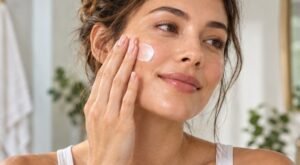
Why Moisturizer Still Matters
HOCl is not a moisturizer. Even if a spray feels soothing, it does not replace the barrier-supporting role of creams, lotions, and ointments.
The Mayo Clinic’s dry-skin guidance recommends moisturizing while skin retains some moisture because this helps limit water loss. For dry or reactive skin, ingredients such as ceramides, glycerin, fatty acids, or petrolatum may matter more for lasting comfort than repeatedly adding facial mists.
Redness can exist alongside barrier damage, so adding antimicrobial products without enough moisturization may not address underlying dryness.
A Four-Step Test for Using HOCl Well
1. Check the Label
Only use an HOCl formula specifically intended for topical or facial skin. Cleveland Clinic dermatology guidance warns that HOCl skincare formulas and products made to disinfect household surfaces are not interchangeable.
That distinction matters more than choosing a product based on social-media popularity or assuming every bottle containing hypochlorous acid is suitable for your face.
2. Keep the Formula Simple
Sensitive skin often does better with fragrance-free formulas and short ingredient lists.
The National Eczema Association has accepted certain facial HOCl products formulated with ingredients such as water, hypochlorous acid, and sodium chloride. Its guidance also makes an important point: an acceptance seal does not guarantee that every product will suit every person with eczema or sensitive skin.
3. Let Layers Dry Instead of Mixing Them

Do not pour HOCl into moisturizer or combine it with several serums in your palm.
Clinical research has not mapped every possible interaction between consumer HOCl sprays and ingredients such as vitamin C, retinoids, niacinamide, or exfoliating acids. Applying products as separate layers makes the routine easier to evaluate and reduces unnecessary experimentation.
If a dermatologist has prescribed an acne, eczema, rosacea, or other medication, the prescribed treatment schedule should take priority.
4. Watch Your Skin, Not the Trend
A product can be popular and still be unnecessary for your routine.
If your skin becomes tighter, increasingly irritated, or persistently red after introducing HOCl, reduce the frequency or stop using it. Severe pain, spreading redness, pus, crusting, fever, eye involvement, or a rapidly worsening rash deserves medical evaluation rather than another skincare product.
Common Misconceptions About Hypochlorous Acid
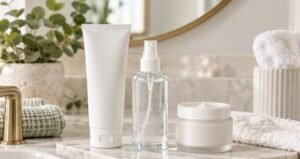
Stronger does not automatically mean better. HOCl performance depends on formulation chemistry, including pH and stability, so concentration alone does not determine product quality. Research reviews have specifically identified formulation stability as an important factor in topical HOCl performance.
Likewise, “natural to the body” does not mean irritation is impossible. Well-formulated topical HOCl is generally considered well tolerated, but individual reactions can occur.
The final misconception is that HOCl can replace acne medication or eczema treatment. Research is promising in several inflammatory skin conditions, but evidence remains uneven. It makes more sense to view HOCl as a supportive skincare tool than as a substitute for dermatologist-directed treatment.
Frequently Asked Questions
1. Can I put moisturizer on immediately after hypochlorous acid spray?
Wait until the mist has dried, then moisturize. A fixed 30- or 60-second interval matters less than avoiding wet-on-wet layering.
2. Can I use HOCl spray over makeup?
Yes. A facial HOCl spray can work as a light refresh, but it does not replace cleansing, moisturizer, acne treatment, or sunscreen.
3. Should I use hypochlorous acid spray before or after moisturizer if I have eczema?
Usually before, followed by a bland moisturizer once dry. If eczema is cracked, infected, painful, or actively flaring, ask a dermatologist about the safest routine.
4. Can I use hypochlorous acid every day?
Many topical products are designed for regular use, but frequency varies by formulation. Follow the label and reduce use if your skin becomes dry or irritated.
The Takeaway
For a normal skincare routine, the answer to hypochlorous acid spray before or after moisturizer is straightforward: spray first, moisturize second. Clean skin gives HOCl the clearest opportunity to contact the surface, while moisturizer belongs afterward to support hydration and the skin barrier.
After-moisturizer use still has a place when you are sweaty, overheated, traveling, or simply need a midday refresh. The more useful lesson is not to overcomplicate the routine. Choose a facial-grade product, let it dry between layers, keep moisturizer and sunscreen doing their own jobs, and treat persistent skin problems as medical issues rather than layering problems.
Leave a Reply