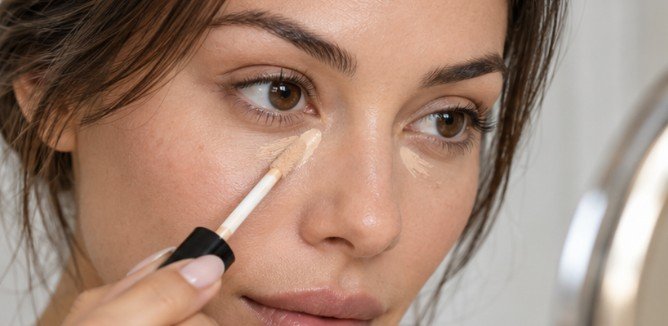
The surprising truth about under-eye creasing is that more makeup usually makes the problem worse, not better. Every time you smile, squint, blink, or look down, the skin beneath your eyes moves. A thick layer of concealer has nowhere to go except into those natural folds.
Learning how to stop concealer from creasing under eyes is therefore less about finding an impossibly crease-proof formula and more about controlling hydration, product quantity, placement, blending, and setting.
The goal is not to make the under-eye area completely motionless. It is to create a thin, flexible layer that moves with your skin instead of collecting inside fine lines.
Why Concealer Creases Under Your Eyes
Creasing happens when concealer migrates into small folds in the skin. Three factors usually make it noticeably worse: dryness, excessive product, and movement.
Dry under-eye skin can exaggerate texture before makeup is even applied. The American Academy of Dermatology explains that dehydrated skin can make fine lines appear more noticeable, while moisturizer helps trap water in the skin. American Academy of Dermatology dry-skin guidance
Moisturizing does not erase wrinkles, but it can temporarily make the skin surface look smoother. Mayo Clinic similarly notes that moisturizers hold water in the skin and can reduce the visible appearance of small lines.
That matters because concealer sitting over dry, textured skin is more likely to look heavy and fragmented.
Start With Less Under-Eye Skincare Than You Think
Hydration helps, but an overly rich layer immediately before makeup can create another problem: slip.
Apply a small amount of lightweight moisturizer or eye cream beneath the eyes and allow it to settle before applying complexion makeup. If the surface still feels wet or greasy, give it more time rather than immediately covering it.
Harvard Health moisturizer guidance suggests that commonly use ingredients such as glycerin and other humectants to bind water to the skin. The objective before makeup is hydrated skin—not a thick film sitting on top of it.
People with very dry under-eyes may need slightly richer preparation. Oily or combination skin may need much less.
Do Not Stack Foundation and Concealer Without a Reason

One of the easiest ways to create creasing is placing foundation beneath the eyes and then adding a full layer of concealer over it.
If your foundation already provides enough coverage around the orbital area, keep it minimal there. Then add concealer only where discoloration remains.
This can cut the total amount of complexion product sitting inside your fine lines nearly in half.
Use Concealer Where Darkness Actually Exists
A common application mistake is painting a large triangle of concealer from the lower lash line halfway down the cheek. Most people do not need that much product. Make sure to use hypochlorous acid spray before putting concealer for that extra hydration.
Look straight into a mirror and identify the darkest areas. For many people, that means the inner corner and the hollow running beneath the eye rather than the entire under-eye surface.
Place tiny amounts there first.
Then blend outward with tapping motions. Avoid dragging the product aggressively across the skin because this spreads pigment into areas that never needed coverage.
If additional coverage is necessary, add another extremely thin layer rather than applying one heavy coat.
The 30-Second Crease Test
After blending, do not immediately reach for powder.
Wait roughly 20 to 30 seconds. Blink normally, smile once, and look downward.
Then inspect the under-eye area closely.
If concealer has already settled into a line, gently tap that line with a clean fingertip, small brush, or slightly damp sponge. This removes or redistributes the excess product before powder locks it into place.
This small step can make a bigger difference than adding more setting powder.
Diagnose Your Creasing Pattern
| What you notice | Likely problem | What to change |
| Concealer looks dry and cracked | Under-eye dehydration or too much powder | Moisturize lightly and reduce powder |
| Creases appear within minutes | Too much concealer | Use a thinner layer |
| Makeup slides around | Excess skincare or oil | Use less prep and allow absorption time |
| Fine lines become more obvious after setting | Powder layer is too heavy | Use a smaller brush and less powder |
| Only the lash-line area creases | Concealer is placed too high | Keep most product below the deepest folds |
This troubleshooting approach is more useful than automatically switching products because it identifies which part of the routine is causing the failure.
Set the Under-Eye Area Strategically
Powder can reduce movement, but excessive powder can emphasize every line.

Before setting, make sure no concealer is visibly sitting inside a crease. Once the surface looks smooth, pick up a very small amount of finely textured setting powder using a small fluffy brush.
Tap off excess powder.
Press or lightly sweep it only over the areas that need setting, especially where concealer normally moves. Avoid repeatedly layering powder throughout the day.
A heavy powder application may initially look smooth but become increasingly dry as the hours pass.
What About Mature or Very Dry Under-Eyes?
People with mature skin often need a different strategy than someone with oily skin.
With age, skin tends to hold less moisture. The American Academy of Dermatology notes that dryness and fine lines become more common as skin ages and that moisturizing can improve their appearance.
That means aggressive powdering can be counterproductive.
For mature or noticeably dry under-eyes, prioritize a thin, flexible concealer layer and set only where necessary. You may find that leaving the outer eye largely unpowdered creates a smoother appearance than attempting to completely mattify it.
Research indexed by PubMed also describes the periorbital region as particularly prone to early visible aging and wrinkles, reinforcing why this area often behaves differently from the rest of the face.
How to Fix Concealer Creasing During the Day
Do not immediately add another layer of concealer.
First, wash or sanitize your hands. Then gently press a clean fingertip over the crease. The warmth of your finger can soften the existing makeup enough to redistribute it.
If necessary, use a clean sponge to tap the edges smooth.
Adding more liquid concealer over dried makeup often creates another visible layer, while piling on powder can make the area look chalky.
Hygiene matters around the eyes as well. The U.S. Food and Drug Administration advises keeping hands and cosmetic tools clean and stopping use of eye-area cosmetics if irritation or infection develops.
When Creasing Is Actually Irritation

Persistent flaking, redness, burning, swelling, or itching should not automatically be treated as a makeup-performance problem.
Cosmetics can sometimes contribute to irritation or contact dermatitis. MedlinePlus lists cosmetics among substances capable of triggering contact dermatitis and notes that makeup can also irritate the eye itself.
If the area is inflamed, stop applying makeup until the skin has recovered. Persistent symptoms deserve evaluation by a dermatologist, optometrist, or ophthalmologist.
Frequently Asked Questions
1. Why does my concealer crease even after powder?
You may be setting too much product. Remove excess concealer from fine lines before powdering, then apply only a very thin powder layer.
2. Should I put foundation under my eyes before concealer?
Usually only if you need the additional coverage. Layering foundation and concealer can increase product buildup and make creasing more noticeable.
3. Should concealer go directly under the lower lashes?
Not necessarily. Keeping most concealer over areas of darkness rather than deep folds close to the lash line can reduce product accumulation.
4. Can dry skin make under-eye concealer crease?
Yes. Dehydrated skin can make fine lines more visible. Light moisturizing before makeup can create a smoother-looking surface, although excessive skincare can make concealer slide.
The Thin-Layer Rule Usually Wins
The most reliable answer to how to stop concealer from creasing under eyes is surprisingly simple: give the moving skin beneath your eyes less makeup to move around.
Hydrate enough to soften visible dryness, avoid unnecessary foundation underneath, concentrate concealer where darkness actually exists, remove anything that settles before setting, and use powder sparingly.
Some movement and fine-line settling will always be normal because your face is supposed to move. Successful under-eye makeup is not makeup that behaves like cement. It is makeup thin and flexible enough that you can blink, smile, and go through the day without constantly repairing it.
Leave a Reply