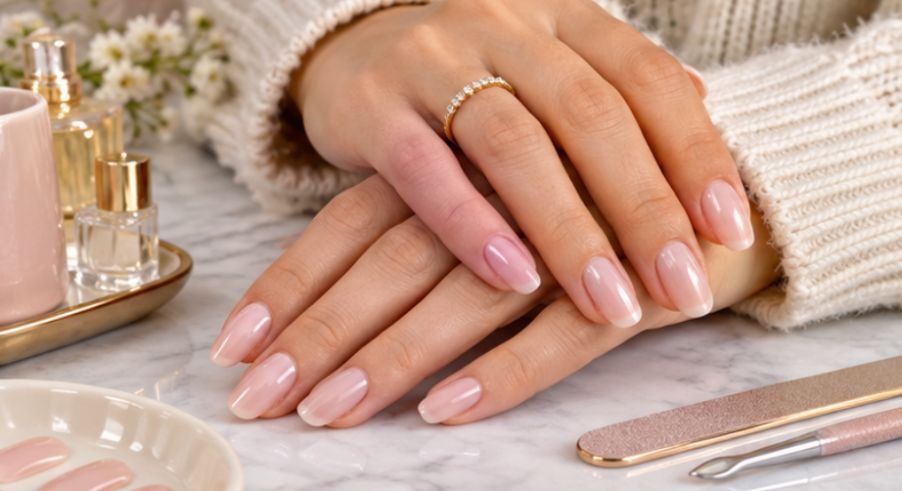
The strongest press-on manicure is not automatically the best one. A bond that survives showers, workouts, and a weekend trip can also make removal harder and reduce your chance of reusing the set. That is why nail glue vs adhesive tabs which is better has no universal answer: glue usually wins for durability, while tabs win for easier removal, lower commitment, and preserving reusable press-ons.
I would choose based on one question first: do you care more about wear time or flexibility?
The Real Difference Is Bond Strength and Removal
Nail glue commonly uses a fast-setting cyanoacrylate-type adhesive. It creates a firm bond between the artificial nail and natural nail plate, making it useful for vacations, busy workweeks, or anyone wanting extended wear.
Adhesive tabs behave more like pressure-sensitive stickers. They are slightly flexible and designed to release more easily, which makes them practical for weddings, photo shoots, weekends, or frequent style changes.
Because water exposure can affect both the natural nail and the adhesive bond, it is also useful to understand how to protect nails from water damage when choosing between glue and adhesive tabs.
The U.S. FDA nail-care product guidance advises consumers to follow nail-product labels and warnings carefully and notes that infections and allergic reactions can occur with some nail products.
Nail Glue vs Adhesive Tabs Which Is Better? A Fast Comparison
| Factor | Nail Glue | Adhesive Tabs |
| Typical wear goal | About 1–3+ weeks | A few days to roughly a week |
| Best use | Travel, longer wear | Events, weekends, frequent swaps |
| Water resistance | Usually stronger | Usually weaker |
| Removal | Slower and more involved | Faster and easier |
| Press-on reuse | Less predictable | Usually better |
| Beginner friendliness | Moderate | High |
These are practical ranges rather than guarantees. A carefully applied tab can outlast poorly applied glue, while even strong glue may fail early if oil, lotion, moisture, or poor sizing prevents full contact.
Why Nail Glue Usually Lasts Longer
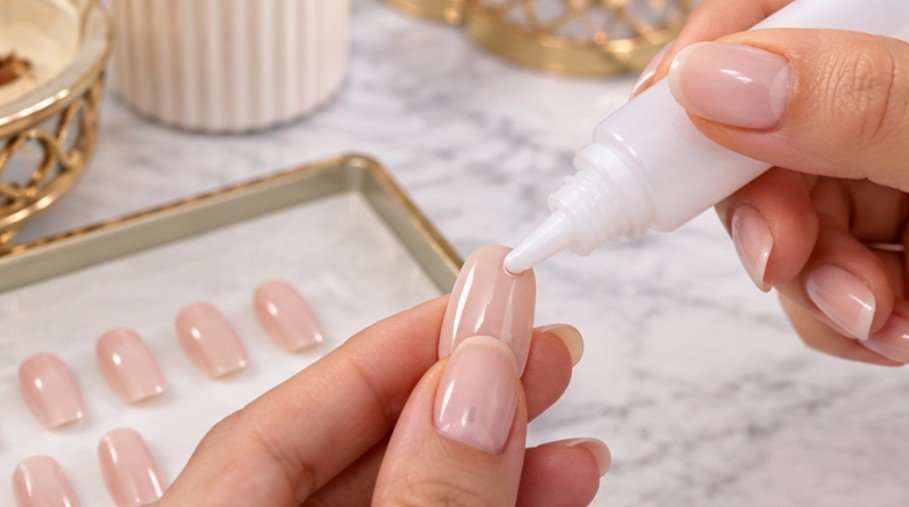
Cyanoacrylate nail adhesives cure quickly and create a strong bond. Less movement between the press-on and natural nail generally means fewer lifted edges, particularly during daily chores or extended wear.
The drawback often appears during removal. Pulling or prying at a firmly attached nail can strip superficial layers from the natural nail plate, leaving it rough, thin, or tender.
The American Academy of Dermatology artificial-nail advice on application and removal can weaken natural nails, particularly when aggressive filing or repeated treatments are involved.
Glue can also irritate or sensitize some users. Medical reports have documented allergic contact dermatitis, inflammation, and nail separation associated with cyanoacrylate nail adhesives. Itching, swelling, redness, blistering, or persistent nail lifting therefore deserves more attention than simply covering the problem with another press-on.
Why Adhesive Tabs Work Better for Reusable Sets
Tabs become particularly attractive when the press-on nails themselves are worth protecting. Because tab residue is generally easier to remove from the underside, a good-quality set can often be cleaned and worn again.
That can make tabs more economical for custom, hand-painted, seasonal, or premium press-ons. Beginners may also appreciate being able to correct placement without dealing with quickly setting liquid glue.
The compromise is durability. Long showers, washing dishes, cleaning, lifting weights, gardening, or repeatedly putting pressure on long tips can loosen tabs sooner.
There is another overlooked issue: moisture. Cleveland Clinic dermatologist Taryn Murray, MD, has warned that press-ons can trap moisture, potentially creating an environment where bacteria or fungus can grow. A nail that lifts after getting wet should therefore be removed and dried rather than simply pushed back into place.
Use This Four-Question Test Before Applying Press-Ons
1. How Long Do You Need Them?
For one evening, a weekend celebration, or a photo shoot, tabs are usually sufficient. For a weeklong vacation or extended everyday wear, glue is generally more dependable.
2. Do You Want to Reuse the Set?
If your press-ons are expensive, custom-designed, or difficult to replace, tabs make more sense. If reuse is unimportant, glue becomes easier to justify.
3. What Will Your Hands Be Doing?
Regular swimming, cleaning, gardening, lifting, or other hands-on activities favor the stronger bond of glue. Light office work and short events make tabs more realistic.
4. Are Your Nails Already Irritated?
Do not hide painful, inflamed, separating, or infected-looking nails beneath another artificial nail.
Harvard Health explains that contact dermatitis can occur after exposure to cosmetics and other chemicals. When an allergen is unclear, dermatologists may use patch testing to identify it.
Better Nail Prep Beats Using More Adhesive
Start with press-ons that fit from sidewall to sidewall without pressing into the surrounding skin. Wash your hands and dry them thoroughly. Gently clear excess cuticle from the nail plate and remove surface oil if the product instructions recommend it.
Avoid applying hand cream immediately beforehand.
With glue, more is not automatically better. Excess adhesive can squeeze onto surrounding skin and make removal messier without guaranteeing additional wear time.
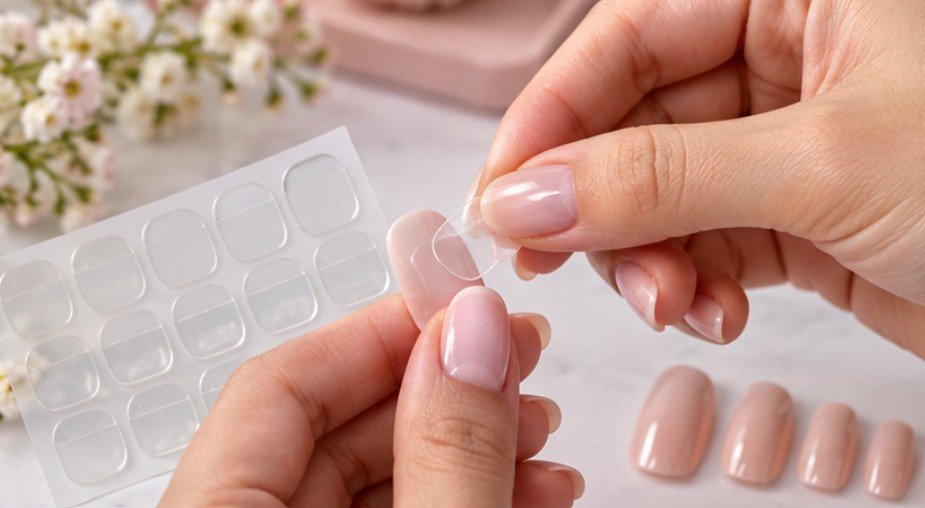
With tabs, choose a size covering most of the nail plate without touching the skin. Press the tab down firmly before attaching the artificial nail.
After either method, follow the manufacturer’s directions concerning water exposure and bonding time rather than relying on a universal rule from social media.
Proper nail preparation also includes keeping the surrounding skin comfortable and hydrated, so learning how to moisturize nails and cuticles can be useful before starting a press-on application.
Safe Removal Matters as Much as Application
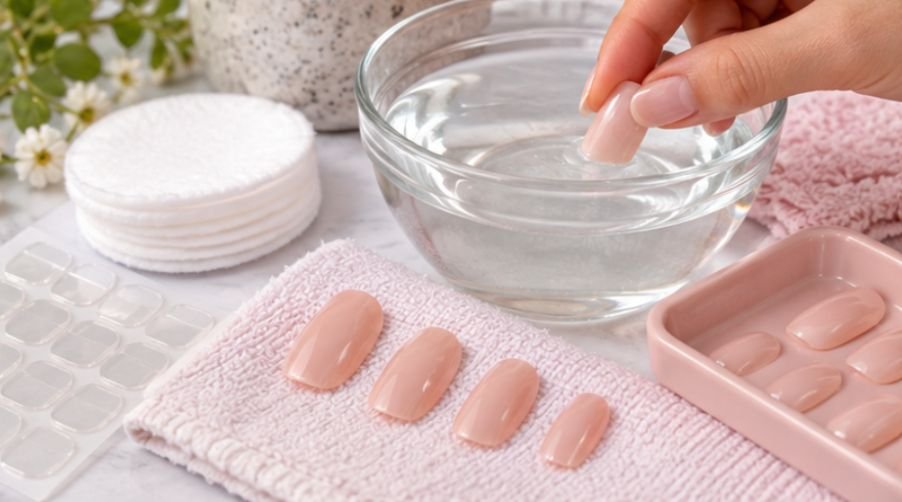
Never turn removal into a strength test. Popping, peeling, or prying off a firmly attached press-on can damage layers of the natural nail.
Adhesive tabs may release after soaking in warm soapy water or using oil, depending on the product. Nail glue may require longer soaking or acetone. Because press-on materials and adhesives differ, always check the manufacturer’s directions before using solvents.
Removers and primers should also be kept securely away from children. Poison Control warns that some artificial-nail removers and primers can cause serious poisoning or injury if swallowed.
Common Misconceptions About Press-On Adhesives
Tabs are often described as completely damage-free, but that promise is too broad. Their easier removal usually makes them gentler, yet ripping a tabbed press-on away can still traumatize the nail.
Likewise, glue does not automatically destroy every reusable set. Some press-ons can be cleaned and worn again, although dried glue, filing, and solvent exposure can make reuse less predictable.
The bigger mistake is assuming stronger adhesion always equals a better manicure. Your ideal adhesive depends on how long you need the nails, what your hands will encounter, and how you plan to remove them.
Frequently Asked Questions
1. Is nail glue stronger than adhesive tabs?
Generally, yes. Nail glue creates a firmer bond and is better suited to longer wear, regular water exposure, and more demanding daily activities.
2. Which option is better for weak or peeling nails?
Tabs are usually the lower-commitment choice. However, painful, splitting, inflamed, or separating nails should be allowed to recover and may require evaluation by a dermatologist.
3. Nail glue vs adhesive tabs which is better for a vacation?
Glue generally works better for a multi-day vacation because it handles water and physical activity more reliably. Tabs are useful if you want to change styles during the trip.
4. Can I use nail glue and adhesive tabs together?
Some users combine them, but layering adhesives can alter fit and complicate removal. Following the press-on manufacturer’s recommended attachment method is safer than improvising a stronger bond.
The Better Choice Depends on What You Want to Protect
If I needed my manicure to survive travel, errands, and several days of everyday activity, I would choose glue. If I cared more about reusing a favorite set, changing designs quickly, or simplifying removal, adhesive tabs would be the smarter option.
The best adhesive is not necessarily the one with the strongest hold. It is the one whose trade-offs match your plans. Tabs may lift sooner; glue may demand more patience during removal. Decide based on your schedule, natural nail condition, expected activities, and whether those press-ons are disposable or worth saving.
Leave a Reply