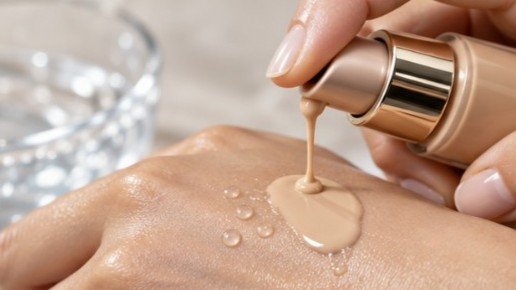
A foundation can list water first and still behave like a silicone-heavy formula. That is why choosing between water based vs silicone based foundation is less about spotting “aqua” on a label and more about understanding what comes next.
Neither type is universally better. Water-dominant formulas often feel lighter and more skin-like, while silicone-rich formulas tend to smooth texture and hold pigment in place longer. The best choice depends on your skin, prep routine, and preferred finish.
What the Labels Actually Tell You
Liquid foundation is usually an emulsion containing water, pigments, emollients, film-formers, preservatives, and other ingredients. That is why the first ingredient alone can mislead you.
Under U.S. cosmetic-labeling rules, ingredients are generally listed in descending order of predominance. The FDA’s cosmetic ingredient guidance therefore makes the top of the ingredient list the best place to start, although it does not reveal exact percentages.
A water-dominant foundation usually lists water first without major silicones near the top. A silicone-dominant formula may also list water first, but ingredients such as dimethicone, cyclopentasiloxane, cyclohexasiloxane, phenyl trimethicone, or related “-cone” and “-siloxane” ingredients appear early.
Silicones are not just fillers. Dermatology literature describes dimethicone as an emollient and barrier-supporting ingredient, while Harvard Health’s moisturizer guidance identifies dimethicone and cyclomethicone as silicone occlusives used in skin-care formulas.
Water Based vs Silicone Based Foundation at a Glance
| Factor | Water-dominant foundation | Silicone-dominant foundation |
| Feel | Thin, fluid, lightweight | Silky, velvety, more slip |
| Common finish | Natural to dewy | Satin to soft-matte |
| Texture effect | Leaves more natural texture visible | Often blurs pores and unevenness |
| Wear tendency | Comfortable, but may fade faster on very oily skin | Often grips longer and resists movement better |
| Often suits | Dry, dehydrated, sensitive-feeling skin | Oily, combination, textured skin |
| Main caution | Can break down faster with excess oil | Can emphasize flakes if skin is poorly prepped |
These are tendencies rather than rules. A water-rich foundation can be long-wearing, and a silicone-rich formula can look luminous. Pigments, powders, oils, humectants, and film-formers all influence the final performance.
When a Water-Dominant Formula Makes Sense
Dry or Dehydrated Skin
Water-based foundations are often paired with humectants and lightweight emollients, which can make them feel flexible on tight or flaky skin. They also tend to preserve more natural surface texture.
Still, “water-based” does not automatically mean moisturizing. DermNet’s guidance on moisturizers and emollients explains that hydration products work through combinations of humectants, emollients, and occlusives. That means the complete foundation formula—and the moisturizer underneath—matters more than water alone.
Sensitive-Feeling Skin
People who dislike a heavy or coated sensation may prefer a thinner water-dominant base. However, fragrance, alcohol, preservatives, botanical extracts, and other ingredients may be more relevant to sensitivity than whether silicone appears in the formula.
Anyone with persistent burning, swelling, itching, or a recurring rash should stop using the suspected product rather than continuing to experiment with different bases.
Acne-Prone Skin
This is where online foundation advice often becomes too absolute. Water-based makeup is frequently recommended for breakouts, but silicone alone is not a reliable way to predict whether a formula will clog pores.
The American Academy of Dermatology’s acne and makeup guidance recommends choosing products labeled “oil-free,” “non-comedogenic,” or “won’t clog pores.” Yale Medicine’s acne guidance also notes that certain cosmetics can contribute to clogged follicles.
In practical terms, the finished formula and your personal reaction matter more than avoiding every ingredient ending in “-cone.”
When Silicone-Rich Foundation Has an Advantage
Oily or Combination Skin
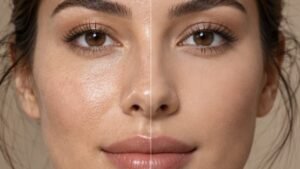
Silicone-heavy formulas often create a smoother film with more slip and stronger pigment hold. That can help if foundation repeatedly moves around the nose, forehead, or chin.
However, oily skin does not automatically require silicone. The American Academy of Dermatology also recommends oil-free, water-based makeup for oily complexions and notes that matte formulas may help reduce visible shine.
If your T-zone becomes oily but your cheeks feel normal or dry, a lighter foundation combined with strategic powdering may work better than choosing the heaviest matte formula available.
Visible Pores and Uneven Texture
Silicones can make texture appear smoother by filling tiny surface irregularities and creating a more uniform optical surface.
This does not physically shrink pores or erase fine lines. It is a temporary cosmetic effect that helps pigment spread more evenly instead of settling sharply around texture.
Long Wear and Humid Weather
For long workdays, weddings, outdoor events, or hot and humid parts of the United States, silicone-rich formulas may offer useful staying power because silicones can improve spreadability and create an even film across the skin.
That does not make them sweat-proof. Skin oil, humidity, sunscreen, powder, application thickness, and touching the face can all affect how long foundation lasts.
The 60-Second Ingredient-List Test
Start by reading the first five to seven ingredients. Water in position one is common in both foundation categories, so do not stop there.
Next, scan for dimethicone, cyclopentasiloxane, cyclohexasiloxane, trimethicone, or siloxane-type names. If several appear near the top, the foundation is probably silicone-dominant.
If water appears first while silicones are absent or much farther down the list, the formula is more likely water-dominant.
Then check claims that match your actual concern. Look for non-comedogenic labeling if you are breakout-prone, fragrance-free formulas if fragrance bothers you, and finishes described as matte, natural, satin, or radiant according to the result you want.
Use the ingredient list as a practical clue rather than laboratory proof. It tells you ingredient order, not the exact recipe.
Do Primer and Foundation Bases Have to Match?
Matching water with water and silicone with silicone is a useful troubleshooting shortcut, but it is not a strict rule. Note that to stop skincare products from pilling wait between each product.
A water-dominant primer can perform perfectly under a silicone-rich foundation when both formulas are compatible. Problems usually become noticeable when layers form films differently, too much product is applied, or makeup is rubbed before skincare has settled.
If your foundation pills or separates, simplify the routine. Apply less skincare, let sunscreen or moisturizer settle, use half your usual primer, and press a thin foundation layer over the skin instead of repeatedly rubbing it.
Then try the same foundation once without primer. If the problem disappears, the primer-foundation combination was probably contributing. If separation continues, excess oil, dry patches, sunscreen, or application technique may be the real issue.
Misconceptions Worth Dropping
Silicone does not automatically mean “bad for skin,” and water does not automatically mean hydrating, clean, gentle, or acne-safe. These terms describe part of the formulation structure rather than the overall quality of the product.
Likewise, silicone-rich does not always mean matte, while water-rich does not always mean dewy. Modern foundation formulas can combine water, silicones, powders, humectants, emollients, and film-formers in very different proportions.
The more useful question is not simply “Which base is better?” It is whether the foundation wears evenly on your skin, works with your skincare, produces the finish you want, and remains comfortable after several hours.
Frequently Asked Questions
1. Is water-based foundation better for acne-prone skin?
Not automatically. Look for non-comedogenic or oil-free labeling and monitor your skin response. The complete formula matters more than silicone alone.
2. How can I tell if my foundation is silicone based?
Check the first several ingredients for dimethicone, cyclopentasiloxane, cyclohexasiloxane, trimethicone, or siloxane-related names. Water may still appear first.
3. Can I use silicone foundation with a water-based primer?
Yes. If pilling occurs, reduce product amounts, allow skincare layers to set, and test the foundation without primer to isolate the problem.
4. Which foundation base lasts longer on oily skin?
Silicone-rich formulas often provide strong smoothing and wear, but some oily complexions perform better with lightweight, matte, water-based makeup.
Final Takeaway
The most useful lesson about water based vs silicone based foundation is that the front label tells you less than the first few ingredients on the back. Water can lead both types, and silicone is not automatically a pore-clogging villain. Start with your actual skin concern, verify the ingredient pattern, and test the foundation over your normal skincare.
Choose water-dominant formulas when lightness and a skin-like finish matter most. Consider silicone-rich formulas when smoothing, grip, and a more perfected surface are priorities. Ultimately, the better foundation is the one that still looks balanced and feels comfortable several hours after application.
Leave a Reply