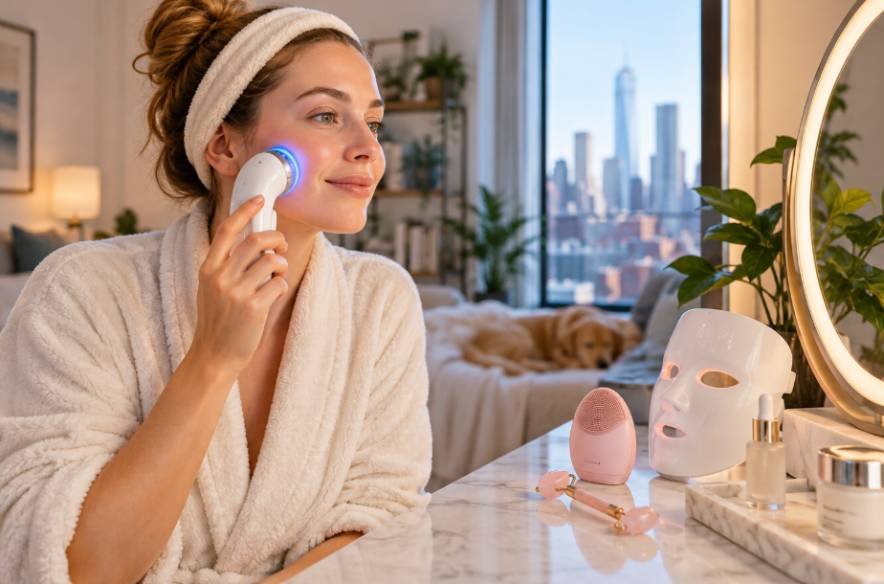
I started noticing how many facial devices had moved beyond occasional luxury treatments and into ordinary bathroom routines. I was curious whether these gadgets could make skincare more useful without turning a simple habit into a complicated project. The more I looked at LED masks, microcurrent tools, cleansing devices, and smart skincare gadgets, the clearer it became that technology can help, but only when the device matches a realistic goal.
I also realized that the biggest appeal is not having the most advanced gadget available. It is adding a targeted treatment to a routine that already works. A device can look impressive on the counter, but its value comes down to what it does, how safely it works, and whether someone will actually use it consistently.
What Makes a Facial Device High-Tech?
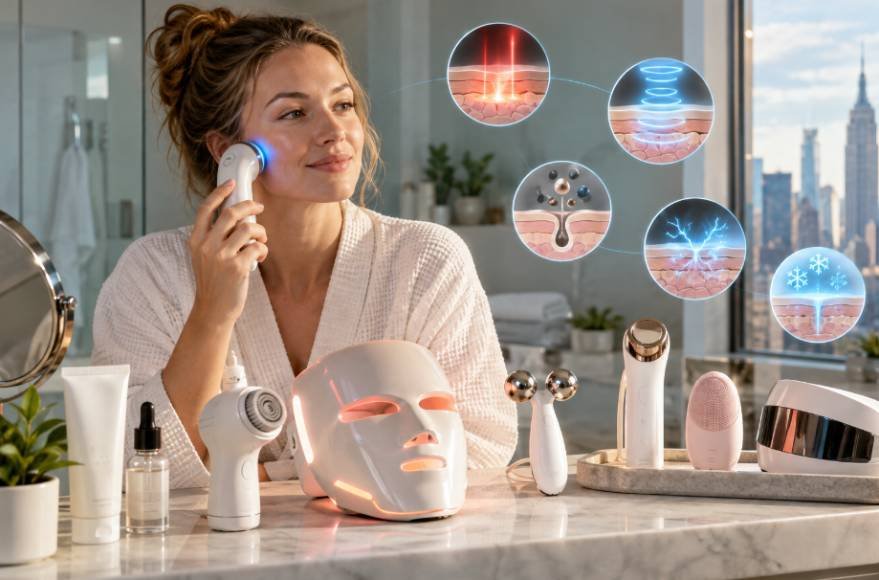
High-tech facial devices use light, electrical stimulation, vibration, thermal energy, or digital sensors to perform functions traditional skincare products cannot provide. Some tools focus on one technology, while multifunction devices combine several treatments.
That distinction matters because LED therapy, microcurrent, radiofrequency, and ultrasonic cleansing work differently. Their intended benefits differ too. Choosing a device should begin with a skincare concern rather than the number of features advertised.
The Main Technologies Worth Knowing
Microcurrent for a More Toned Look
Microcurrent devices deliver low-level electrical currents through conductive contact with the skin. They are commonly marketed for facial toning and a temporarily lifted or more defined appearance.
Microcurrent is better viewed as a maintenance-oriented beauty tool than a replacement for professional procedures. Proper conductivity matters, and sessions should stay within the duration and intensity recommended for the device.
LED Light Therapy
LED devices use specific wavelengths of visible or near-infrared light. Red-light treatments are commonly associated with signs of aging and overall skin appearance, while blue light is often used in acne-focused devices.
At-home LED devices are generally less powerful than professional equipment, and outcomes can depend on wavelength, dose, treatment schedule, and individual skin characteristics. LED should not be treated as an instant collagen fix or a substitute for medical acne care when professional treatment is necessary.
Ultrasonic Cleansing and Exfoliation
Ultrasonic skin scrubbers use rapid vibrations to help loosen surface debris, oil, and dead skin. Their appeal comes from providing a targeted mechanical approach without aggressive rubbing.
These tools can be useful for an occasional cleansing or exfoliation step. However, more exfoliation is not automatically better. Excessive use can contribute to dryness, irritation, and disruption of the skin barrier.
Radiofrequency and Multifunction Tools
Radiofrequency devices use controlled thermal energy and are generally marketed around skin firmness and rejuvenation. Because power and temperature control vary, users should follow instructions for the exact device.
Choosing Technology That Fits Your Routine
Start with one primary concern. Someone focused on acne may consider a blue-light option, while someone concerned about fine lines may look toward red-light technology. A person interested in a temporary toned appearance may prefer microcurrent.
For people interested in wearable beauty technology for skincare routines, comfort and ease of use deserve as much attention as technical specifications. Wearable technology adds value when it can be used comfortably, safely, and consistently.
Building a Smarter Home Routine
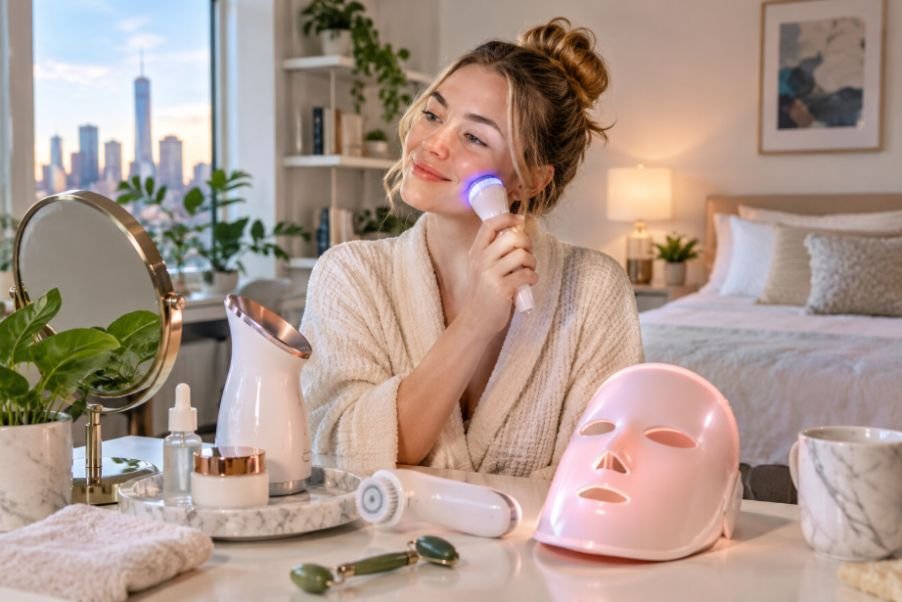
High-tech tools should support basic skincare rather than replace it. Cleansing, moisturization, and daily broad-spectrum sunscreen still matter. Devices are additions, not shortcuts around those fundamentals.
Introduce one new device at a time. Adding several technologies together makes it harder to identify what is helping or causing irritation. The same caution applies when introducing strong exfoliating acids or other active products.
Smart features can add convenience through timers, intensity controls, connected apps, and skin-analysis functions. Smart beauty mirrors with skin analysis technology can help organize routines and observe patterns, but digital measurements should not be treated as a diagnosis. Lighting, hydration, camera quality, and other variables can affect what a sensor detects.
Safety Matters More Than Extra Features
Read the manual before the first session. Treatment duration, preparation, intensity, conductive products, cleaning instructions, and compatible skincare can differ between devices.
Electrical and light-based devices also have contraindications. Broken, infected, or severely inflamed skin may not be an appropriate treatment surface. People taking photosensitizing medications or managing particular skin conditions should ask a qualified healthcare professional whether a light-based device is suitable.
When Professional Care Makes More Sense
Home technology has limits. Persistent acne, unexplained pigmentation, painful inflammation, significant scarring, or rapidly changing skin concerns deserve professional assessment rather than repeated experimentation with gadgets.
Why Consistency Beats a Bathroom Full of Gadgets
The most useful facial device is rarely the one with the longest feature list. It is the one that matches a specific goal, fits comfortably into an existing routine, and can be used safely enough to become a habit. High-tech skincare works best when technology adds precision or convenience without pushing basic care into the background. Results may be subtle, gradual, or temporary, so expectations should stay realistic.
A thoughtful routine does not need every new gadget. One appropriate device, used consistently and with realistic expectations, can be more practical than a shelf crowded with tools that promise everything.
Frequently Asked Questions
1. Are high-tech facial devices safe for everyday use?
Safety depends on the device, treatment type, skin condition, and frequency. Follow the manufacturer’s instructions and stop if significant irritation occurs. Some people may need professional advice before using light-based or electrical devices.
2. Can facial devices replace skincare products?
No. Devices generally complement cleansing, moisturizing, sunscreen, and appropriate active ingredients. They should not be considered substitutes for basic skincare or prescribed treatment.
3. Which facial device is best for acne?
Blue-light devices are commonly designed around acne-related concerns, while other technologies target different goals. Persistent or severe acne should be evaluated by a dermatologist before relying on home technology.
4. Do expensive facial devices work better?
Price alone does not determine effectiveness. Consider the technology, intended purpose, evidence, safety features, instructions, and whether you are likely to use the device consistently.
A Routine That Works With You
The smartest approach to facial technology is simple: choose based on your actual skincare needs, learn how the technology works, and give the device enough time to become part of a manageable routine. High-tech tools can add useful options at home, but they work best alongside the fundamentals rather than replacing the basics altogether.
The goal is not a bathroom full of gadgets. It is a routine that feels sensible, safe, and easy to keep.
Leave a Reply