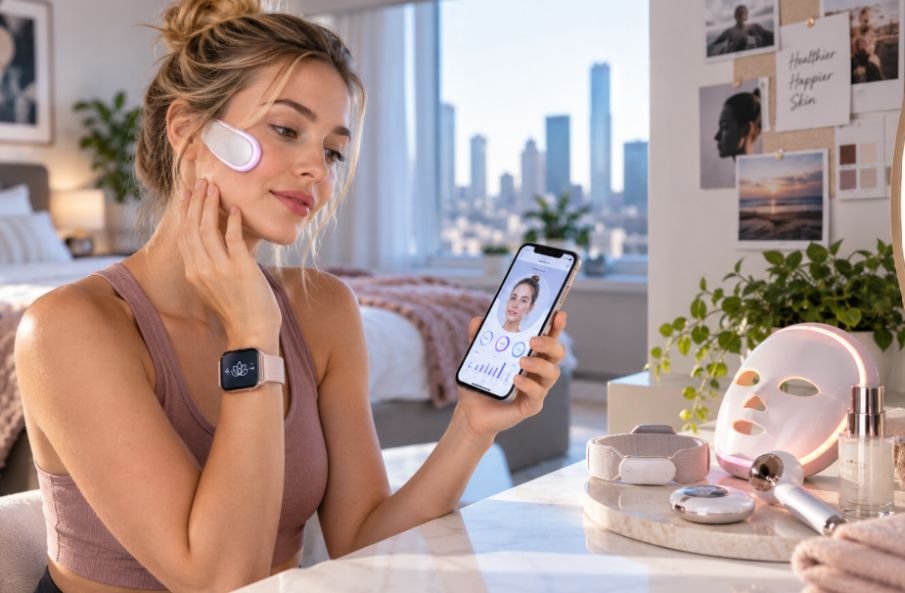
I started noticing how different my skincare habits felt once beauty devices became smaller, easier to wear, and connected to phones. A light mask used to feel like a separate treatment I had to remember; now the category is moving toward tools that can collect information while I go about my day. That shift makes wearable beauty technology for skincare routines feel less like a novelty and more like an emerging part of personal care.
The more interesting question became what a device can actually measure, what it can do with that information, and whether the feedback helps me make a better decision. That is where the category gets complicated, because sensors, light therapy, artificial intelligence, and connected apps are beginning to overlap.
What Counts as Wearable Beauty Technology?
Wearable beauty technology generally means a device designed to stay on or close to the body while collecting information, delivering treatment, or doing both. That can include flexible LED masks, skin sensors, smart patches, UV monitors, and electronic skin systems.
From LED Masks to Smarter Wearables
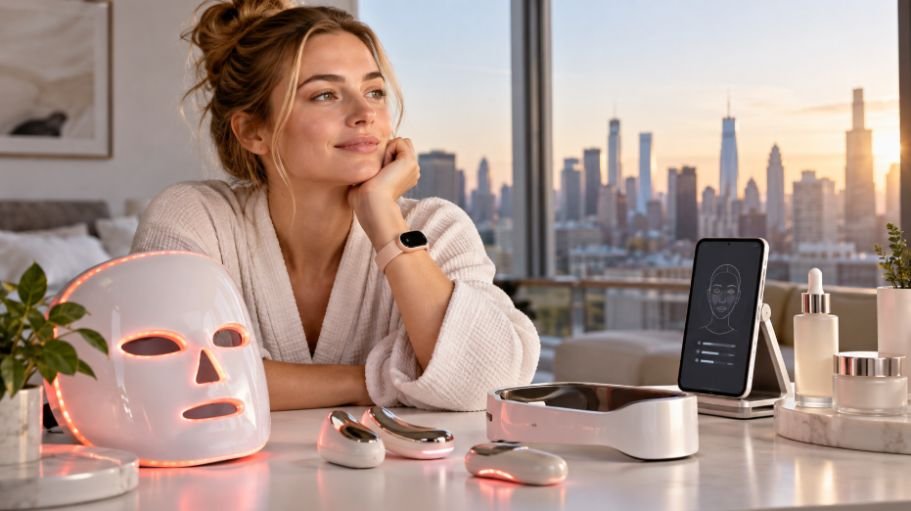
LED masks helped make beauty technology familiar, but newer designs are pushing the wearable concept further. Flexible masks can make light-based treatments easier to incorporate into a routine because the device sits closely against the face without requiring a large handheld unit.
That does not mean every LED device delivers dramatic results. At-home light devices are generally less powerful than professional equipment, and outcomes depend on the condition, device, and consistent use. Red and near-infrared light are widely discussed for signs of aging, while visible blue and red light devices can be used for certain acne-related concerns.
Sensors, Smart Patches, and Everyday Data
Wearable sensors are one of the biggest developments in this space. Researchers are working on flexible systems that can monitor physical and chemical signals while remaining comfortable on the body. Skin-contact technologies can potentially track moisture, temperature, sweat, UV exposure, and other biomarkers.
Smart patches take this idea closer to skincare. Some emerging concepts combine tiny sensors, microfluidic channels, or microneedle structures with delivery systems. Instead of guessing what the skin needs from a single snapshot, a wearable could eventually provide repeated measurements and help inform when an intervention is needed.
Where AI Fits Into the Routine
Artificial intelligence becomes useful when there is enough information to analyze. A connected device can generate readings, but software can turn those readings into patterns, comparisons, and recommendations.
That could mean recognizing changes over time rather than treating every skin assessment as an isolated event. A platform might compare previous measurements, consider environmental conditions, and suggest routine changes. This is the broader promise behind AI-powered skincare devices for personalized routines, where personalization comes from combining data rather than relying only on a questionnaire.
Still, an algorithmic recommendation should not be mistaken for a medical diagnosis. Skin changes have many possible causes, and consumer devices do not have the same role as a clinical examination. The most useful systems will make everyday tracking easier while clearly communicating measurement limits.
What Makes Wearable Beauty Technology Useful?
Convenience may be the biggest advantage. A device comfortable enough to wear regularly has a better chance of producing useful information than one that sits in a drawer. Complicated routines are also harder to maintain.
There is also an educational benefit. Seeing how UV exposure, moisture, or environmental conditions change throughout a day may help people understand why their skin behaves differently from one week to another. Data becomes useful when it leads to a sensible action, not simply when an app displays another number.
The Limits Are Just as Important
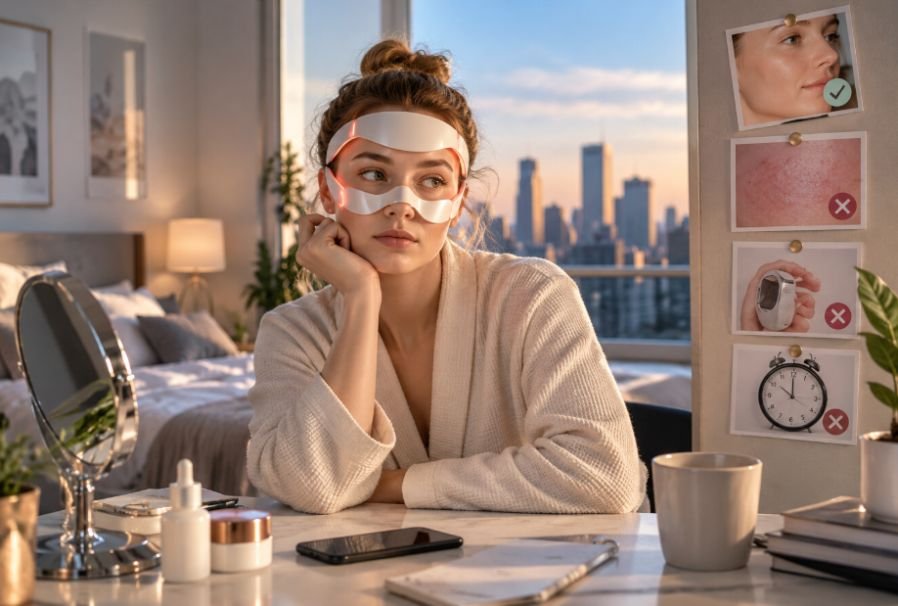
Wearable skincare technology still has limitations. Sensor accuracy can vary, calibration can drift, and there is not always a standardized way to interpret a measurement. Skin type, environment, device placement, and user behavior can affect readings.
Privacy deserves attention too. A connected beauty device may collect personal information, behavioral patterns, images, or long-term skin measurements. Consumers should understand what data is stored, where it goes, and whether it can be shared.
Light-based devices also need realistic expectations. FDA clearance, where applicable, addresses specific regulatory criteria and does not automatically mean a device will deliver dramatic cosmetic results. Following instructions matters, and people with particular skin concerns may benefit from professional advice before using a new treatment device.
Choosing Technology That Earns a Place in Your Routine
A useful wearable should solve a problem rather than add a gadget to a crowded bathroom shelf. Start with the concern you want to address, then look at what the device measures or treats, how often it needs to be used, and what evidence supports its intended purpose.
Connected ecosystems may also become more important. Tools such as smart beauty mirrors with skin analysis technology can combine visual assessment, routine tracking, and product guidance, creating a broader feedback loop around daily skincare.
Where Wearable Beauty Tech Is Heading
The direction is clear: smaller sensors, flexible materials, better connectivity, and more sophisticated software are bringing beauty devices closer to continuous skin monitoring. Future products may combine environmental data, skin measurements, imaging, and treatment in one system.
The challenge will be proving that this information is accurate enough to improve decisions. Better sensors and AI can make personalization more useful, but they also raise questions about validation, privacy, inclusivity, and responsible recommendations.
Frequently Asked Questions
1. What is wearable beauty technology?
It includes wearable or skin-contact devices that monitor skin conditions, deliver treatments, or connect measurements to digital platforms for personalized guidance.
2. Can wearable devices replace a dermatologist?
No. They may support tracking and routine management, but they cannot replace professional assessment or diagnosis.
3. Are LED masks considered wearable beauty technology?
Yes. LED masks are wearable treatment devices, although newer technologies are adding sensors, connectivity, and adaptive features.
4. What should I check before buying one?
Look at its intended use, evidence, safety information, comfort, data practices, and whether the device realistically fits your routine.
The Habits Worth Keeping
Wearable beauty technology is most promising when it makes skincare more informed without making it more complicated. The opportunity is not having another screen or sensor in the bathroom. It is using meaningful information to understand patterns, improve consistency, and make small adjustments when they genuinely help. As devices become thinner, smarter, and more responsive, the strongest products will probably be the ones that disappear into everyday life instead of demanding constant attention.
Technology can add useful context, but good skincare still depends on sensible habits and realistic expectations. The future may be smarter, but smarter should also mean clearer, safer, and more practical.
Leave a Reply