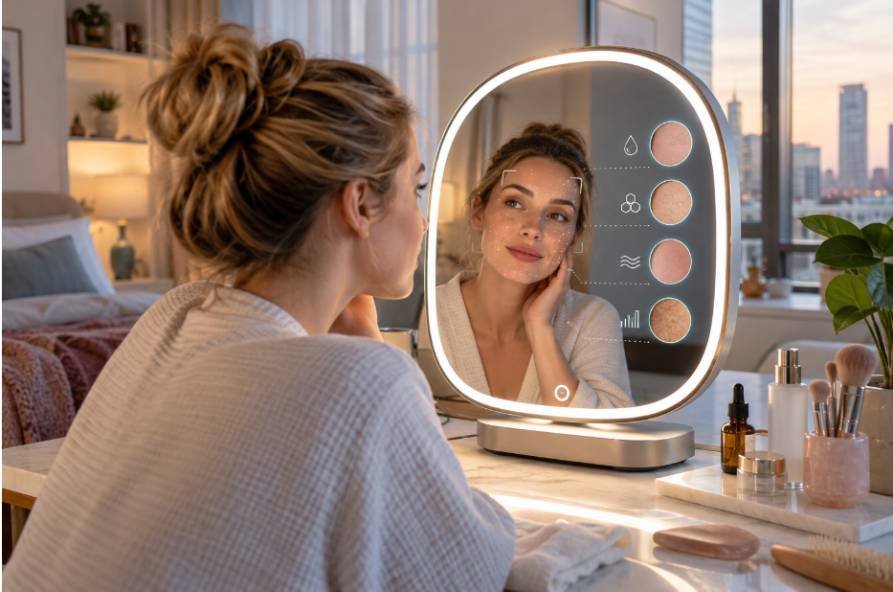
I used to think a beauty mirror had one job: give me a clear reflection while I fixed my hair, applied makeup, or checked whether my skin looked tired. Once I started seeing smart mirrors with built-in cameras and AI analysis, that simple idea changed. The promise is tempting because the mirror is already part of a daily routine, so adding skin tracking feels less intrusive than pulling out a phone for another task.
I also noticed how quickly these devices turn ordinary concerns into numbers. Pores, redness, pigmentation, texture, fine lines, and acne can become scores, followed by ingredient suggestions and routine ideas. That sounds useful, but are smart beauty mirrors with skin analysis technology giving you information worth paying hundreds of dollars for, or simply making a familiar routine feel futuristic?
What Makes a Beauty Mirror Smart?
A smart beauty mirror combines a reflective surface with a camera, display, software, and sensors or lighting controls. The camera captures your face, while computer vision and machine learning examine visible features. Depending on the product, the system may also offer facial mapping, augmented reality makeup, routine tracking, product recommendations, or progress reports.
That combination separates a smart mirror from a lighted vanity mirror. The software turns captured information into an interactive experience. Research has explored smart mirrors for computer vision and personalized monitoring, although many healthcare applications remain technically challenging.
How Skin Analysis Technology Works
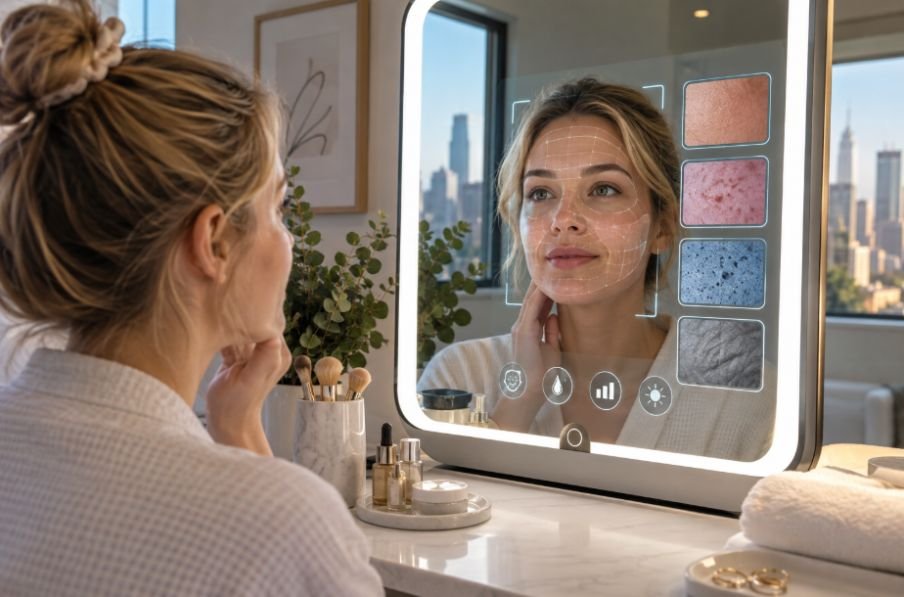
The basic process is simpler than the marketing suggests. You position your face in front of the camera, answer some questions about your skin, and take a scan. The system then analyzes the image for visible characteristics such as pigmentation, redness, texture, oiliness, fine lines, acne, or UV-related spots.
The useful part is not necessarily the single score. It is the ability to repeat scans and compare them over time. If you photograph your skin under similar conditions, a trend can be more informative than one result. Some smart mirrors also connect observations with skincare ingredients and routine suggestions, making the technology more practical than a simple score.
For someone interested in AI-powered skincare devices for personalized routines, ongoing feedback can be the most appealing feature. Instead of changing several products at once and guessing what helped, you can keep a routine consistent and watch for changes.
Where These Mirrors Can Actually Help
Progress tracking is probably the strongest argument for the technology. A dedicated user may enjoy seeing whether a routine appears to be improving texture, redness, pigmentation, or fine lines over several weeks. The process can also encourage consistency, especially for people who tend to forget what they used or when they changed products.
The Accuracy Problem Matters
This is where the excitement needs some restraint. Facial analysis depends on the quality and consistency of the image. Lighting, camera angle, distance, makeup, facial expression, and even the position of your hair can influence what the software sees. If one scan happens in bright natural light and another happens under a warm bathroom bulb, comparing their scores may not tell you much.
Real-world testing of current consumer products has exposed inconsistencies. Reviewers have reported score changes between scans and occasional results that did not match visible changes. That does not make the technology useless. It means the output should be treated as an estimate and tracking aid, not an unquestionable measurement.
Skin tone also deserves attention. AI systems need representative training and rigorous validation across different skin tones and real-world conditions. The American Academy of Dermatology has warned that digital tools can produce inaccurate information when their underlying systems have not been sufficiently tested across diverse populations.
Are Smart Beauty Mirrors Worth the Money?
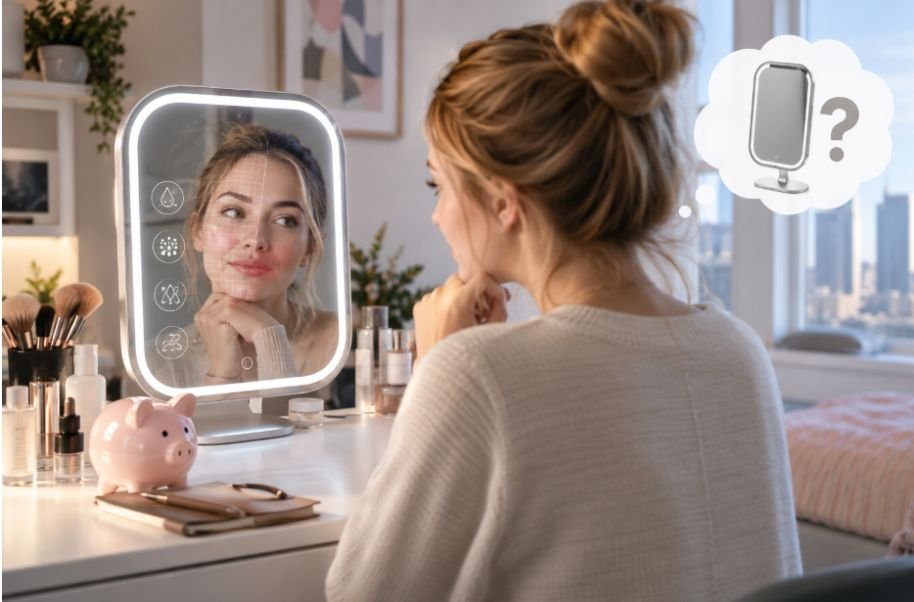
For casual users, probably not. If your main need is a good reflection, consistent lighting, and a place to apply makeup, a quality traditional mirror can do that for far less money.
The calculation changes for someone who genuinely enjoys skincare tracking and will use the analysis repeatedly. A device priced around $795, plus subscription costs, is easier to justify when you value progress logs, recommendations, AR makeup tools, and everything in one place. Otherwise, the novelty may fade. Current reviews of high-end AI mirrors show that subscription access can be an additional consideration alongside the hardware price.
Privacy should be part of that calculation. A mirror with a camera collects images of your face, and connected devices may involve apps or cloud services. Before buying, check what information is stored, where it goes, how long it is retained, whether it is shared, and what controls you have. Privacy matters when a product observes you repeatedly.
For people who prefer practical beauty technology, makeup tools that simplify everyday routines may offer more everyday value than a feature-heavy smart mirror.
Why the Mirror Matters Less Than the Habit
The most valuable part of smart beauty mirrors with skin analysis technology may ultimately be the habit they encourage rather than the hardware itself. A person who follows a simple routine consistently, changes one variable at a time, protects their skin from sun exposure, and pays attention to real changes may learn more than someone who collects endless scores without changing anything. The technology can organize observations, but it cannot make sensible skincare decisions for you.
For dedicated beauty-tech users, that distinction makes these mirrors easier to judge. They are intriguing tools with real convenience and personalization, but they are still tools. At a luxury price, they make the most sense when their information becomes part of a routine rather than the reason for one.
Frequently Asked Questions
1. Are smart beauty mirrors accurate?
They can be useful for tracking visible changes, but readings can vary with lighting, angle, distance, makeup, and image quality. Treat scores as estimates rather than medical measurements when comparing scans taken under different conditions.
2. Can a smart mirror diagnose skin conditions?
No. Consumer beauty mirrors are designed for cosmetic analysis. They should not replace a dermatologist, particularly when you have a persistent, changing, painful, or concerning skin issue. A scan can describe an image, but it cannot provide clinical context for a diagnosis.
3. Are smart beauty mirrors worth the price?
They can be for dedicated skincare users who value progress tracking, personalized recommendations, and beauty tools. For casual users, a quality mirror and simple routine may offer better value.
4. What should I check before buying one?
Look at the subscription cost, privacy policy, camera and lighting requirements, features, data controls, and how the company validates its skin analysis. Also consider whether you will actually use the tracking features regularly. It has little value if it becomes another gadget sitting unused on your vanity.
Leave a Reply