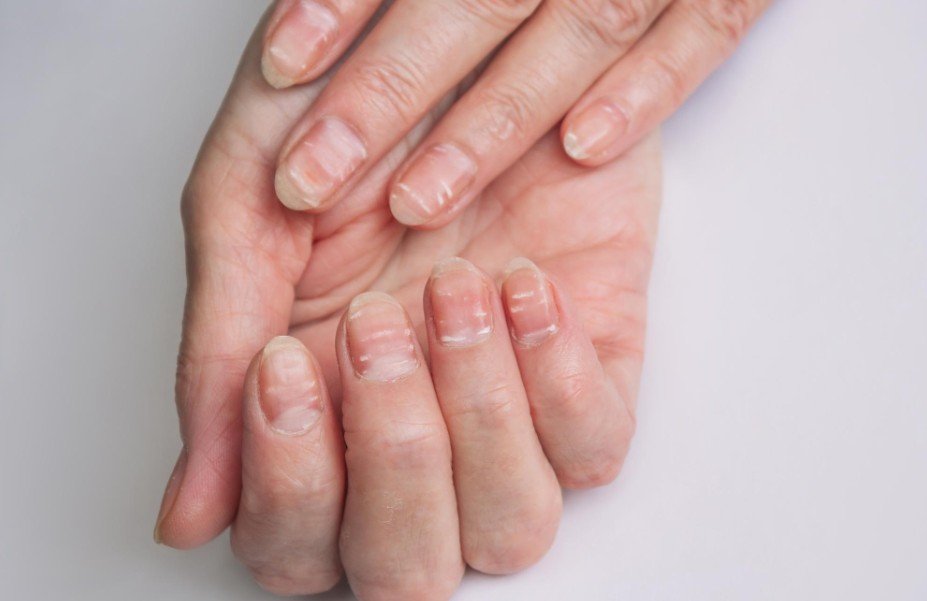
I used to think nail changes were mainly cosmetic problems caused by polish, household chores, or dry weather. However, fingernails can also provide useful clues about local infections, skin conditions, injuries, and occasionally wider health concerns. Although one unusual mark rarely confirms an illness, a change that appears suddenly, affects several nails, causes pain, or refuses to grow out deserves closer attention.
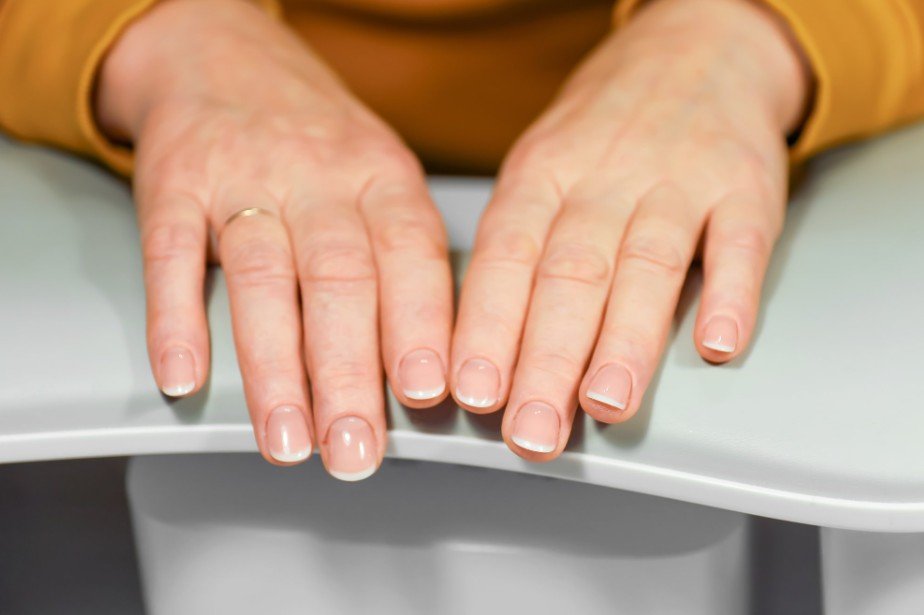
Healthy fingernails are generally smooth, firmly attached to the nail bed, and reasonably consistent in color and thickness. Fine vertical lines, minor variations in shape, and occasional white spots can be normal. The changes below are more important when they persist, worsen, or appear alongside other symptoms.
Yellow or Unusually Discolored Nails
Yellowing can develop after repeated use of dark nail polish, smoking, or contact with staining products. When the discoloration continues after the nail grows, however, a fungal infection may be responsible. An infected nail may also become thick, crumbly, distorted, or separated from the nail bed.
Blue or purple nails may appear when the fingers are cold, but color that does not improve after warming can be associated with reduced oxygen circulation. Very pale nails may occur naturally, although persistent paleness across several nails can accompany anemia or other medical conditions.
Brittle, Splitting, or Peeling Nails
Frequent exposure to water can make nails repeatedly swell and shrink, weakening their layers. Cleaning products, acetone-based removers, aggressive filing, gel removal, and dry weather can make the problem worse.
Brittleness can also occur with normal aging or conditions affecting the thyroid and skin. Iron deficiency is another possible factor, but brittle nails alone are not enough to diagnose a deficiency. If several nails become fragile without an obvious external cause, a clinician can determine whether testing is appropriate.
If your nails are repeatedly splitting or becoming fragile, following practical ways to prevent nails from breaking can help reduce further damage and protect the nail as it grows.
Deep Horizontal Grooves
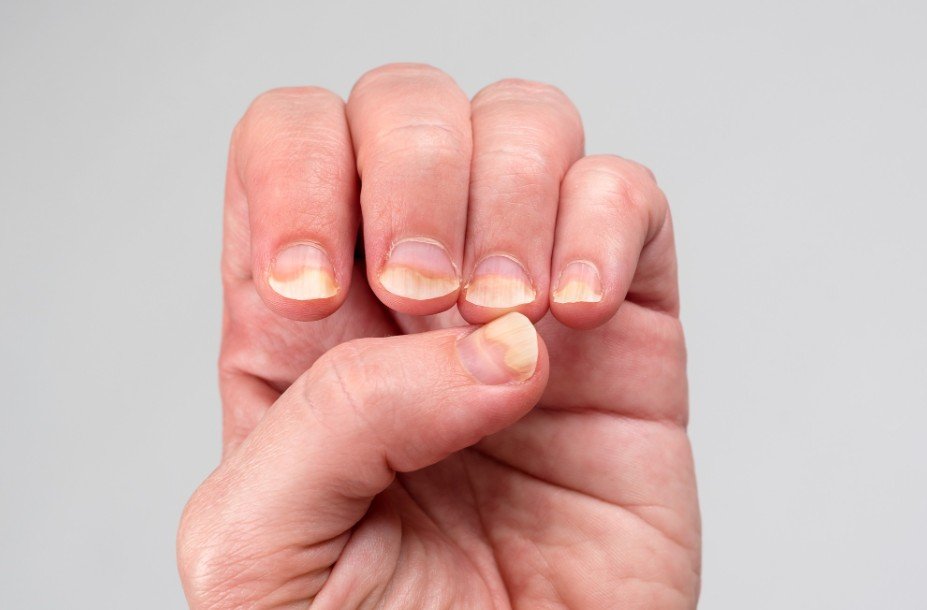
Vertical ridges running from the cuticle to the tip often become more visible with age and are usually harmless. Deep horizontal grooves are different. Known as Beau’s lines, they form when nail growth is temporarily interrupted.
Illness with a high fever, major physical stress, injury, chemotherapy, uncontrolled diabetes, or severe nutritional problems can disrupt growth. Because fingernails grow slowly, the groove may become noticeable weeks after the triggering event. Grooves appearing across several nails at approximately the same level are more significant than an indentation on one injured nail.
Tiny Pits Across the Nail Surface
Nail pitting looks like clusters of small dents made by the tip of a pin. It can occur in people with psoriasis, eczema, or alopecia areata. The surrounding skin may show plaques, scaling, irritation, or hair loss, but nail changes sometimes appear first.
One or two shallow dents may follow minor trauma. Numerous pits, repeated pitting, or changes affecting several nails should be assessed by a dermatologist, particularly when the nails are also thickening, crumbling, or lifting.
Nails Lifting From the Nail Bed
When part of a nail separates from the tissue underneath, the detached area often looks white or opaque. This condition is called onycholysis. It can result from an injury, an aggressive manicure, prolonged moisture, psoriasis, thyroid disease, sensitivity to nail products, or infection.
Avoid digging beneath the lifted section because doing so can increase separation and introduce bacteria. Keep the nail short and dry. A clinician should examine persistent lifting, especially when it is accompanied by odor, debris, pain, or discoloration.
Thickened or Crumbling Nails
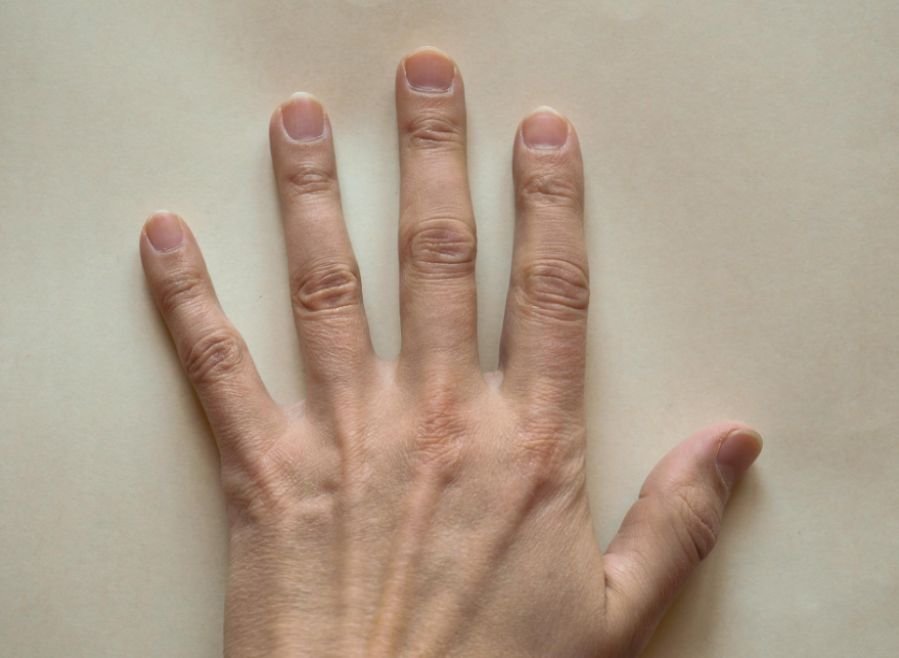
A nail that becomes unusually thick, rough, or crumbly may have a fungal infection. Nail psoriasis can produce a similar appearance, which is why appearance alone cannot reliably identify the cause.
Thickening may also develop after repeated injuries or pressure. Because treatment depends on the underlying problem, covering the nail with polish or repeatedly filing it down may hide the symptom without resolving it. Laboratory testing may be needed before antifungal treatment is recommended.
Spoon-Shaped Fingernails
Spoon nails are thin nails with raised edges and a depression in the center. The hollow may become deep enough to hold a drop of water. This change is known as koilonychia.
It can be associated with iron-deficiency anemia, but exposure to chemicals, repeated trauma, and certain medical conditions are other possibilities. A naturally flat nail is not necessarily abnormal. A new spoon shape affecting multiple nails is a better reason to request a medical evaluation.
Rounded Nails and Enlarged Fingertips
Nail clubbing causes the fingertips to become enlarged while the nails curve downward around them. The change normally develops gradually and may affect both hands.
Some people inherit this shape without having an illness. Newly developed clubbing, however, can be associated with conditions affecting the lungs, heart, digestive system, or liver. Because the possible causes require professional assessment, new clubbing should not be managed as a cosmetic concern.
Red, Swollen, or Painful Nail Folds
The skin around a nail may become tender, red, warm, or swollen when bacteria or fungi enter through a damaged cuticle. Nail biting, pulling hangnails, frequent hand washing, and cutting cuticles can increase the risk.
Nail biting and pulling at damaged skin can make these problems worse, so following practical nail care tips for nail biters can help reduce repeated trauma and protect the surrounding tissue.
A mild irritation may improve when the area is protected from moisture and further trauma. Pus, spreading redness, severe throbbing, fever, or worsening swelling needs prompt medical attention. People with diabetes or weakened immunity should seek advice earlier because infections can become more difficult to control.
A New Dark Line Under One Nail
A dark mark can result from a bruise, particularly after the finger has been trapped or struck. Bruising normally moves toward the tip as the nail grows.
A new brown or black vertical band without a known injury should be evaluated, especially if it widens, has irregular colors, affects the nearby skin, or causes the nail to split or lift. Most dark nail marks are not cancer, but melanoma can occur beneath a nail and should be ruled out rather than self-diagnosed.
How to Monitor a Suspicious Nail Change
Remove polish so the entire nail and surrounding skin are visible. Photograph the area in natural light and note when the change first appeared. Watch whether discoloration moves outward with nail growth or remains fixed near the cuticle.
Consider whether one nail or several nails are affected. A single abnormal nail often suggests local injury or infection, while similar changes across multiple nails can point toward a shared exposure, medication effect, skin disorder, or wider health issue.
Frequently Asked Questions
1. What are the most common signs of unhealthy fingernails?
Persistent discoloration, splitting, peeling, deep horizontal grooves, numerous pits, thickening, lifting, swelling, clubbing, and unexplained dark bands are common warning signs. Their importance depends on how suddenly they appeared, how many nails are affected, and whether pain or other symptoms are present.
2. Are vertical nail ridges unhealthy?
Fine vertical ridges are common, especially with aging, and are usually harmless. Deep horizontal grooves, sudden surface changes, or ridges accompanied by discoloration and splitting deserve more attention.
3. Do white spots mean I have a vitamin deficiency?
Small white spots commonly result from minor trauma to the growing nail. They do not automatically indicate calcium deficiency. Widespread whitening or changes affecting many nails should be discussed with a healthcare professional.
4. When should I see a dermatologist?
Arrange an examination when a nail change persists, spreads, becomes painful, affects several nails, or has no obvious cause. Seek timely advice for a new dark streak, blue nails, pus, spreading redness, or newly developed clubbing.
Final Thoughts
I would not try to diagnose my overall health from one ridge, spot, or broken nail. I would instead pay attention to patterns: whether the change is new, whether it affects several nails, and whether it comes with pain, swelling, breathing problems, fatigue, or skin symptoms.
Gentle care can help prevent everyday damage, but unexplained or persistent abnormalities require more than polish or a strengthening treatment. By watching how a change develops and seeking professional guidance when necessary, I can protect both my nails and the health concerns they may occasionally reveal.
Leave a Reply