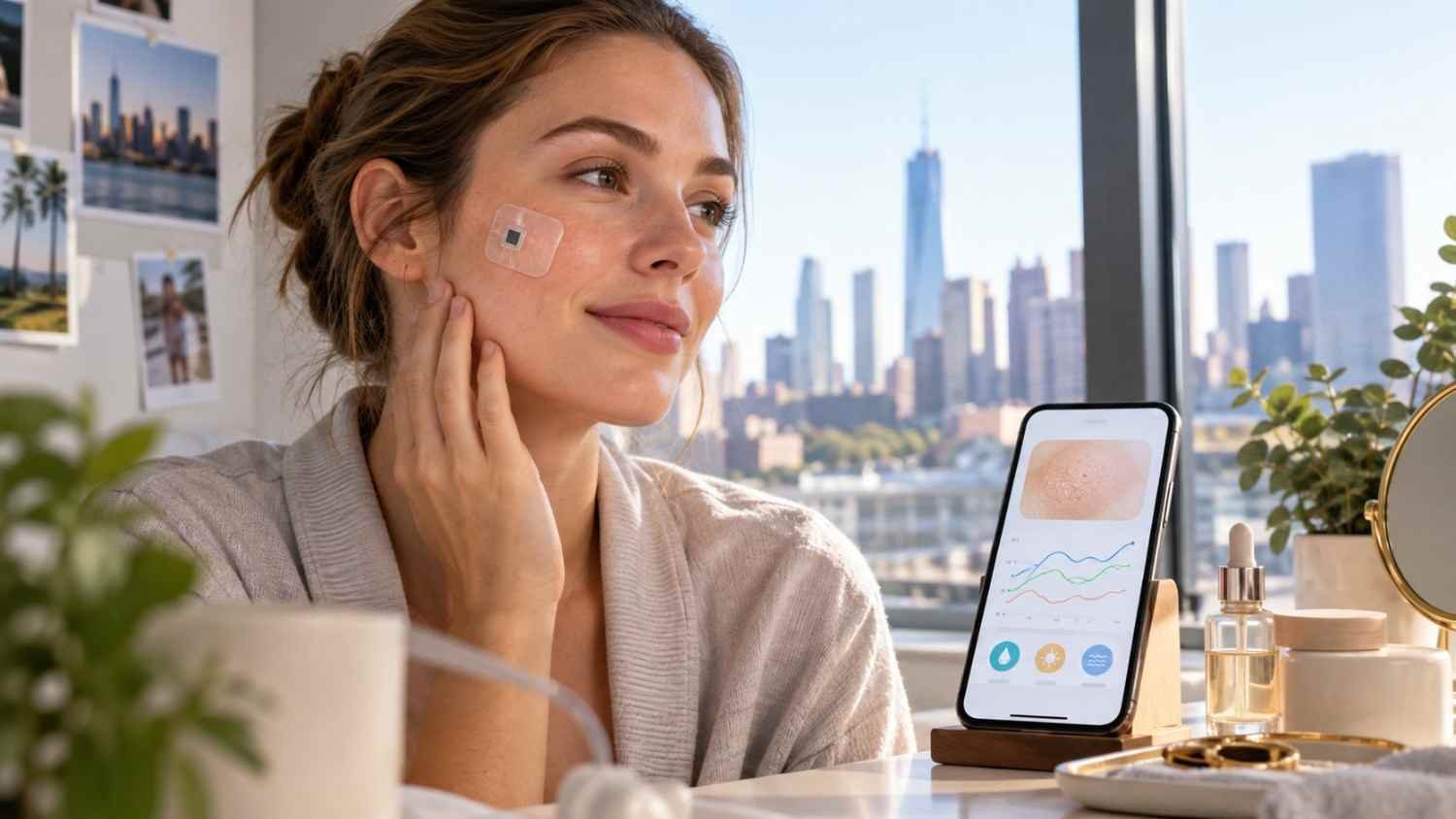
I started noticing how many skincare products now promise more than surface-level care. Patches once meant a small sticker for a breakout or a dose of an ingredient, but newer concepts make that sticker part of a sensing system. That shift caught my attention because the appeal is easy to understand: instead of guessing what skin needs, a wearable patch could potentially collect information while it sits on the skin.
I also found myself wondering where the technology ends, and the marketing begins. A patch that measures moisture or UV exposure sounds impressive, but measurement quality, interpretation, comfort, and availability matter just as much as the sensor itself. That distinction is worth understanding before treating smart patches as a replacement for familiar skincare tools.
What Makes a Beauty Patch Smart?
A conventional beauty patch generally has one job. It may protect a blemish, hold an ingredient against the skin, or create an occlusive environment that supports topical treatment. A smart patch adds electronics or sensing materials that can collect information from the skin or its immediate environment.
Flexible sensors can conform closely to moving skin rather than behaving like rigid electronics. Depending on the system, they may monitor hydration, temperature, UV exposure, mechanical changes, or chemical signals associated with sweat. Some experimental platforms can send readings to a phone or another receiver for analysis.
What Can the Sensors Actually Measure?
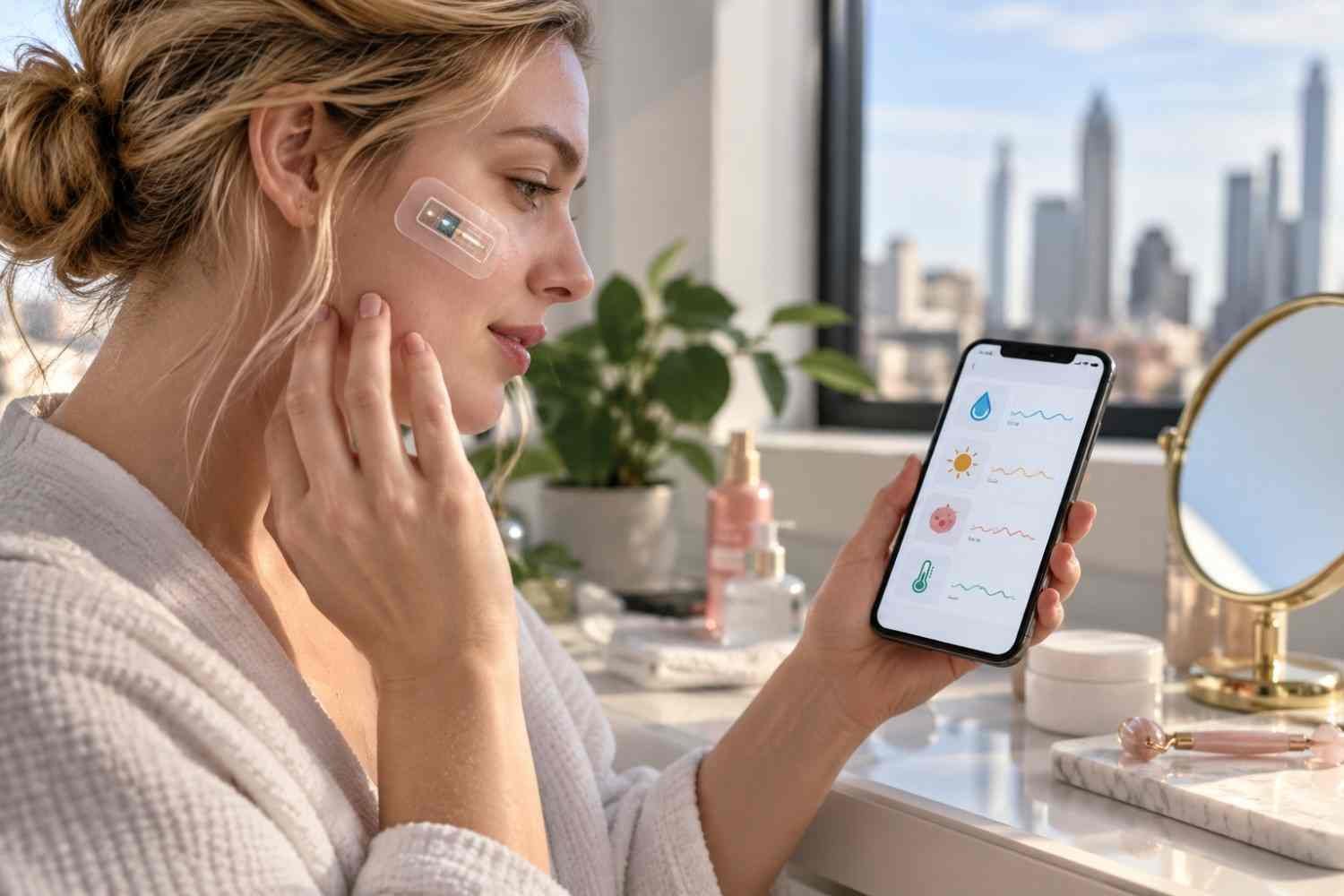
The phrase smart sensor can make a product sound more capable than it is, so the specific measurement matters. Skin hydration is not the same thing as measuring every aspect of skin health. A hydration-focused sensor may estimate moisture-related changes at the skin surface, while another system might examine temperature or ultraviolet exposure.
Redness presents another challenge. It can be influenced by irritation, temperature, blood flow, product use, and other factors. A future wearable may combine optical measurements with other signals, but a sensor reading should not automatically be treated as a medical diagnosis.
How Skin Data Could Become Personalized Care
The real appeal of smart skincare is not the sensor alone. It is what happens after a measurement is collected. A connected patch could transmit data to an app, where software organizes changes over time and presents them in a form that is easier to understand.
That could eventually make skincare less dependent on occasional snapshots. Instead of deciding that skin seems dry today, a person might see a longer pattern of changing moisture levels or environmental exposure. With enough reliable data, algorithms could potentially help tailor product recommendations or routines.
The technology is still developing, though. Wearable sensors have to deal with movement, sweat, skin contact, signal interference, calibration, and differences between users. A reading can be affected by how consistently the patch sits on the skin. More data does not automatically mean better advice if the underlying measurement is unreliable.
For people already exploring LED face masks with multiple light wavelengths, smart patches represent a different approach to beauty technology. Light-based devices generally deliver a treatment, while sensing patches are designed around collecting information. Future products could potentially combine sensing and treatment, but those are separate technical challenges.
Where Microneedles Fit In
Another term likely to appear alongside smart patches is microneedle technology. Microneedles use tiny structures designed to interact with the outer skin barrier and can be investigated for controlled delivery of cosmetic or therapeutic ingredients.
That does not mean every smart patch contains microneedles. Sensing and delivery are different functions. One system may measure a skin parameter, another may deliver an ingredient, and a more advanced platform could eventually combine both.
What to Check Before Trying One
Before buying a product described as smart, look beyond the technology language. The first question is simple: what does the patch measure? A specific claim is more useful than a vague promise about analyzing skin.
It is also worth checking whether results are displayed directly, interpreted through an app, or used only during product testing. Look for information about wear time, adhesive materials, connectivity requirements, and whether repeated measurements are comparable.
Finally, consider whether the product is available to consumers. Recent beauty-tech research shows progress in wearable skin sensing, but commercially accessible diagnostic-style patches remain limited. Some impressive systems are still being demonstrated, tested, or developed rather than sold as ordinary skincare products.
Where Smart Beauty Patches Could Go Next

The most interesting possibility is a shift from reactive skincare toward more measured personalization. Future patches could combine several sensors, track patterns across different conditions, and connect those measurements with a routine. A system might eventually recognize that environmental exposure, moisture changes, and product use are interacting rather than treating each factor separately.
For readers interested in next-generation facial sculpting devices, the broader trend is worth watching. Beauty technology is moving toward devices that do more than perform a single visible function. The next step may be systems that measure, interpret, and respond, although the distance between a promising prototype and a dependable consumer product can be substantial.
FAQs: Beauty Patches With Smart Sensors: What to Know Before Trying Them
1. What are beauty patches with smart sensors?
They are wearable patches designed to collect information from the skin or surrounding environment. Depending on the technology, measurements may include hydration, temperature, UV exposure, or chemical signals.
2. Are smart beauty patches widely available?
Not yet. Research and development are advancing, but many skin-monitoring patches remain experimental or limited in commercial availability.
3. Can a smart patch diagnose a skin condition?
A sensor reading should not automatically be considered a diagnosis. Consumer devices may provide measurements or trends, while clinical diagnosis requires appropriate evaluation and validated medical tools.
4. Do smart patches replace skincare products?
Generally, no. A sensing patch and a treatment product perform different jobs. Some future systems may combine monitoring with ingredient delivery, but that technology is still developing.
Why Better Measurement Could Change Skincare
The promise of smart patches is not really about putting more electronics into beauty products. It is about making skincare more responsive to what is happening on the skin. If sensors become accurate, comfortable, affordable, and easy to understand, they could add context to decisions that are currently based heavily on appearance and guesswork.
For now, curiosity is reasonable, but realistic expectations matter. The technology is moving forward, and the most useful innovations will be the ones that turn better measurements into practical care.
Leave a Reply