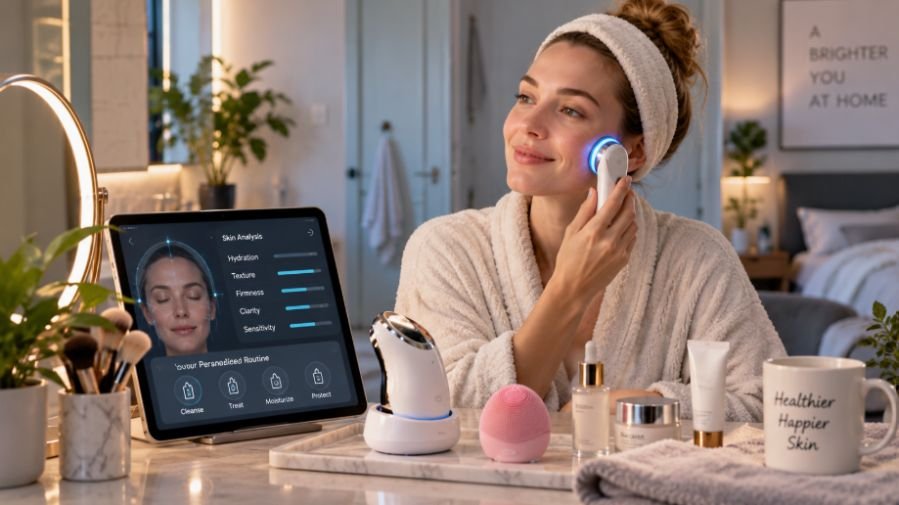
I used to think choosing a skincare device was mostly about picking the feature that sounded impressive. A red-light mask promised glow, a microcurrent tool promised lift, and a skin analyzer promised answers. None of those promises told me what my skin actually needed on a Tuesday morning.
I started paying closer attention to the newer generation of beauty technology when devices began combining cameras, sensors, apps, and treatment functions. I wanted to know whether AI could make a routine more relevant, easier to follow, and less dependent on guesswork.
What Makes a Skincare Device AI-Powered?
AI-powered skincare devices for personalized routines generally add an analysis layer to a conventional beauty device. Cameras capture facial images, computer vision assesses visible characteristics, and software turns observations into recommendations. Some systems save measurements over time, allowing users to compare changes.
That distinction matters because “AI-powered” does not automatically mean a device is diagnosing a medical condition. Many consumer systems are better understood as cosmetic assessment and recommendation tools. A platform may track wrinkles, pigmentation, texture, oiliness, redness, or acne, then suggest products or treatment modes. Smart mirrors combine skin scoring, tips, and product recommendations.
How Personalization Actually Works
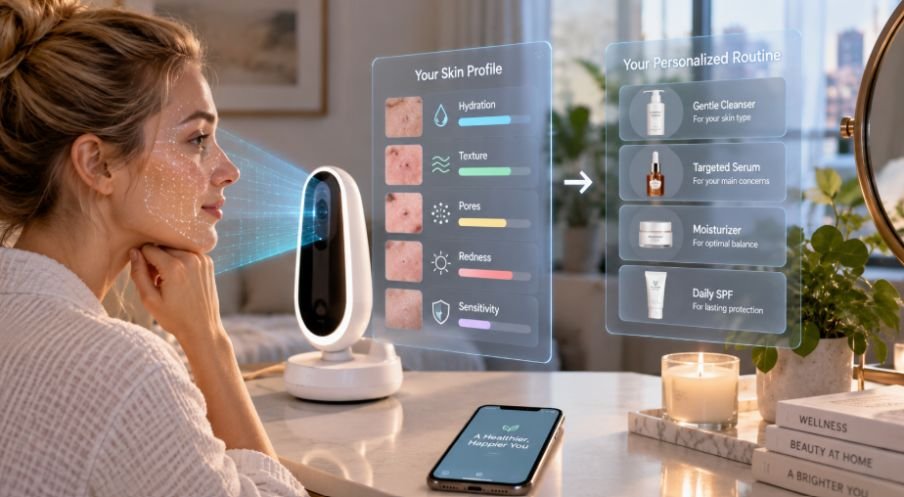
The useful part is the feedback loop. A user starts with a scan or questionnaire, receives recommendations, follows a routine, then returns for another assessment. Over time, the software can create a record of changes and make future suggestions based on that history.
Consistency matters here. If one scan happens beside a bright window and another happens under warm bathroom lighting, the apparent differences may have more to do with the environment than the skin. A better system encourages repeatable scanning conditions and makes its measurements understandable.
Some connected devices go further by linking analysis with treatment. For example, a multifunction device might combine an app with LED, microcurrent, heat, cooling, or massage. The appeal is having software organize when and how those functions fit into a routine.
Wearable technology is also expanding beyond traditional devices, with beauty patches with smart sensors offering another way to collect skin-related data and support more personalized routines.
Which Features Are Worth Looking For?
When comparing AI-powered skincare devices for personalized routines, focus less on modes and more on how the system uses information.
- Look for meaningful skin tracking rather than a one-time score. A useful platform should show trends and explain changes.
- Check whether the device offers adjustable treatment settings, clear instructions, app connectivity, and a practical reason for each technology it includes.
- Review how the company handles images and personal data. A face scan is sensitive information, so privacy policies and account controls deserve attention.
Treatment technology still matters. LED devices, microcurrent tools, warming or cooling systems, and other at-home technologies serve different purposes. Current beauty-tool coverage shows that consumers can choose among many approaches, from red-light therapy and microcurrent to radiofrequency and multifunction devices.
When comparing different beauty tools, I also look for makeup tools that simplify everyday routines, especially when a device is meant to make regular beauty steps easier rather than more complicated.
A personalized routine should match the device to a specific need rather than treating every setting as necessary. More features can create more opportunities for misuse, confusion, or inconsistent use.
Where AI Skincare Still Has Limits
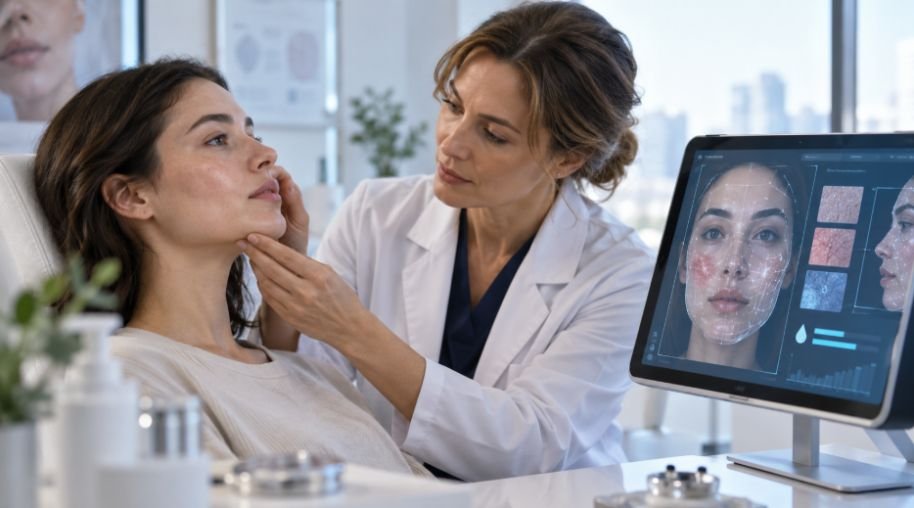
AI can make skincare measurable, but skin is not a fixed spreadsheet. Hydration, redness, breakouts, and texture can change with weather, sleep, hormones, products, sun exposure, and irritation. A camera can capture what is visible at one moment, while missing factors that require professional examination.
There is also a fairness issue. AI systems depend on their training data, and beauty technology has faced concerns about whether datasets adequately represent different skin tones and conditions. That makes transparency around validation and performance more meaningful than a glossy claim about machine learning.
Safety deserves the same attention. Follow the manufacturer’s directions, especially when a device uses light, heat, electrical stimulation, or energy-based technology. The FDA notes that aesthetic devices can have risks and that users should understand benefits, limitations, and potential complications. Some energy-based procedures are not appropriate for everyone, and RF microneedling should not be used at home.
For routine skincare, AI is most useful when it organizes sensible habits rather than encouraging constant treatment. If a system detects a concern that is persistent, painful, rapidly changing, or difficult to understand, professional medical advice is more appropriate than repeatedly scanning it.
The Better Way to Choose
The strongest buying decision starts with the problem, not the gadget. Someone trying to monitor visible pigmentation may value consistent imaging and progress tracking. Another person may care more about convenient LED sessions or microcurrent. A beginner might benefit most from a simple app that explains a routine clearly rather than a complicated device with ten treatment modes.
Cost matters. Consider the device price, replacement parts, skincare products, subscriptions, and session time. A less expensive tool that gets used consistently can be more useful than an advanced system that ends up in a drawer.
Look for evidence behind the treatment claims, realistic expectations, a return policy, customer support, and clear cleaning instructions. Usability is part of effectiveness because complicated routines are easy to abandon. FDA guidance also recommends considering whether a home-use device can be operated safely and effectively in the user’s environment.
Frequently Asked Questions
1. Can AI skincare devices replace a dermatologist?
No. They can help organize cosmetic routines and track visible changes, but they should not be treated as a substitute for professional diagnosis or medical care.
2. Do AI skincare devices work for every skin type?
Performance varies. Image quality, lighting, device design, and the diversity of training data can affect results, so claims should be viewed realistically.
3. Are smart skincare devices safe to use daily?
Not necessarily. Frequency depends on the technology and device instructions. Using an energy-based tool more often than recommended can increase irritation or other risks.
4. Should I buy a device with more treatment modes?
Not automatically. Fewer useful functions may be better than a crowded feature list that makes your routine harder to follow.
When Technology Should Simplify Your Routine
The real promise of AI skincare is not a bathroom full of machines or another score to obsess over. It is the possibility of turning scattered observations into a routine that feels more deliberate. When analysis, treatment, and tracking work together, technology can remove guesswork while leaving room for common sense.
The best device is ultimately the one that fits your needs, earns your trust, and gets used consistently. Personalization should make skincare clearer, not more complicated.
Leave a Reply