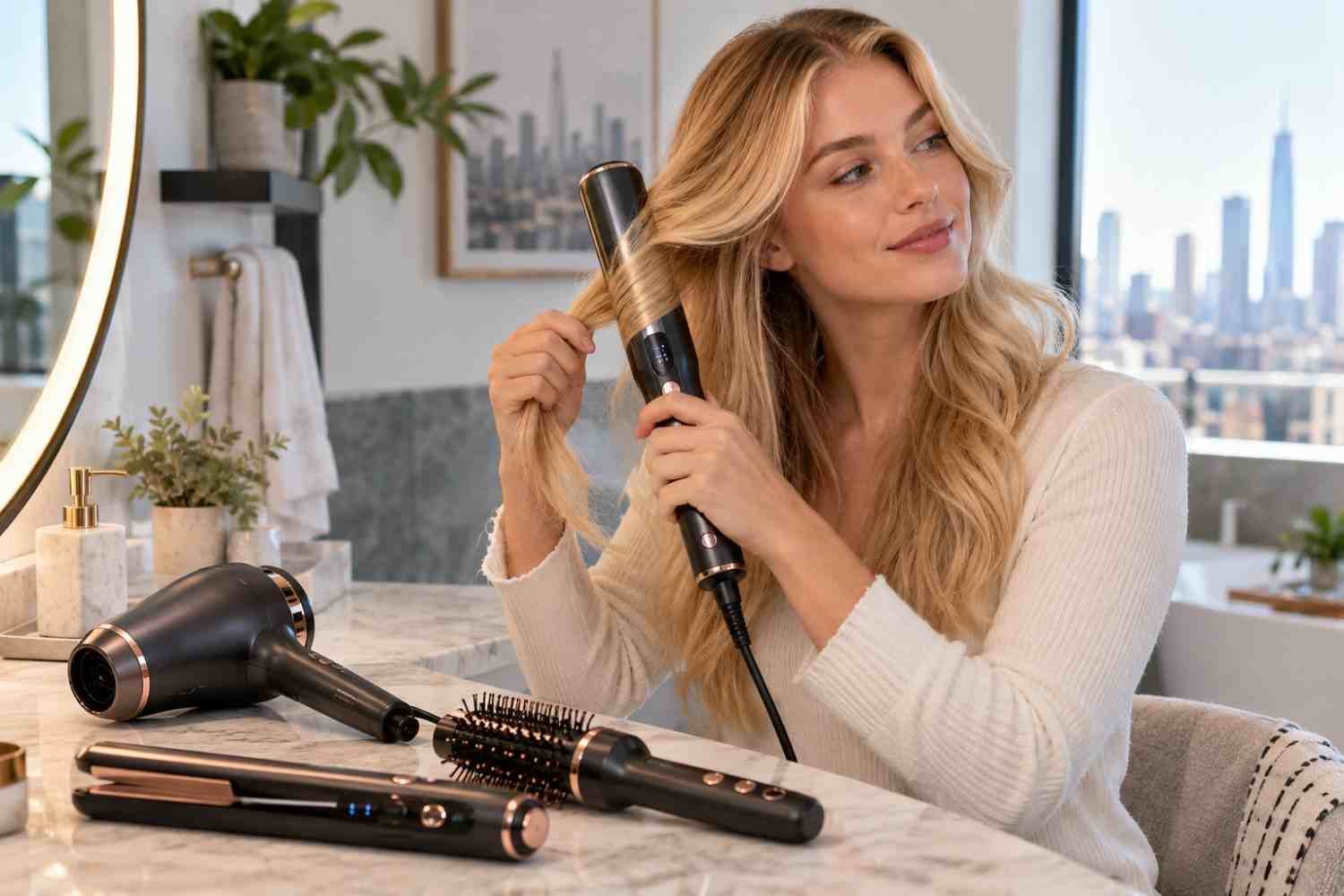
I used to think the temperature dial on a hair tool was just another setting to ignore. If my straightener got hot quickly and my curls held, I considered it a good tool. After dealing with uneven results, repeated passes, and hair that sometimes felt rough after styling, I started paying closer attention to how heat was actually being delivered.
I also noticed newer styling devices feel different in use. Some react to what is happening while I style. That made me curious about smart hair styling tools with temperature control and which features genuinely matter.
What Makes a Hair Tool Smart?
A conventional heated tool gives you a selected temperature and expects you to manage the rest. A smarter device can add sensors, processors, feedback systems, or programmed settings that monitor conditions and adjust performance. The goal is controlled heat during daily styling.
Real-time monitoring is one of the more meaningful developments. Sensors can help a device track temperature and maintain a consistent level instead of allowing large fluctuations. Some newer dryers detect proximity to the scalp and adjust heat. That responsive behavior can personalize styling without constant manual changes. Intelligent heat control is increasingly treated as a practical feature.
Why Consistent Temperature Matters
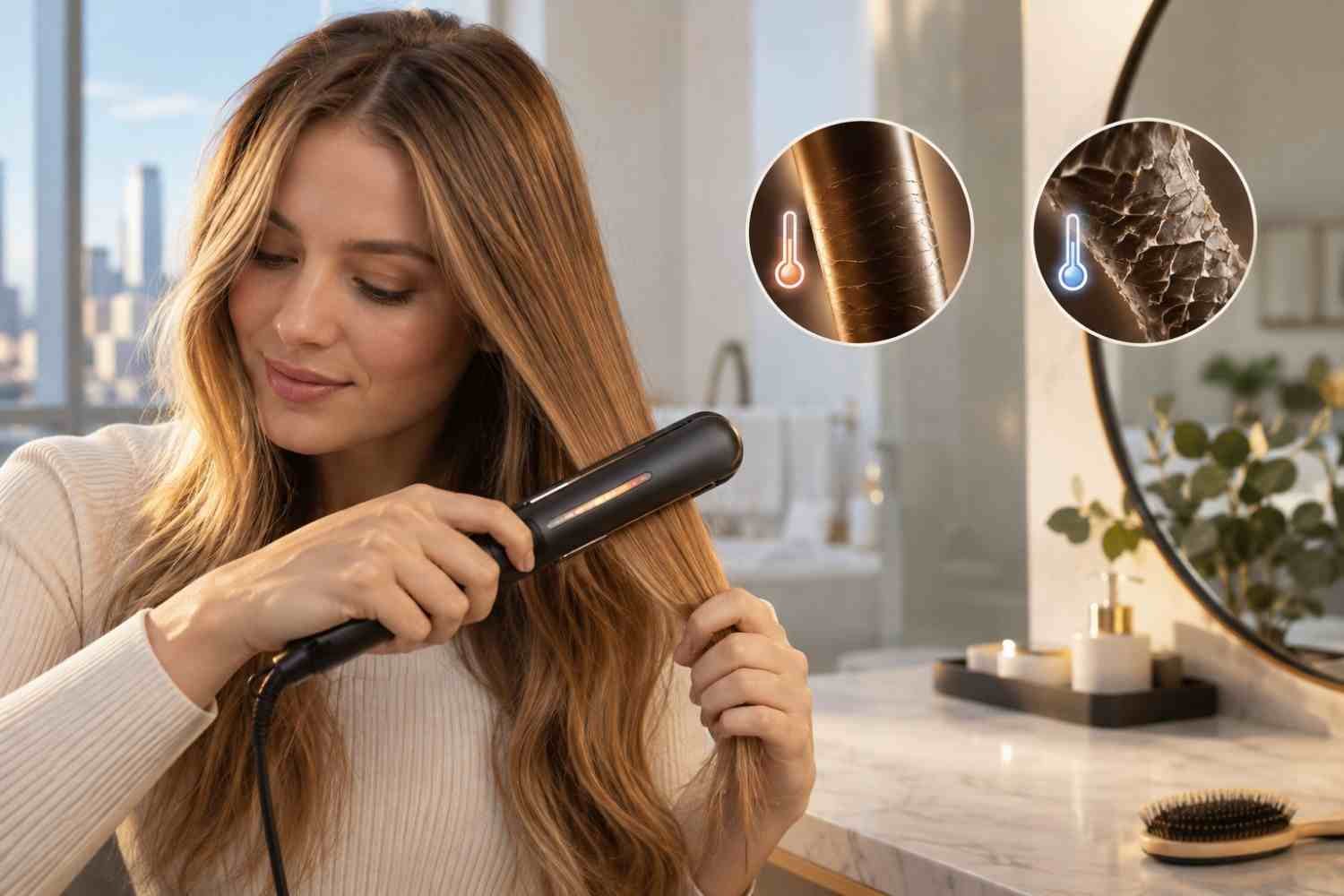
High temperature is not automatically better. Hair responds to thermal exposure, and excessive heat can contribute to dryness, brittleness, and surface damage. The bigger issue is exposure time and repeated passes.
That makes stable temperature regulation useful. If a straightener drops below its selected setting and then overheats while recovering, the experience can be inconsistent. A well-regulated tool aims to deliver predictable heat, helping you avoid extra passes. Ceramic surfaces are also commonly used because they can distribute heat across the styling area, although the material alone does not determine whether a tool is gentle.
Use enough heat to create the result you want, then focus on technique. Temperature control cannot make careless styling harmless.
Smart Features Worth Paying Attention To
Not every digital feature deserves equal weight. Look for technology that changes how the device actually performs.
- Adaptive heat sensing can monitor temperature and make rapid adjustments during styling.
- Consistent heat delivery can reduce repeated passes.
- Hair-type settings can make choosing a starting point easier for fine, thick, curly, or treated hair.
- Automatic shutoff, cool settings, and controlled airflow add useful safety and convenience.
Some advanced stylers take personalization further with stored profiles or guided settings. These can help connect hair characteristics with a sensible routine. However, a touchscreen or app is not automatically proof of better heat management. Ask what the technology changes in practice.
Modern beauty tools increasingly combine functions, too. Current coverage includes dryers, flatirons, rotating curlers, brush dryers, and multi-stylers.
Match the Tool to Your Hair
The smartest tool on paper can still be wrong for your hair. Fine or fragile strands generally need conservative heat and fewer passes, while thick or coarse hair may require more controlled power. Curly and textured hair can also benefit from tools that reduce snagging and friction while maintaining predictable heat.
Color-treated or stressed hair deserves extra care. Precise temperature control helps with restraint, but it does not replace heat protectant or good styling habits. Hair should also be sufficiently dry when using tools designed for dry styling, unless the device specifically supports wet-to-dry use.
Personalization should mean more than selecting a hair type inside an app. Consider your hair’s condition, density, texture, and styling goal before choosing technology.
Look Beyond Straighteners
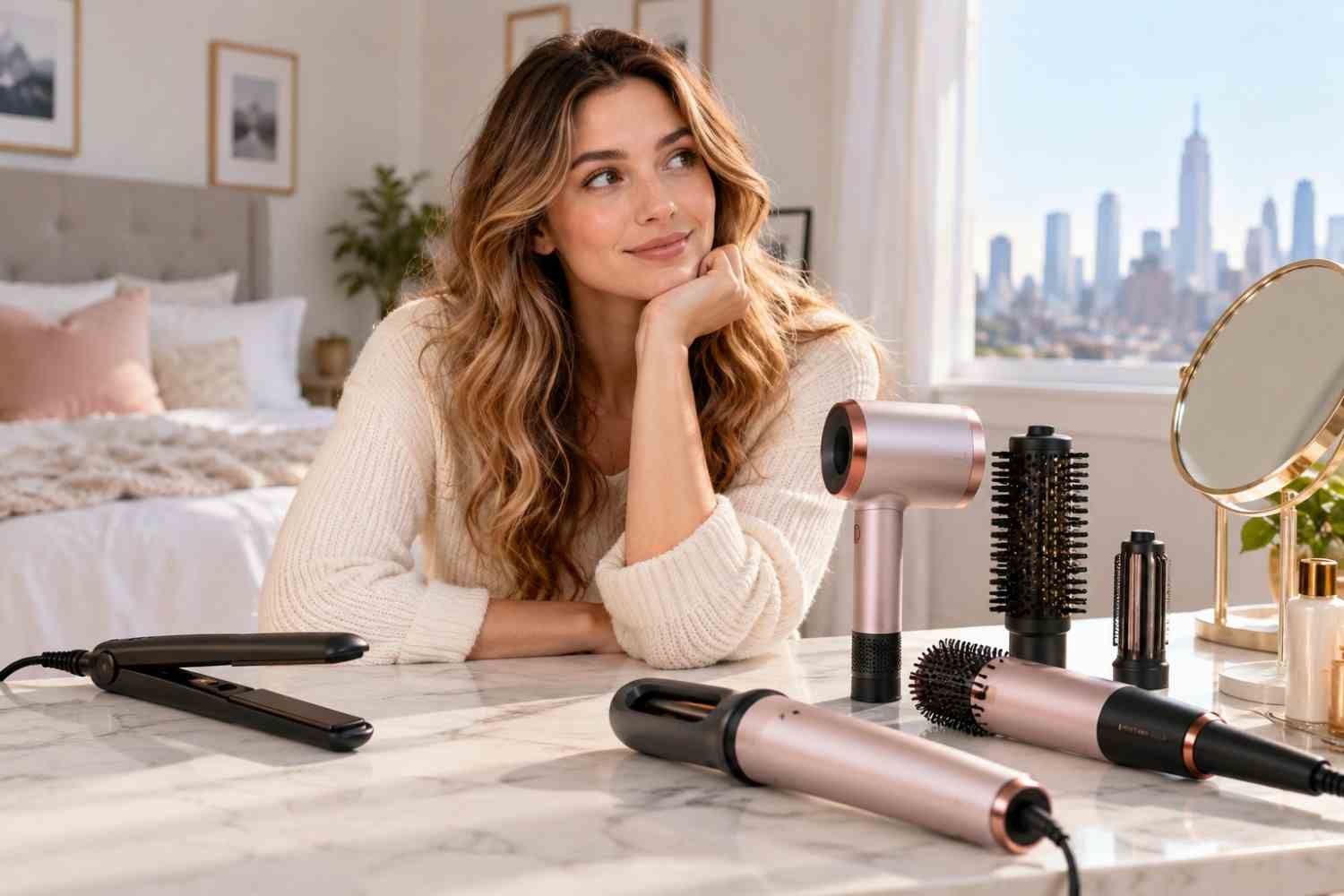
Temperature intelligence is no longer limited to flatirons. Hair dryers can regulate heat while monitoring distance or airflow, while hot brushes and multi-stylers combine drying, smoothing, curling, or volumizing in fewer steps. Air-based styling systems are another direction because they use airflow to shape hair rather than relying exclusively on hot surfaces.
That matters daily. A tool that dries and styles at once can reduce handling and shorten the time hair spends under heat. Recent beauty coverage has emphasized multitasking designs, faster drying, and technologies intended to make styling more efficient.
Versatility should not overshadow basic performance. A device with ten attachments is not necessarily more useful than a simple, reliable tool.
What to Check Before Buying
Before spending more on smart styling technology, examine the features that affect actual use. Check the temperature range, adjustment precision, automatic heat regulation, and consistency during repeated passes. Also consider plate or barrel construction, airflow, weight, controls, and automatic shutoff.
Think about your routine. If you mainly straighten your hair, precise plate temperature and smooth movement may matter most. If you switch between waves, curls, and blowouts, a responsive multi-styler could make more sense. Ease of cleaning and storage also matter because sophisticated technology is less valuable when the device is annoying to use.
Smart does not mean maintenance-free. Keep attachments clean, follow instructions, and replace a tool if its temperature behavior becomes erratic.
FAQs: Smart Hair Styling Tools With Temperature Control: Features That Matter
1. Do smart hair tools prevent heat damage?
No. Temperature control can limit unnecessary thermal exposure, but damage also depends on heat level, contact time, passes, hair condition, and technique.
2. Are ceramic plates better for hair?
Ceramic surfaces can provide even heat distribution, but overall performance depends on temperature regulation, construction, and how the tool is used.
3. Are smart hair tools worth the extra cost?
They can be worthwhile if adaptive heat, precise controls, or multitasking features solve a real problem. Extra technology alone is not a reason to spend more.
4. Should every hair type use the same temperature?
No. Texture, thickness, condition, and treatment history can affect the appropriate setting. Start conservatively and increase heat only when necessary.
The Features Worth Keeping
The most useful smart styling technology is not the feature that looks futuristic on a product page. It is the one that quietly makes heat more predictable, reduces unnecessary passes, simplifies control, or helps you work with your hair instead of fighting it. That is where temperature sensors, responsive controls, balanced heat distribution, and practical presets can earn their place in a daily routine.
Good styling still requires judgment. The right tool can make that easier, but cannot replace it. When technology gives you more control without making the routine complicated, smart hair styling starts to feel genuinely useful.
Leave a Reply