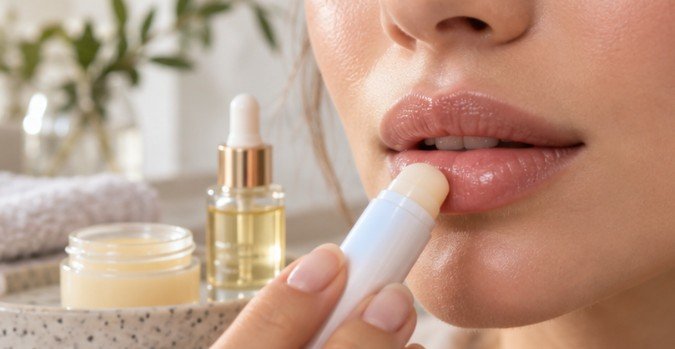
Your lips do not have the oil glands that help much of the rest of your skin stay naturally lubricated. That small anatomical difference helps explain why wind, indoor heating, sun exposure, lip licking, or the wrong balm can quickly turn tight lips into painful peeling and cracks.
A practical lip care routine for dry lips should do three things well: limit irritation, restore moisture, and reduce water loss. Most people do not need a shelf full of treatments. They need a few simple steps repeated consistently.
Why Dry Lips Keep Coming Back
Chapped or inflamed lips are often described medically as cheilitis. Cold or dry air, sun exposure, frequent lip licking, dehydration, allergies, certain medications, and some medical conditions can all contribute.
That means drinking more water alone will not necessarily solve the problem. If dry winter air is continually pulling moisture from the lips, or a fragranced balm is causing irritation every few hours, hydration cannot remove the trigger.
The American Academy of Dermatology’s dry-lip guidance also makes an important point: burning, stinging, or tingling after applying a lip product can signal irritation rather than effectiveness.
The goal should be barrier recovery, not forcing every visible flake away.
The Three-Step Lip Repair Method
A useful routine is easier to remember when reduced to three functions.
| Step | What to do | Why it matters |
| Hydrate | Apply a bland moisturizing balm | Supports moisture in the lip surface |
| Seal | Add petrolatum or another thick ointment when needed | Reduces moisture loss and protects cracked areas |
| Protect | Wear an SPF 30+ lip product outdoors | Reduces UV exposure and further damage |
The AAD recommends applying a non-irritating lip balm several times daily and using a thick ointment such as white petroleum jelly when lips are extremely dry or cracked.
MedlinePlus guidance on chapped lips similarly recommends petrolatum as a straightforward option for soothing chapping.
Morning: Keep the Routine Gentle

Clean Without Scrubbing
You normally do not need a special lip cleanser. After brushing your teeth, rinse away toothpaste residue, dampen the lips with water, and pat gently.
If a loose piece of skin lifts easily with a soft damp cloth, it can be removed carefully. Avoid scrubbing until the surface feels artificially smooth. Repeated rubbing can aggravate already damaged tissue.
Apply a Simple Moisturizing Product
Look for formulas that feel comfortable immediately. Ingredients commonly used in moisturizing or protective products include petrolatum, glycerin, mineral oil, dimethicone, ceramides, and shea butter.
Humectants such as glycerin can help attract water, while occlusive ingredients help keep that moisture from escaping. For badly chapped lips, a simple ointment may therefore be more useful than a complicated cosmetic treatment.
If a product causes persistent burning, itching, or increasing tightness, stop using it.
Finish With SPF
Lip sunscreen should not be reserved for beach days. UV exposure can contribute to chronically dry, damaged lips, particularly the lower lip.
The American Cancer Society recommends SPF 30 or higher for lip protection and advises using a sunscreen-containing lip balm when outside.
Choose a broad-spectrum formula you will actually reapply. Zinc oxide and titanium dioxide are common mineral sunscreen filters found in lip products.
Daytime: Break the Lick-and-Dry Cycle
Licking dry lips feels helpful for a few seconds but can make the problem continue. Saliva repeatedly contacting the skin may create irritation, while evaporation leaves the surface dry again.
DermNet describes lip-licker’s dermatitis as an irritant contact dermatitis caused by repeated saliva exposure.
Reapply balm after meals, drinks, or whenever the lips begin feeling tight. Outdoors, follow the sunscreen label and reapply your SPF lip product regularly; commonly recommended sun-protection guidance calls for reapplication around every two hours.
Dry indoor environments matter too. Running a humidifier during periods of heavy indoor heating can help reduce exposure to extremely dry air.
Night: Give the Barrier Time to Repair
Bedtime is a good opportunity for a heavier protective layer because eating, drinking, and wiping or hydro lip fillers are less likely to remove it.
Apply a generous layer of a plain ointment before sleeping. You can use an overnight lip mask, but check the formulation rather than assuming that a product labeled “repair” or “sleeping mask” is automatically gentle.
Menthol, camphor, eucalyptus, fragrance, and certain flavorings can irritate already chapped lips in some people.
Exfoliation should also be limited. If the lips are mildly flaky rather than cracked or bleeding, very gentle use of a damp cloth occasionally may be enough. Active fissures need protection, not polishing.
Check More Than Your Lip Balm
Persistent dryness is sometimes triggered by something that does not look like a lip treatment.
Lipsticks, flavored balms, toothpaste, mouthwash, dental products, foods, and cosmetics can contribute to irritant or allergic cheilitis in susceptible people.
If symptoms began after introducing a new product, try removing that exposure rather than continuously adding more moisturizers.
A useful troubleshooting checklist is simple:
- Stop products that sting or tingle.
- Use one fragrance-free moisturizing balm.
- Add petrolatum at night.
- Stop licking and picking.
- Use SPF 30+ outdoors.
- Review recently introduced toothpaste, cosmetics, and lip products.
This approach makes it easier to identify what is actually helping.
When Dry Lips Need Medical Attention
Not every case of peeling lips is ordinary weather-related chapping.

The NCBI clinical review of cheilitis explains that lip inflammation may result from irritants, allergic reactions, chronic sun exposure, nutritional deficiencies, dermatologic conditions, and systemic illnesses.
Seek medical advice if your lips continue worsening despite routine care, repeatedly bleed, remain swollen, develop persistent sores, or fail to improve over several weeks.
Long-term sun exposure deserves particular attention. Chronic UV damage can cause actinic cheilitis, a potentially precancerous change that may appear as persistently rough, dry, scaly, or ulcerated areas, particularly on the lower lip.
For additional patient guidance, Cleveland Clinic’s overview of chapped lips explains common causes, treatment options, and circumstances that warrant professional evaluation.
Frequently Asked Questions
1.How often should I apply lip balm for dry lips?
Apply it whenever your lips become dry and after eating or drinking. A thicker ointment before bedtime can provide longer-lasting protection overnight.
2. Should I exfoliate peeling lips every day?
No. Frequent scrubbing may increase irritation. If peeling is mild, exfoliate very gently and occasionally. Avoid exfoliation entirely when your lips are cracked, painful, or bleeding.
3. What is the best lip care routine for dry lips during winter?
Use a bland moisturizing balm during the day, SPF 30+ outdoors, a thicker ointment at night, and consider a humidifier when indoor air is very dry.
4. Can chronically dry lips indicate a medical problem?
Yes. Persistent cheilitis can sometimes involve allergies, eczema, medications, nutritional issues, infection, or sun damage. Have ongoing or worsening symptoms evaluated by a healthcare professional.
The Takeaway: Calm Lips Beat Perfect Lips
The easiest mistake to make with dry lips is assuming they need more products. Often, recovery begins by doing less: remove irritants, stop licking and picking, shield the lips from sun and dry air, and rely on one or two simple protective products.
A dependable lip care routine for dry lips is not designed to make every flake disappear overnight. It creates the conditions that let the lip barrier repair itself. Remember the simplest test when choosing a product: your lips should feel calmer after you apply it, not hotter, tighter, or more irritated.
Leave a Reply