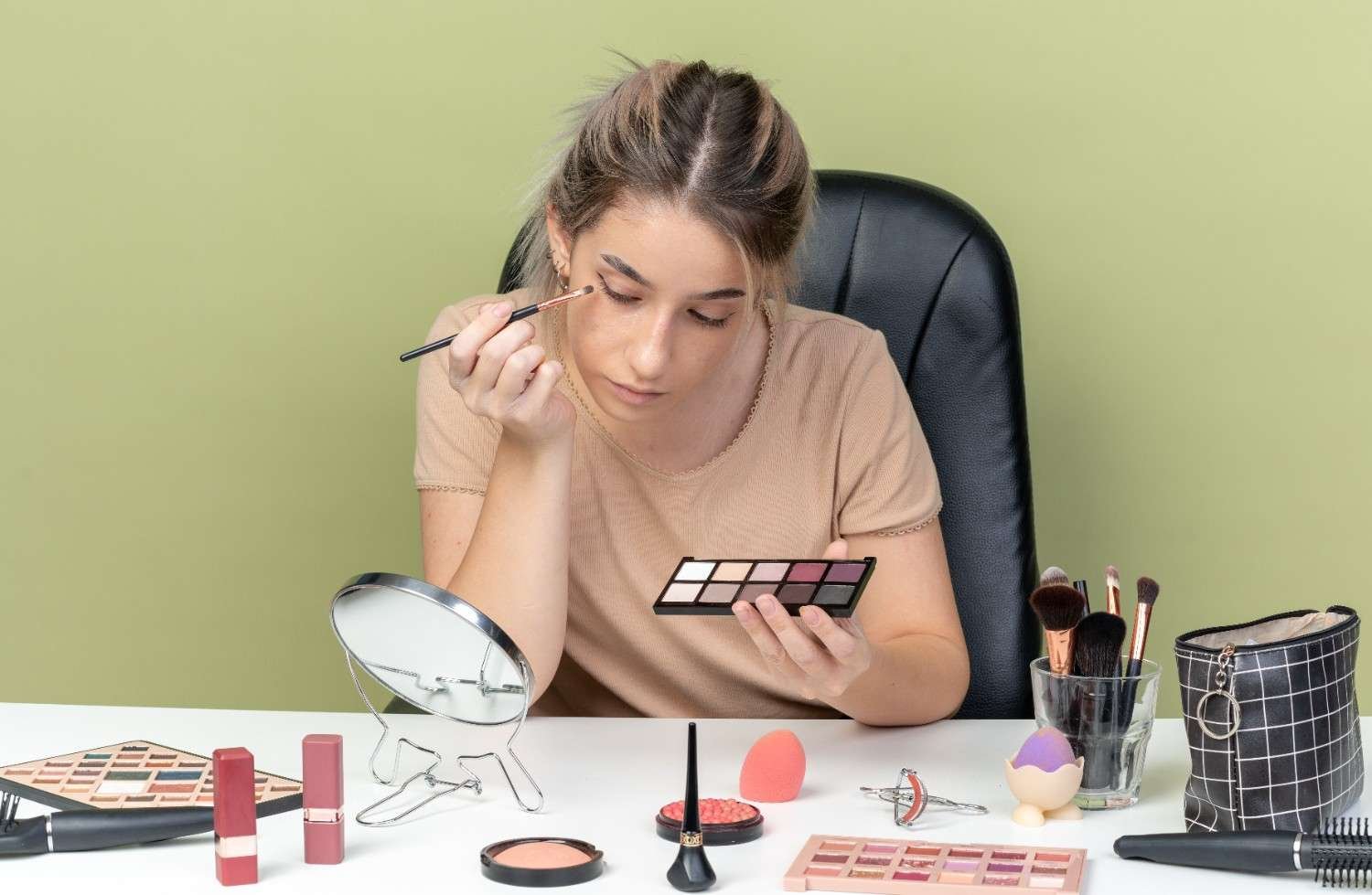
Learning makeup should not feel complicated. I find it easier to think in four phases: prepare the skin, create an even base, define the eyes and brows, then finish with cheeks and lips. This makeup routine for beginners step by step, keeps each stage simple while explaining why it matters.
For a US audience dealing with dry winters, humid summers, indoor heating, and air-conditioning, flexibility matters. Your skin type, climate, and preferred finish should guide how much makeup you use.
How Should Beginners Prepare Their Skin Before Makeup?
Step 1: Cleanse and Moisturize
Start with clean skin, then moisturize. Hydrated skin usually helps makeup spread evenly and reduces dry or patchy areas. Let skincare settle for a few minutes before continuing so the next layers are less likely to pill or slide.
Step 2: Apply Sunscreen During the Day
For daytime makeup, apply broad-spectrum sunscreen before makeup and give it time to set. This helps create a stable base while keeping sun protection part of your daily routine.
Step 3: Use Primer Only Where You Need It
Primer is optional. I would use it only when it addresses visible pores, excess shine, dryness, or short wear time. A small amount through the T-zone or other problem areas is often enough.
What Is the Correct Order for a Smooth Makeup Base?
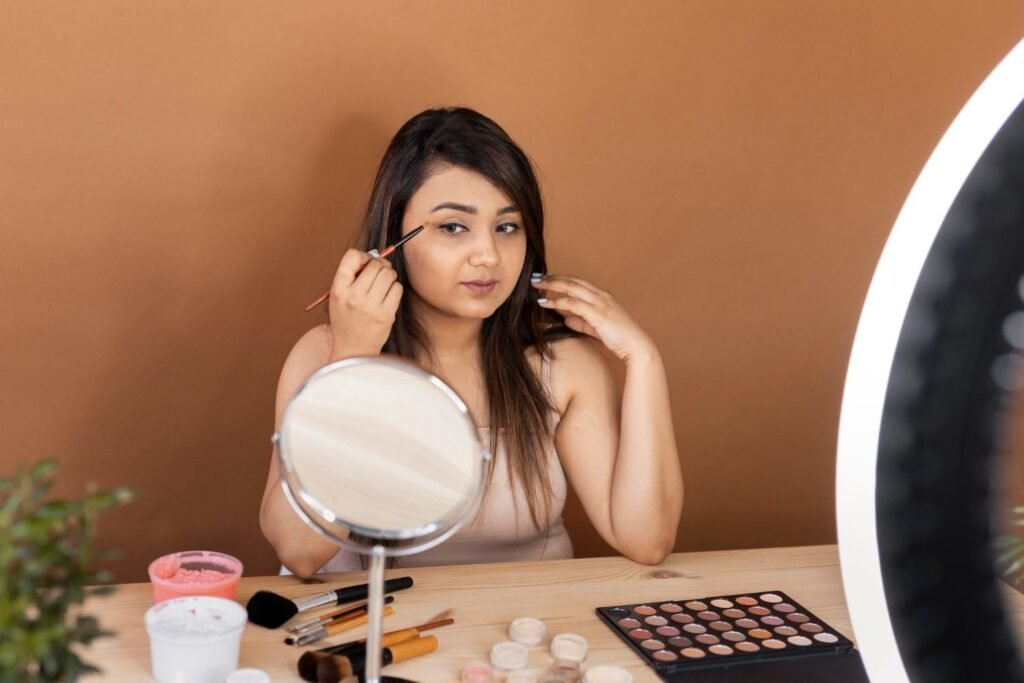
Step 4: Apply a Light, Even Base
Start with a small amount of foundation, BB cream, or another light base and blend from the center of the face outward. A damp sponge, clean fingers, or a brush can all work. Build coverage gradually instead of applying a thick layer at once.
For a natural-looking shade, compare it against your jawline and neck in natural light. Check both depth and undertone so the face does not look noticeably different from the neck.
Step 5: Apply Concealer After the Base
I generally apply concealer after foundation because the base may already cover some redness, dark circles, or blemishes. Dab a small amount only where extra coverage remains and tap it into the skin.
Step 6: Set Only the Areas That Need Powder
Use a small amount of powder under the eyes or through the T-zone if those areas crease or become shiny. Dry skin may need very little, while oily skin may benefit from slightly more. Too much can make the finish look heavy.
Step 7: Add Bronzer and Blush Gradually
Sweep bronzer lightly where you want warmth, then add blush for fresh color. I prefer building both slowly because excess pigment is harder to correct. Soft blending matters more than strong color.
How Can Beginners Make Eye Makeup Look Natural?
Step 8: Fill Brows With Light Strokes
Brush the brows into place and fill only sparse areas. Use short, hair-like strokes rather than creating one solid block of color. Keeping the inner portion softer usually looks more natural.
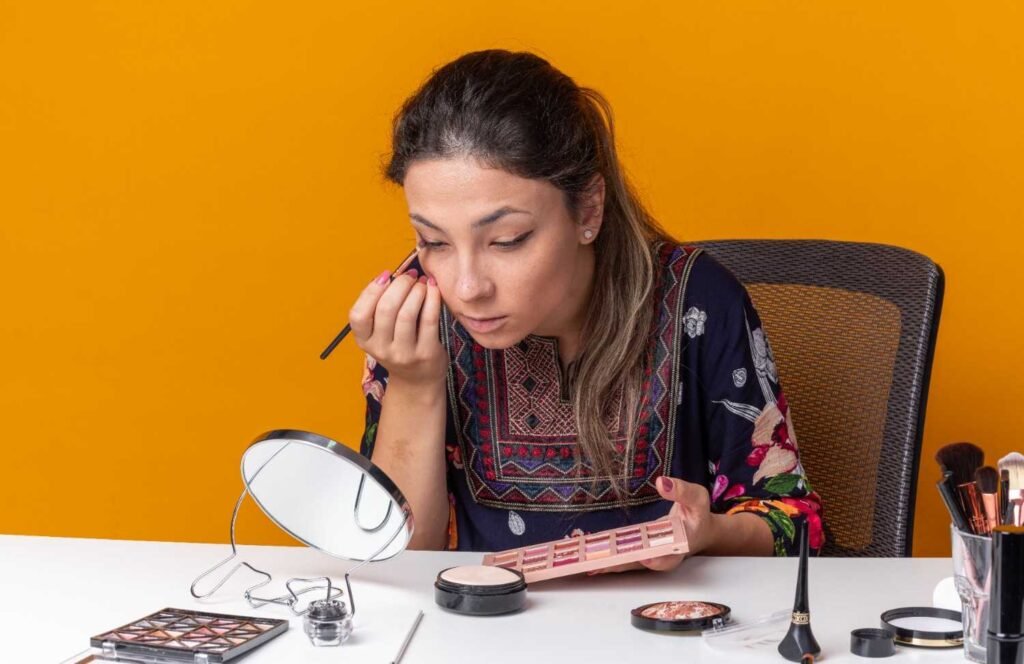
Step 9: Keep Eyeshadow Simple
For everyday makeup, one or two neutral shades are enough. Sweep a soft neutral shade across the lid and blend a slightly deeper shade through the crease if you want more dimension. Blend until there are no obvious lines.
Step 10: Add Eyeliner and Mascara
Eyeliner is optional. If you use it, keep it close to the upper lash line. Finish with mascara from the roots toward the tips. One or two light coats usually look cleaner than several heavy layers.
How Should Beginners Finish the Look?
Step 11: Keep the Lips Simple
Choose a comfortable lip finish that suits the look, whether that means sheer color, gloss, or a more defined neutral shade. Softer finishes are usually easier for beginners to apply and maintain.
Step 12: Use Setting Spray If Needed
Setting spray is optional. Hold it away from the face, mist lightly, and let it dry naturally. It can help the layers look more blended and may improve wear during long days or warmer weather.
What Beginner Makeup Mistakes Should You Avoid?
The biggest mistake I see is applying too much too soon. Thick foundation, heavy concealer, excessive powder, dark brows, and strong blush make blending harder.
Another mistake is copying someone else’s routine without considering skin type or climate. Makeup that works during a humid Florida summer may need different preparation from makeup worn during a dry Colorado winter.
Do not rush blending either. Soft edges make complexion makeup, eyeshadow, bronzer, and blush look more polished.
How Can Beginners Do Makeup in Five Minutes?

When I am short on time, I even out only the areas that need coverage, lightly define the brows and lashes, add a little cheek color, and finish the lips. Choosing the best drugstore makeup products makes this routine affordable, simple, and easy to complete without sacrificing a polished look. This quick routine works well for busy workdays, college mornings, school runs, or casual weekends.
Frequently Asked Questions (FAQs)
1. What is the easiest makeup routine for beginners step by step?
Start with clean, moisturized, sun-protected skin, create a light base, add concealer where needed, set areas that crease, define the brows and eyes, add cheek color, finish the lips, and use setting spray only when useful.
2. Should concealer go before or after foundation?
For most beginners, foundation first is easier because it may already cover some discoloration. You can then use less concealer and apply it only where extra coverage is needed.
3. Do beginners need primer and setting spray?
No. Both are optional. Use them when they address a real concern such as shine, texture, dryness, or makeup longevity.
4. Should makeup always be layered from lightest to heaviest?
Not necessarily. Formula matters. Cream, liquid, and powder textures behave differently, and some people prefer doing eye makeup before their complexion. Think of the standard order as a beginner-friendly framework rather than an unbreakable rule.
Final Thoughts
A good beginner routine should make makeup easier, not more intimidating. I recommend learning one technique at a time, keeping layers thin, and adjusting the routine to your skin and environment. Once the basics feel natural, you can experiment with different finishes and levels of definition.
Leave a Reply