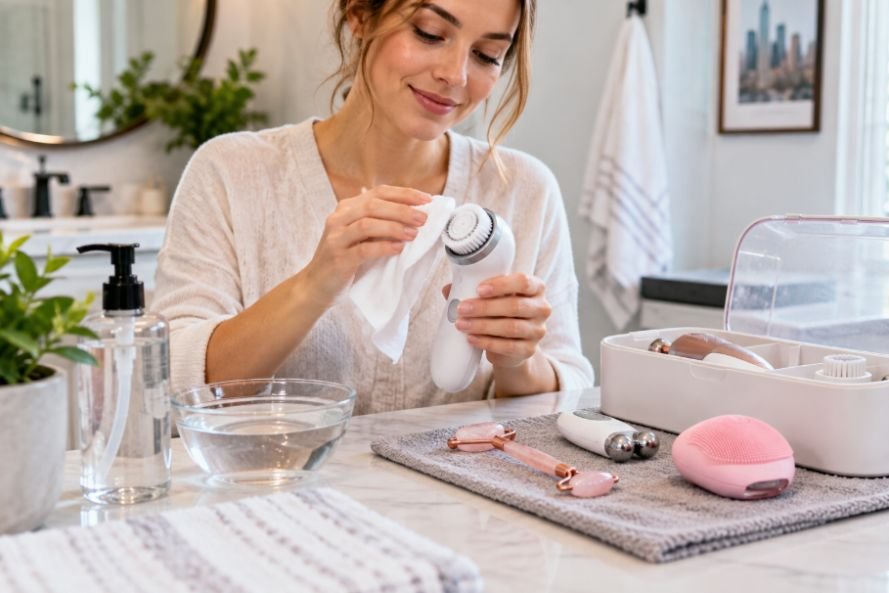
I used to think cleaning a skincare device meant giving it a quick wipe before putting it away. Then I noticed how much serum, oil, sweat, and product residue could collect on areas touching my skin. A device can look clean at a glance while still carrying residue that makes the next use feel less hygienic.
I also learned that electric skincare tools are not interchangeable. An LED mask, microcurrent tool, silicone cleansing brush, and RF device can have very different cleaning limits. Treating every gadget like a waterproof toothbrush can damage materials or expose sensitive electronics.
Why Cleaning After Every Use Matters
Anything touching your face picks up oils, moisturizer, makeup, sunscreen, gel, and sweat. Dried residue becomes harder to remove and can affect comfortable skin contact.
Dried product can collect around seams, treatment heads, silicone surfaces, buttons, or connectors. The goal is not aggressive cleaning. More water or stronger chemicals do not make a beauty tool safer. Manufacturer instructions should take priority because waterproofing and materials vary.
Start With the Manufacturer’s Instructions
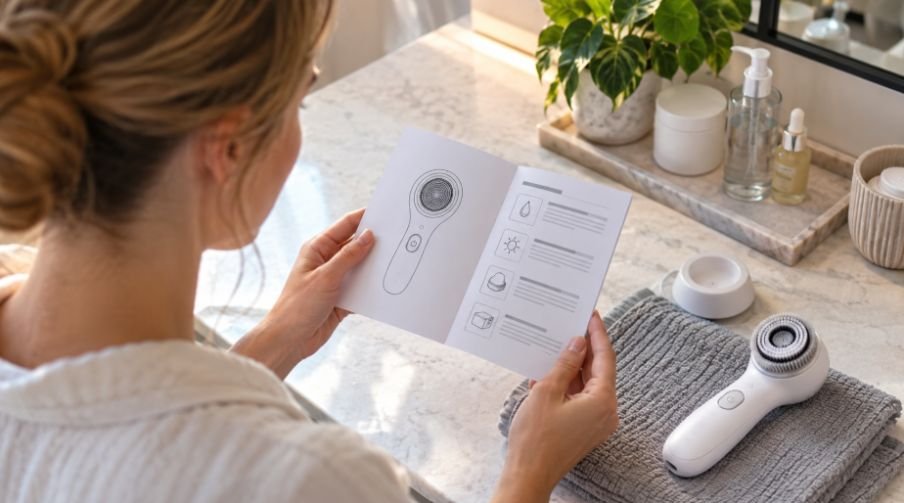
Before reaching for an alcohol wipe, check the manual or care page for your exact model. Some devices can be rinsed, while others should only be wiped with a damp cloth. Some LED device manufacturers advise using a damp cloth and warn against submerging devices or using abrasive cleaners. Silicone cleansing devices can also have material-specific restrictions.
Look for terms such as waterproof, water-resistant, washable, removable treatment head, or charging port. These labels help prevent water exposure and guide safer cleaning choices.
A Simple Post-Use Cleaning Routine
Start by switching the device off and disconnecting it from the charger or power source. Remove detachable heads or accessories if the instructions allow it.
Next, remove visible residue with the gentlest method the manufacturer permits. A soft, lint-free cloth slightly dampened with water works for many wipe-clean devices.
Alcohol deserves extra caution. A 70% isopropyl alcohol wipe may suit some surfaces, but it is not universal. It can damage certain plastics, coatings, adhesives, or silicone. For example, some silicone devices specifically warn against alcohol-based cleaning products.
For a washable silicone cleansing brush, rinse it according to its instructions and pay attention to the base, seams, and charging area. For an LED mask or electronic treatment device, keep liquid away from openings unless the manufacturer explicitly says otherwise.
How Different Devices Need Different Care
LED masks often have flexible surfaces and treatment areas that collect skincare residue. Wipe the skin-contact side and avoid soaking the mask unless it is specifically designed for immersion. Keep connectors and charging points dry. Current manufacturer instructions for LED devices commonly call for wiping after use rather than submerging.
Microcurrent and EMS devices can leave conductive gel or serum around their electrodes. Clean those contact points after each session so residue does not dry onto the surface. A soft cloth or approved wipe is safer than scraping hardened product away.
Silicone cleansing brushes are often easier to wash, but not every model should be submerged. Check whether the whole device is waterproof or only the brush surface. Let it dry fully before closing it inside a case.
RF devices and other electronic tools need similar caution. Treatment heads may need a gentle wipe, while handles, cables, and charging ports should stay as dry as the instructions require.
The same care applies to smart hair styling tools with temperature control, where electronic components and temperature-sensitive surfaces should be cleaned according to the manufacturer’s instructions.
For anyone browsing viral beauty gadgets worth trying, cleaning requirements are worth considering before buying. A device that looks convenient can become frustrating if its care routine is difficult or its materials require special handling.
Drying Is Part of Cleaning
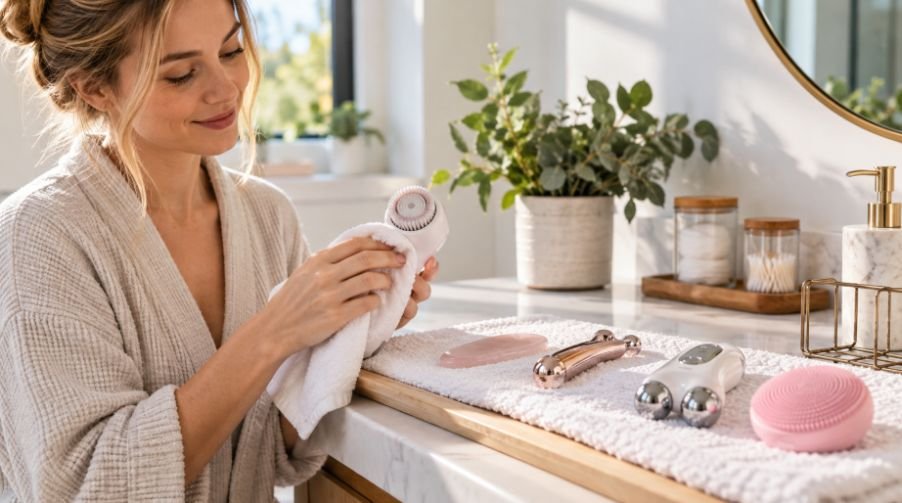
After wiping or washing a device, place it on a clean, dry towel or another protected surface and let it air-dry completely. Do not put a damp device straight into a pouch, drawer, or closed container.
Pay attention to crevices where water can hide. Grooves, seams, charging ports, and attachment points can retain hidden moisture. If the device has removable parts, dry them separately when the manual permits.
Avoid high heat from a hair dryer unless the manufacturer specifically approves it. Excessive heat can affect plastics, adhesives, batteries, or coatings. Air-drying is usually safer.
Store It Somewhere Dry and Protected
A bathroom cabinet may seem like the obvious home for a skincare gadget, but frequent humidity can make it a poor long-term storage spot. A dry drawer, bedroom vanity, or cabinet away from direct sunlight and heat is more suitable.
Once completely dry, place the device in its original pouch, case, or another clean container recommended by the manufacturer. Keep attachments together, but avoid stuffing cables tightly around the device. If a brush head needs to face downward to prevent moisture from settling near its base, follow that guidance.
For people exploring why consumers are replacing salon visits with beauty tech, maintenance is part of the practical side of that shift.
Mistakes That Can Shorten Device Life
Common mistakes include:
- Storing the device before it is completely dry.
- Using alcohol, bleach, oils, or abrasive cleaners without checking the manual.
- Submerging a device that is only water-resistant.
- Scraping residue with sharp objects.
- Leaving a rechargeable device in direct heat or sunlight.
If a device develops corrosion, cracks, a damaged cable, unusual heat, persistent residue around electrical openings, or inconsistent operation, stop using it until you can check the manufacturer’s safety guidance.
Frequently Asked Questions
1. Can I use alcohol wipes on an electric skincare device?
Only if the manufacturer permits alcohol for that model and its materials. Some surfaces tolerate it, while silicone, coatings, plastics, or adhesives may not.
2. Should I clean my skincare device after every use?
Yes, when the device touches your skin. Removing residue promptly is easier than cleaning dried product later and helps keep contact surfaces fresh.
3. Can I store my device in the bathroom?
It is usually better to choose a cool, dry storage area away from repeated steam and humidity. Always let the device dry fully before storing it.
4. Can I wash a waterproof beauty device?
Only within the limits stated by the manufacturer. Waterproof does not mean every part, accessory, or charging area can be treated the same way.
The Habit That Keeps Beauty Tech Worth Using
Good device care is mostly about consistency rather than complicated cleaning rituals. Turn the tool off, remove residue with an approved method, let every surface dry, inspect the parts that touch your skin, and store everything somewhere protected. That sequence can prevent buildup and moisture problems that are easy to overlook when a device becomes part of a daily routine.
A well-maintained skincare gadget is rarely the one cleaned most aggressively. It is the one cared for according to its materials, electronics, and instructions, every single time.
Leave a Reply